Is the sensor size argument just a distraction
For some photographers, it would seem that the size of the sensor in their camera needs to be as large as possible. Full-frame cameras are, sort of, the bare minimum in terms of sensor size. Aren’t they? Not at all.
Olympus/OM System and Panasonic Lumix Micro Four Thirds photographers don’t think like that, and the smaller sensor their cameras depend on hasn’t prevented them from taking fantastic images since 2003.
So who has got it right? Are both camps deluding themselves. Absolutely not. Well, maybe. It all boils down to what you need from your gear. What is absolutely wrong is to dismiss either format without understanding their pros and cons.
The sensors
Full frame cameras are a legacy of the film era. The 36x24mm frame area is the same size as a typical 35mm film camera. A Micro Four Thirds (technically, just ‘Four Thirds’) sensor is a quarter of the area of a full frame sensor. Yes, it’s significantly smaller, but it’s still categorised as a large sensor. The sensors you find in, say, even some of the flagship smartphones, are much, much, smaller still.
Digital camera sensors are semiconductor integrated circuits, or chips. Micro Four Thirds sensors are relatively huge in the chip world. Full frame sensors are, however, behemoths.
Normally, many thousands of tiny chips are manufactured on a platter of silicon, called a wafer. Natural manufacturing defects mean that a percentage of these chips will be faulty, and discarded. The percentage yield of working chips is greater for smaller chips, and, naturally, you get more smaller chips per wafer. This is why the smaller a chip is, the cheaper it is to manufacture. Full frame sensors are significantly more expensive to make than Four Thirds ones.
Pros and cons – size matters
Full Frame sensors usually have a pixel pitch, or the area covered by each light sensitive photosite, that is very large. This means each image pixel is the product of more gathered light. This can translate into lower noise and greater dynamic range, which is the ability to record greater detail in extreme darkness, as well as extreme brightness. Both are plus points for fundamental image quality and mean that Full Frame can cope better with very extreme lighting conditions.
Four Thirds sensors, remember, are still large. These days, sensor technology has improved a great deal, meaning that the noise and dynamic range performance of Four Thirds sensors is better than some Full Frame sensors from, say ten years ago.
Smaller size and mass of Four Thirds sensors mean they work better when IBIS (In Body Image Stabilization) is used. Another advantage of their smaller size is that Four Thirds sensors can be read significantly faster, which makes higher continuous frame rate shooting possible, and this also helps with so-called computational photography modes.
Lenses, and depth of field
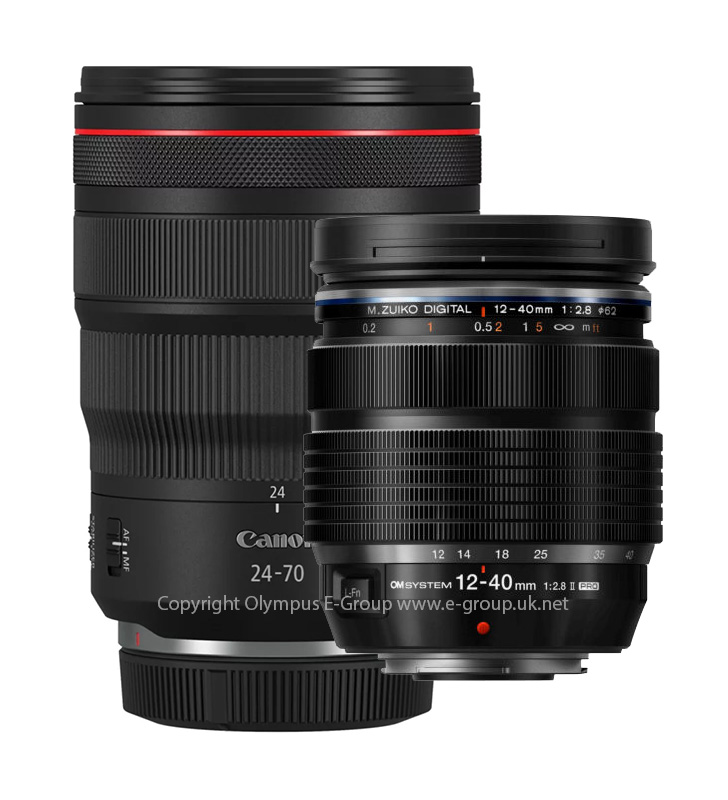
For a given field of view as a rule of thumb, a Full Frame lens will be about twice as large as a Micro Four Thirds lens. We have covered this in a separate article. This is a major factor if you want to travel light, or if, for other reasons, large and heavy lenses are impractical.
Now all the major camera marques have gone mirrorless, the physical size of camera bodies is pretty similar between FF and MFT, with a few exceptions. The primary difference is lens size and weight.
Depth of field is often topic of discussion when comparing FF and MFT. For the same brightness (aperture), a deeper distance in front of and behind the camera will be in sharp focus with MFT than with FF. Larger sensor advocates will dwell on the ability of FF to more easily deliver softer bokeh, or the effect of blurring the background. You can still achieve similar degrees of bokeh through various techniques – larger aperture lenses, using longer focal lengths and reframing, or now, very effectively, in post-processing.
It’s often forgotten that inadequate depth of field can be a headache when you want to get more of your subject in focus, in macro and landscape photography, for example. This may mean you have to stop your aperture down, meaning slower and slower shutter speeds to compensate for the lower brightness, and the consequents of risking more camera shake, or having to raise the ISO setting.
The bottom line
Olympus and OM System, Panasonic Lumix, and other MFT cameras, are not worse than their full frame counterparts. They are just different. If you aren’t primarily shooting for social media, Full Frame might be the better choice, but MFT images can still be printed very large. If you want or need to travel light, MFT is the way to go. It’s no good having a great set of FF gear that you are reluctant to lug around with you. This article could go into a lot more detail, but hopefully, you have started to get the picture.