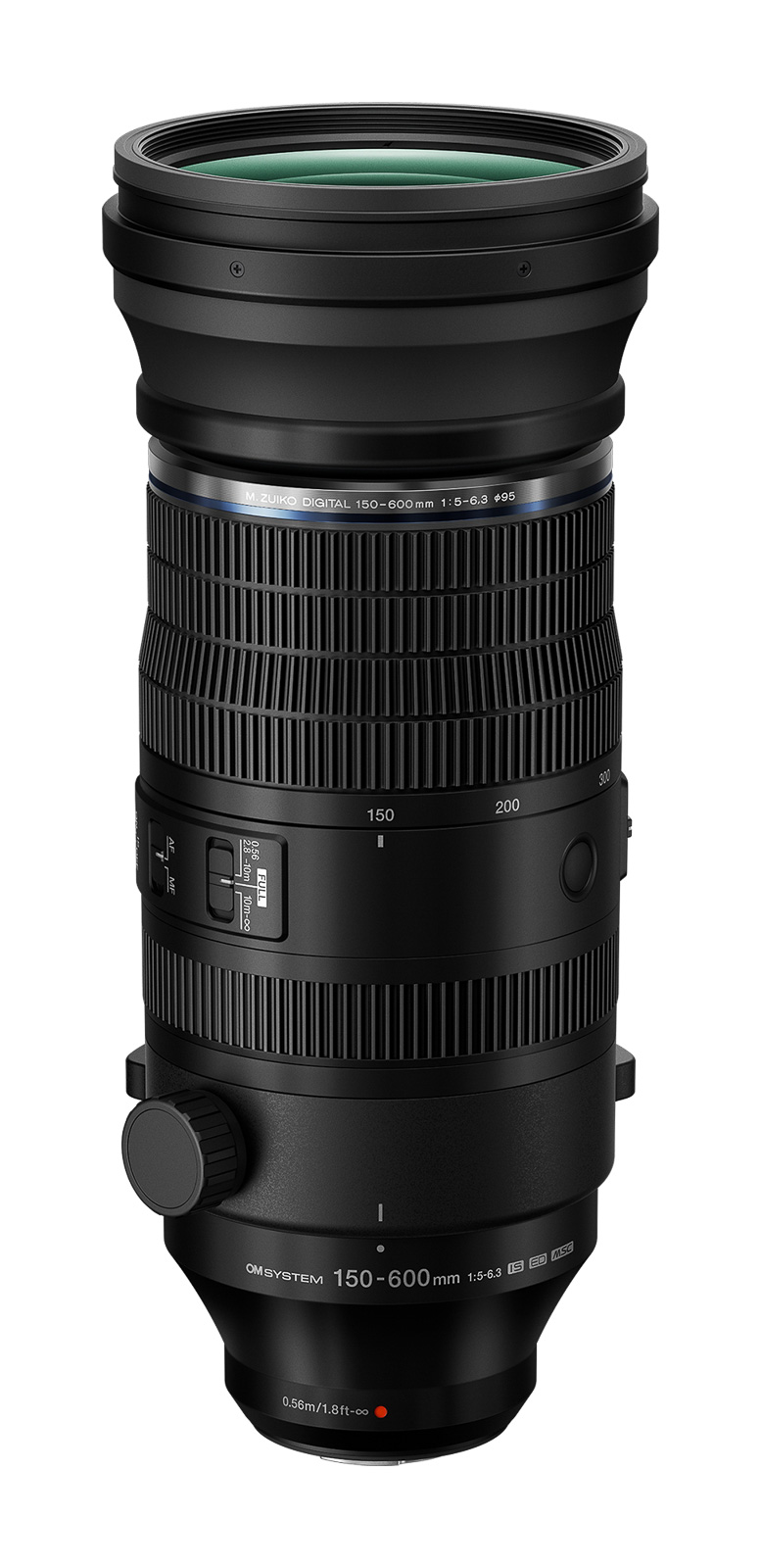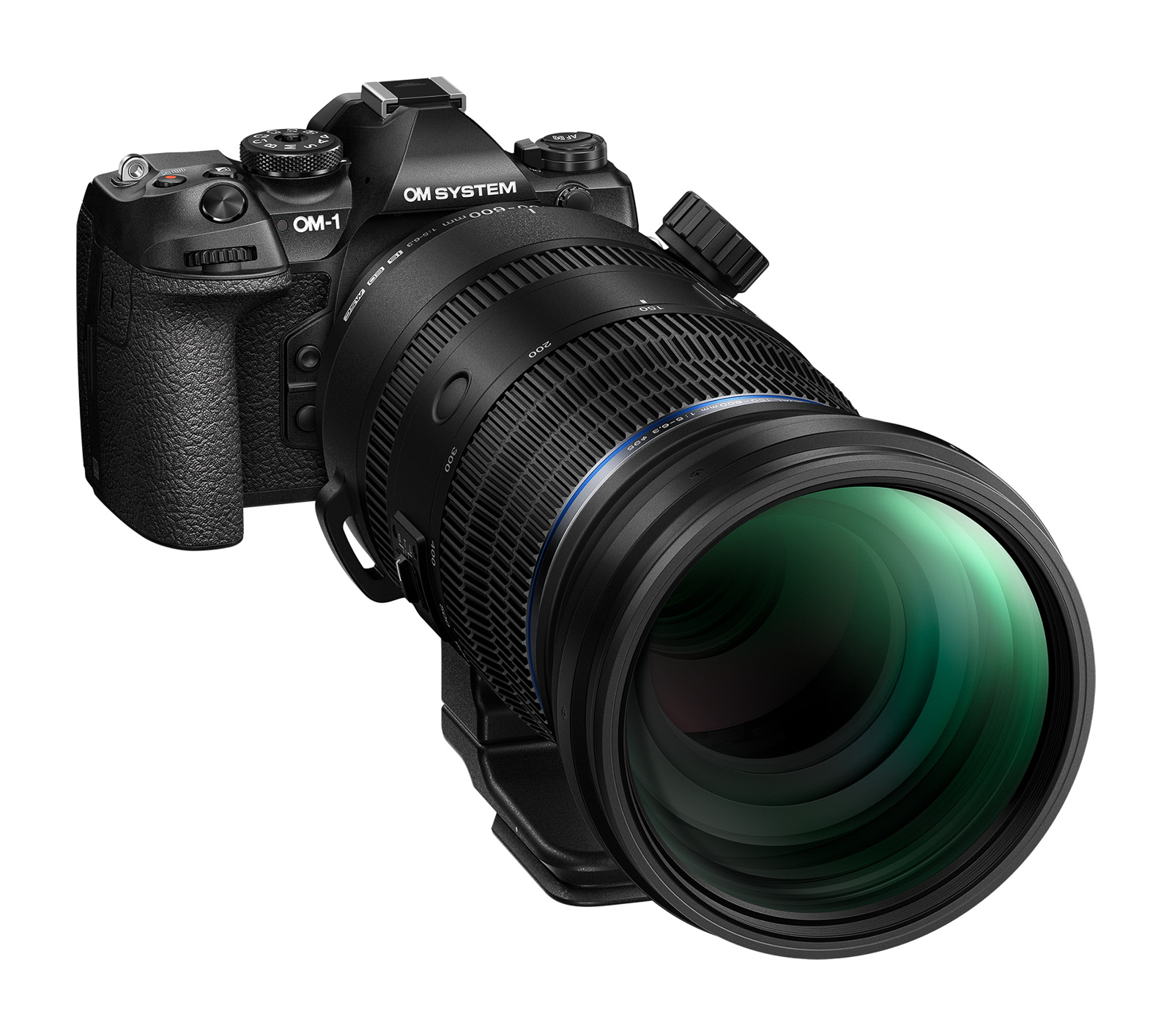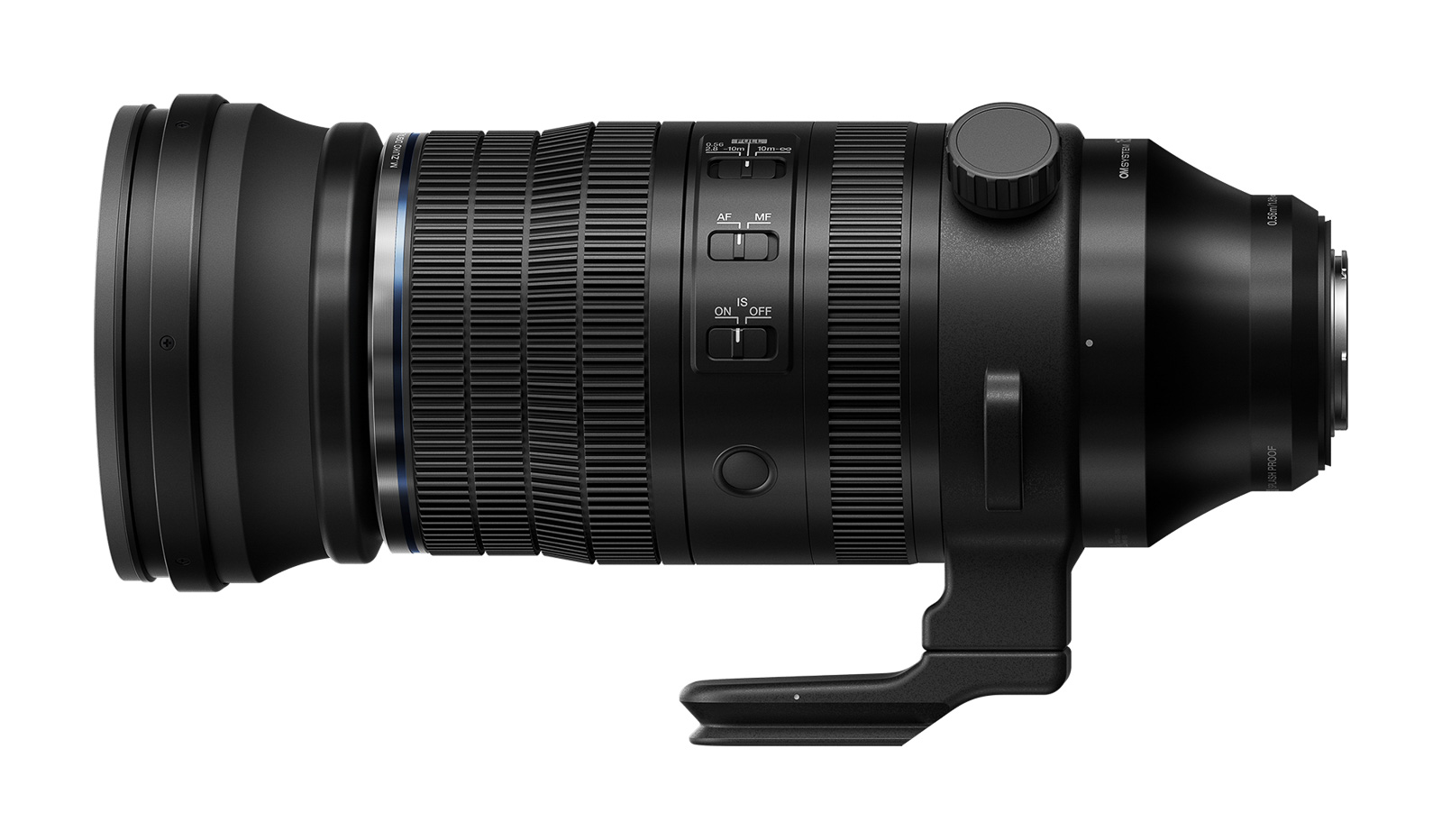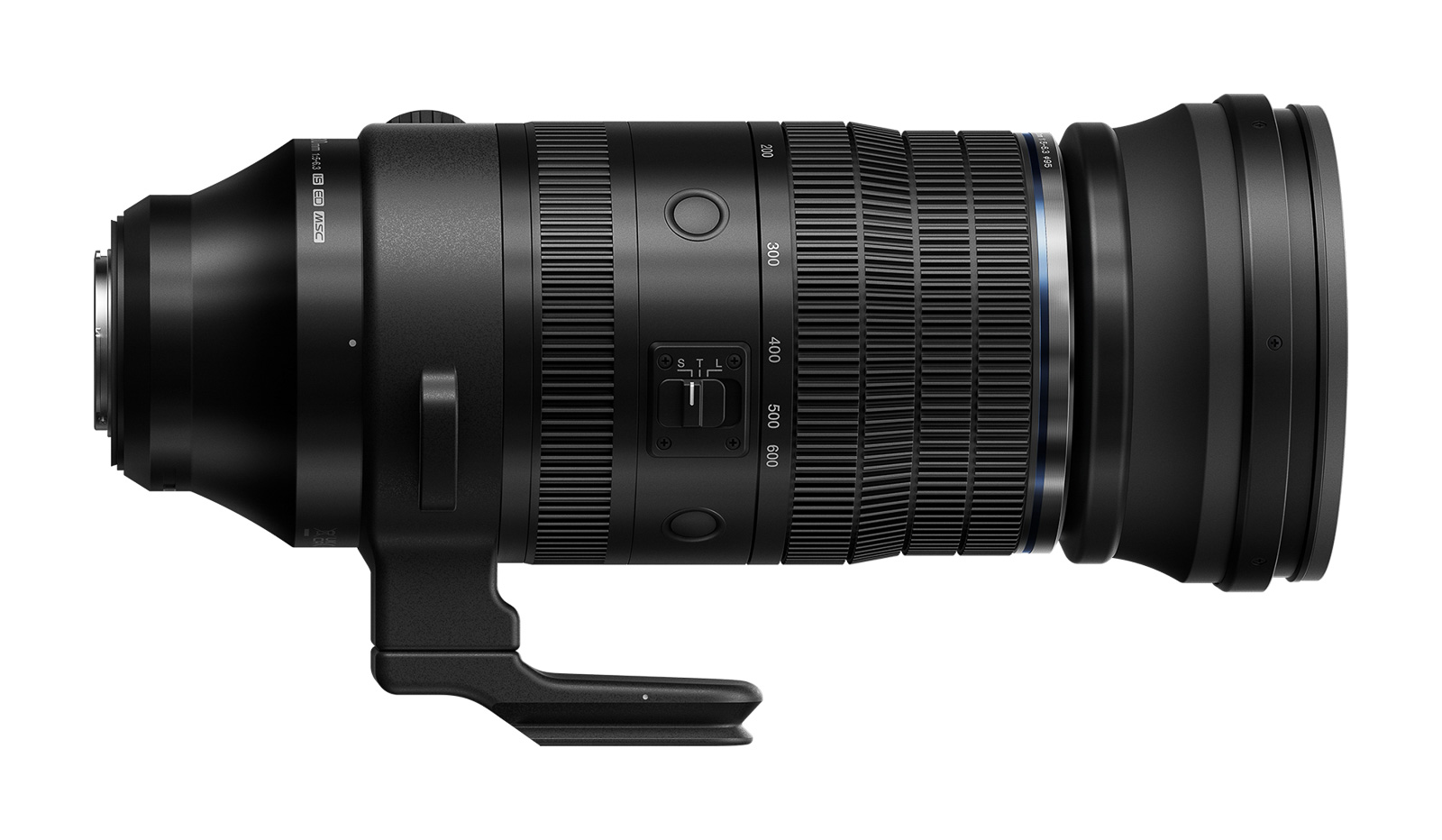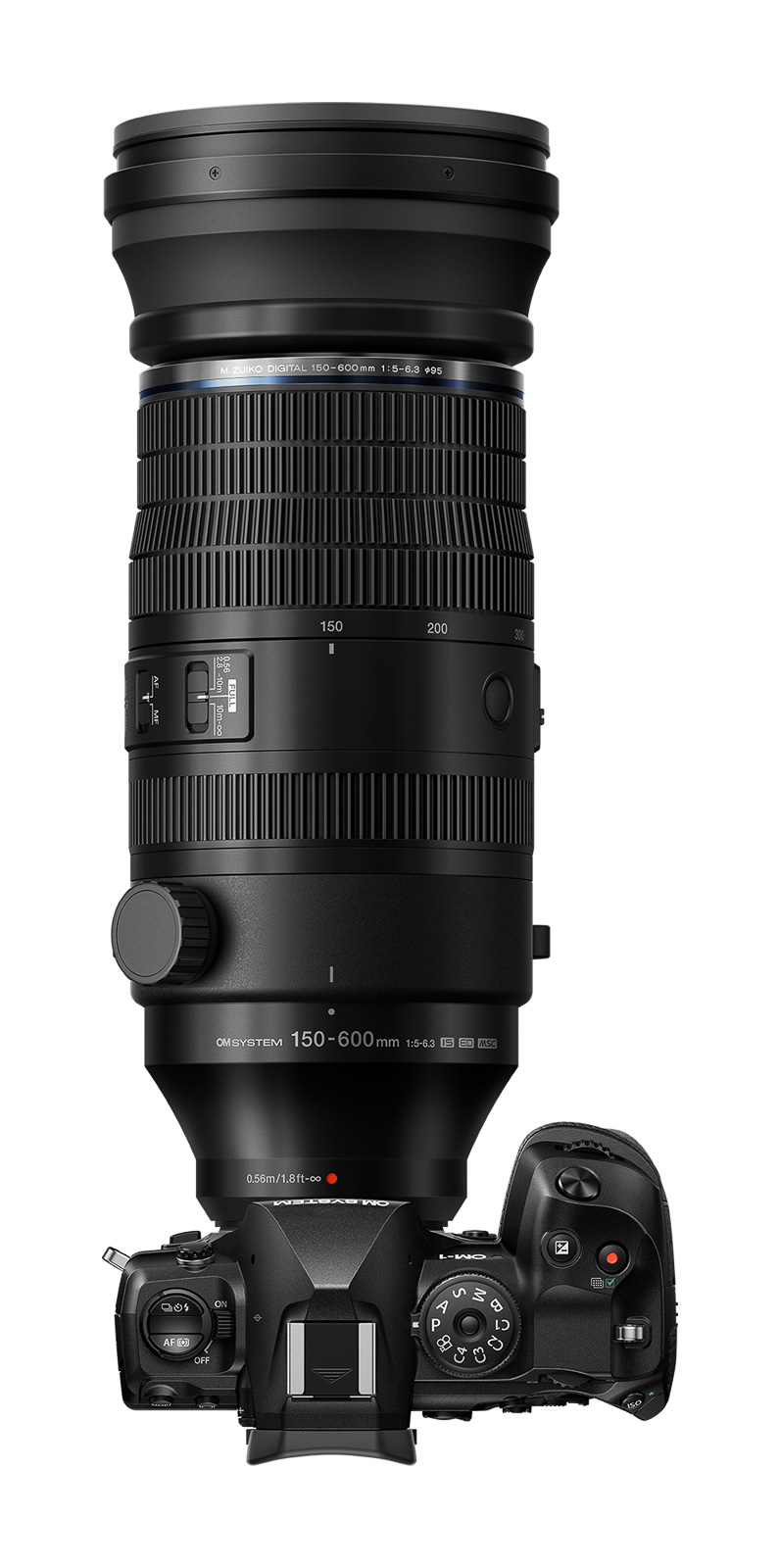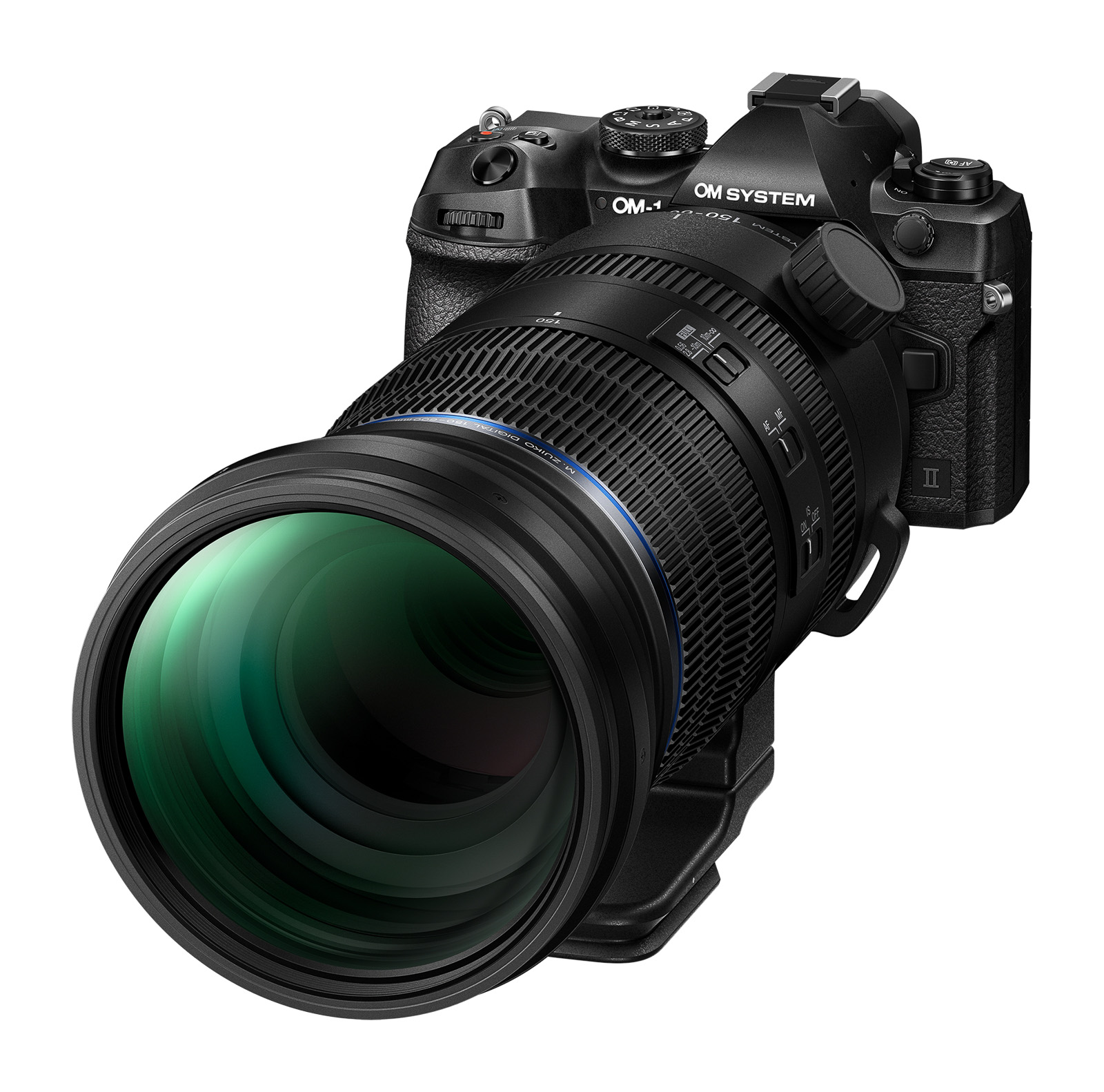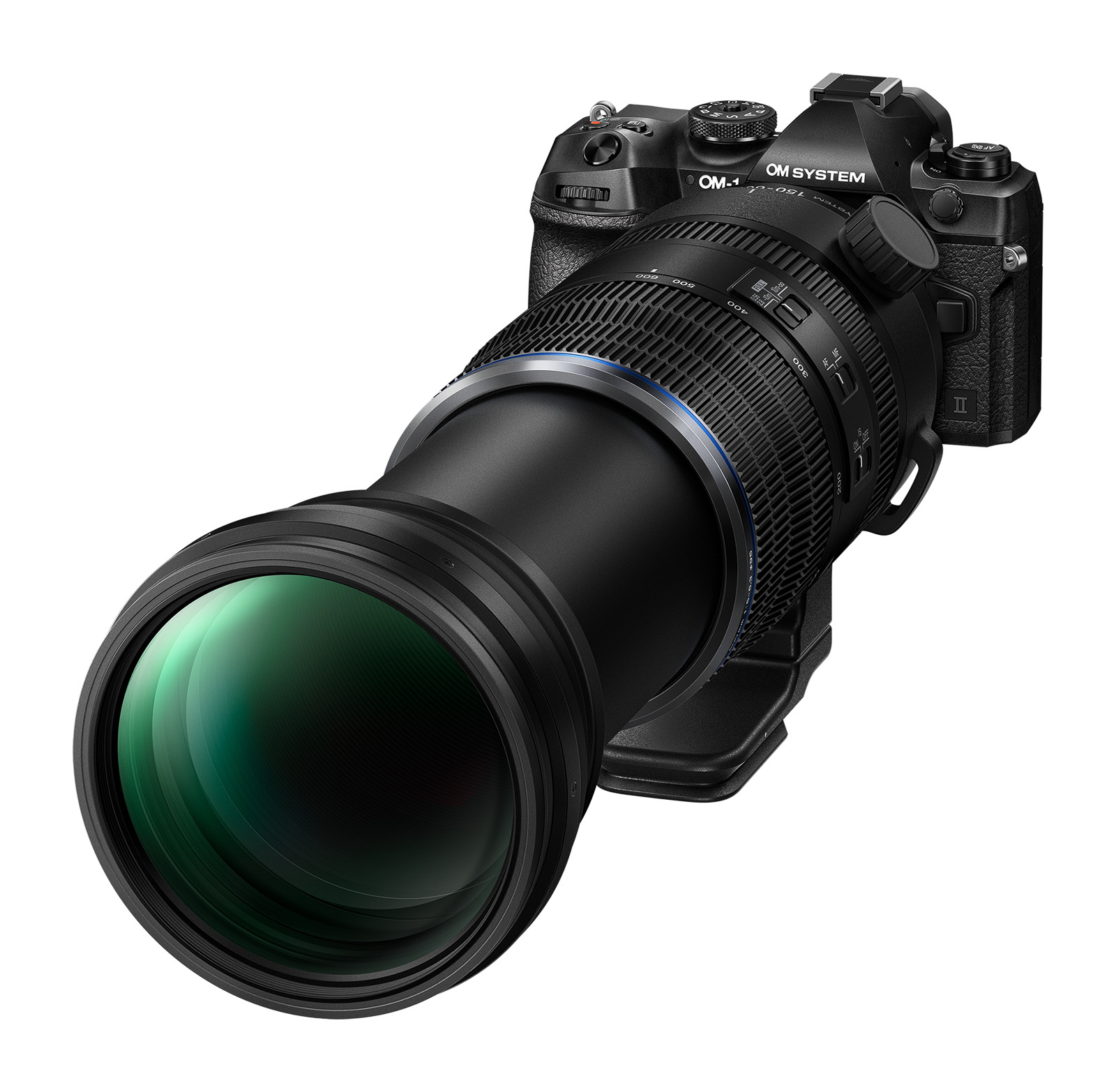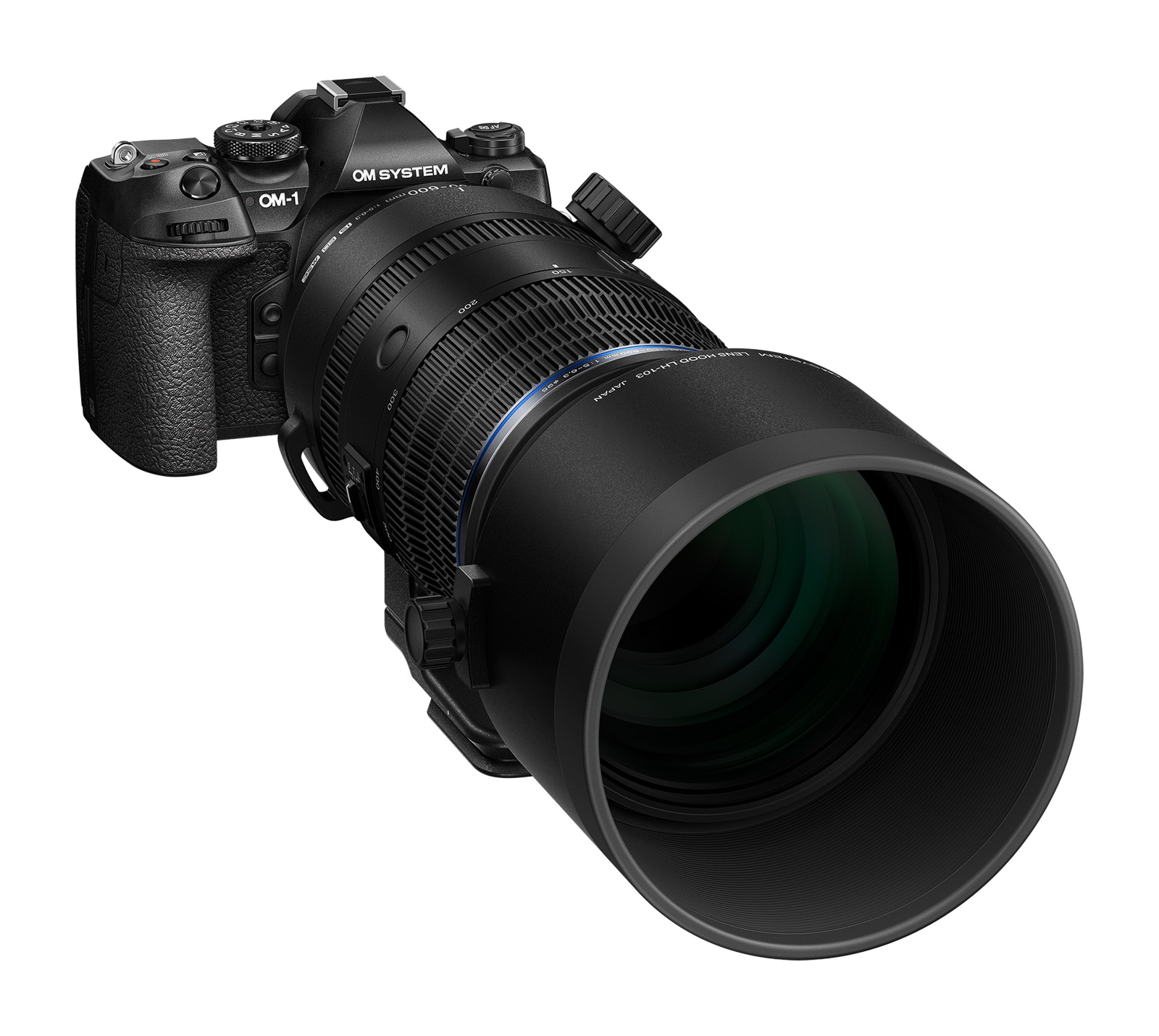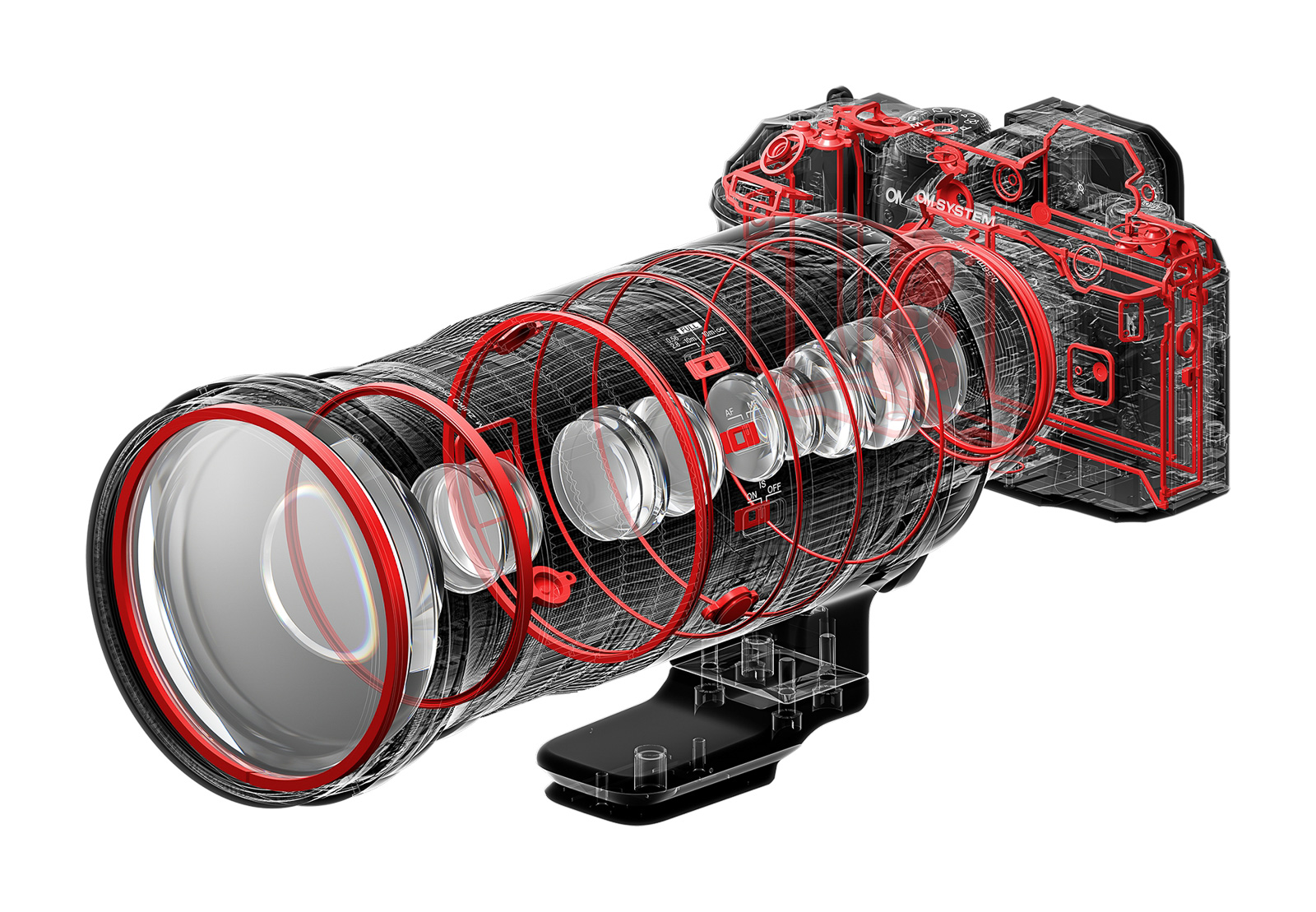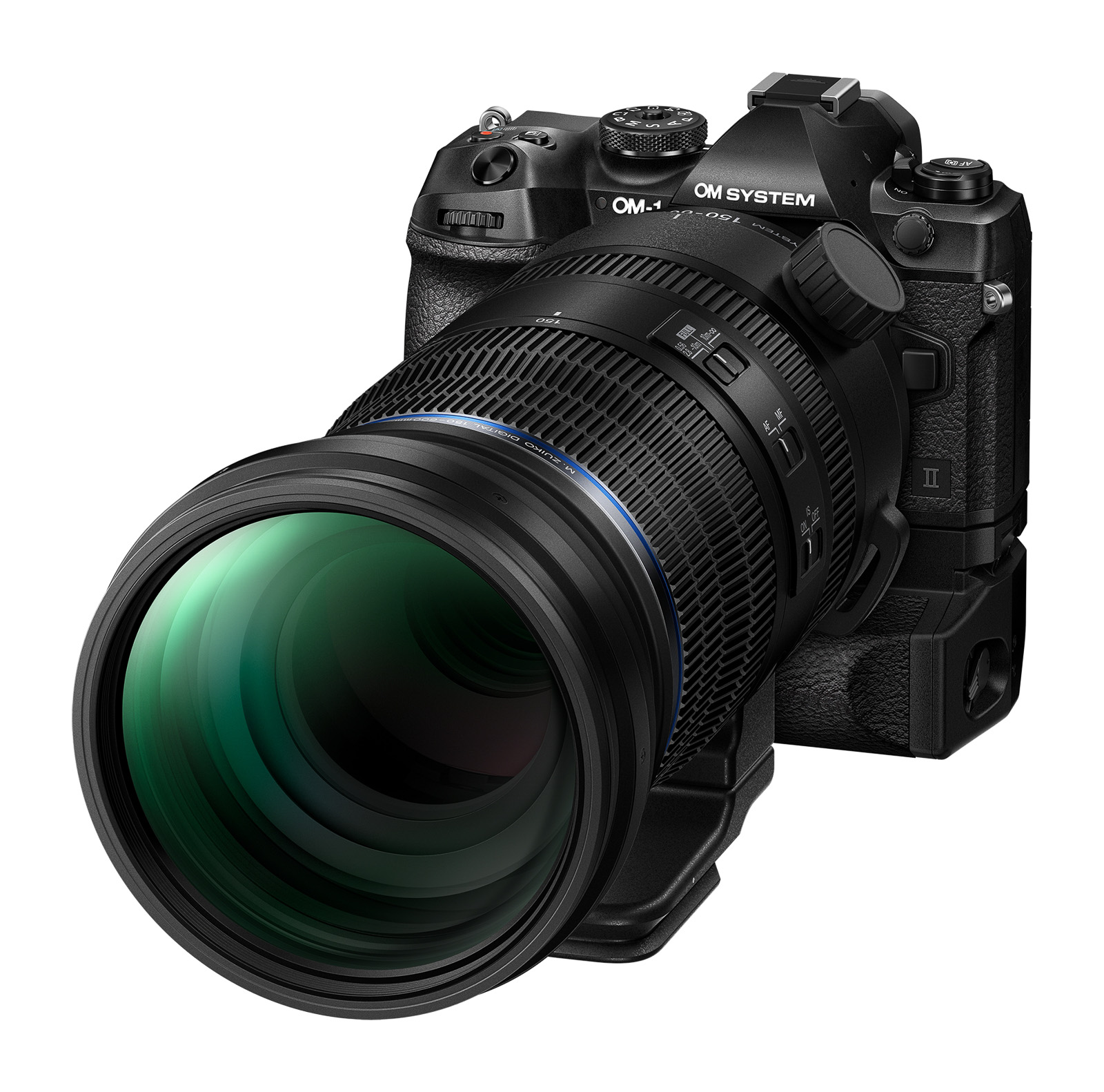
If a 400mm super telephoto (800mm in full frame terms) isn’t enough, OM System now has a solution; the new ultra tele m.Zuiko ED 150-600mm f/5-6.3 IS. That’s a 300-1200mm field of view if you are shooting full frame. And you can use MC-14 1.4x and MC-20 2x teleconverters, if you wish. With the MC-20, that gives you a 300-1200mm f/10-13 Micro Four Thirds view, or full frame 600-2400mm.
Headline features:
- 150-600mm f/5-6.3 ultra telephoto zoom 300-1200mm full frame field of view)
- Compatible with MC-14 and MC-20 teleconverters
- Features Sync IS (up to 7 steps of image stabilisation headroom extension)
- Just over 2kg weight
- Focuses as close as 0.56m at 150mm (0.7x semi-macro usability)
- IPX1 dust and splash-proof sealing
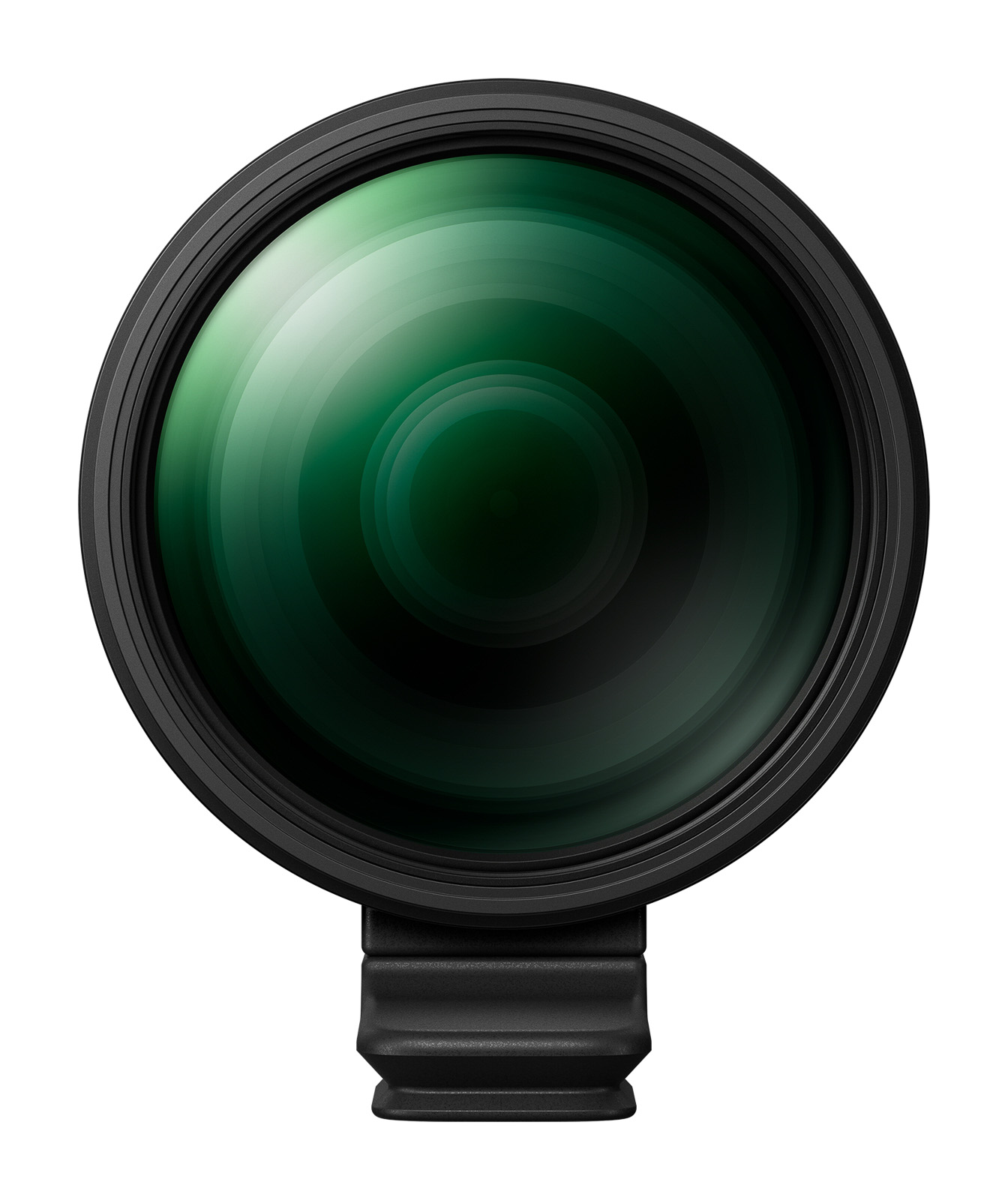
- Water droplet and dust-resistant fluorine front element coating
- 95mm filter thread
- Arca-Swiss compatible tripod foot
- Price: £2,399.99, €2,699.00, $2699.99 US
- Availability, late February
Sync IS
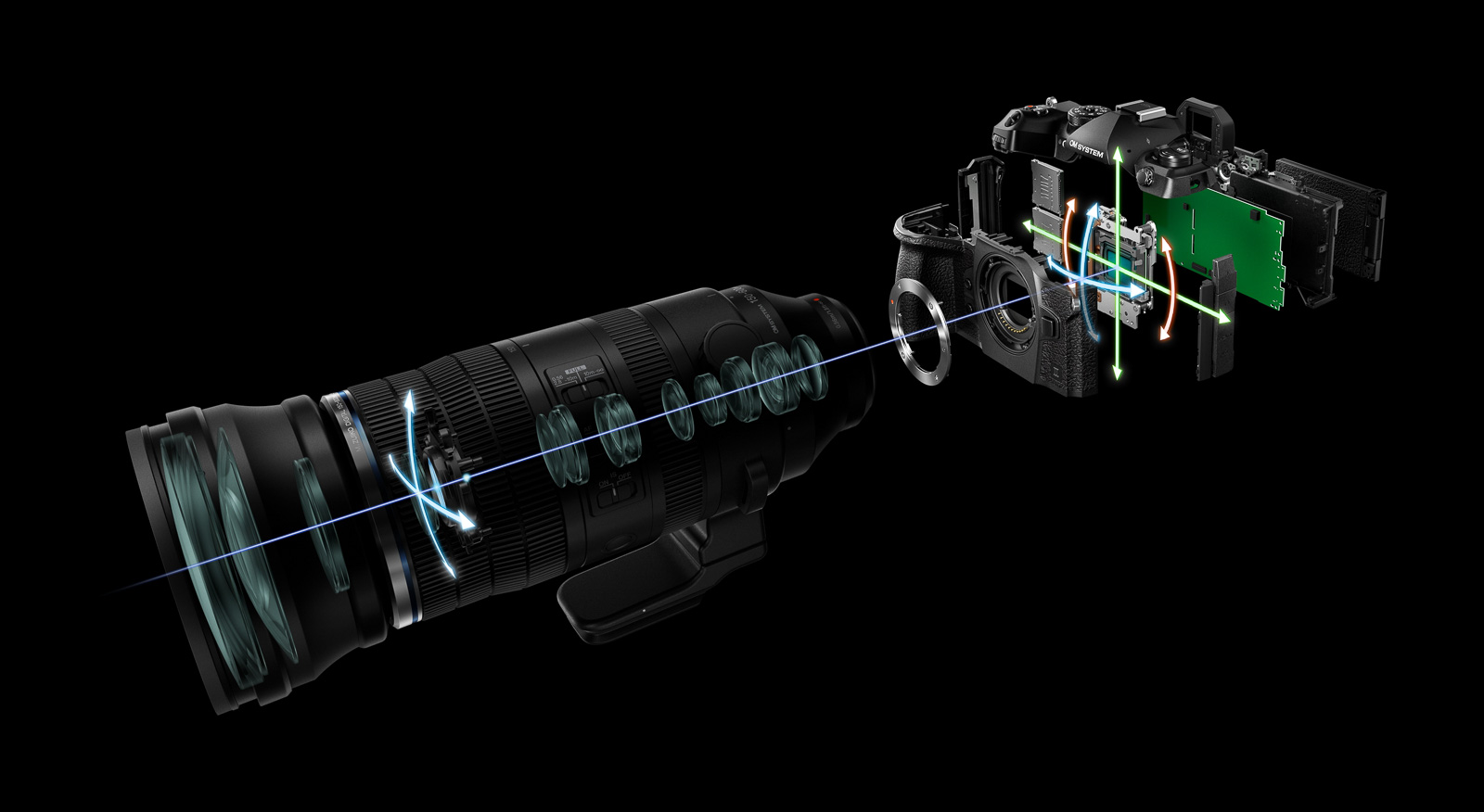
While the 150-600 is not a ‘Pro’ moniker lens, it does benefit from Sync IS. This is the smart combination of camera body sensor-shift image stabilisation, and in-lens optical stabilisation.
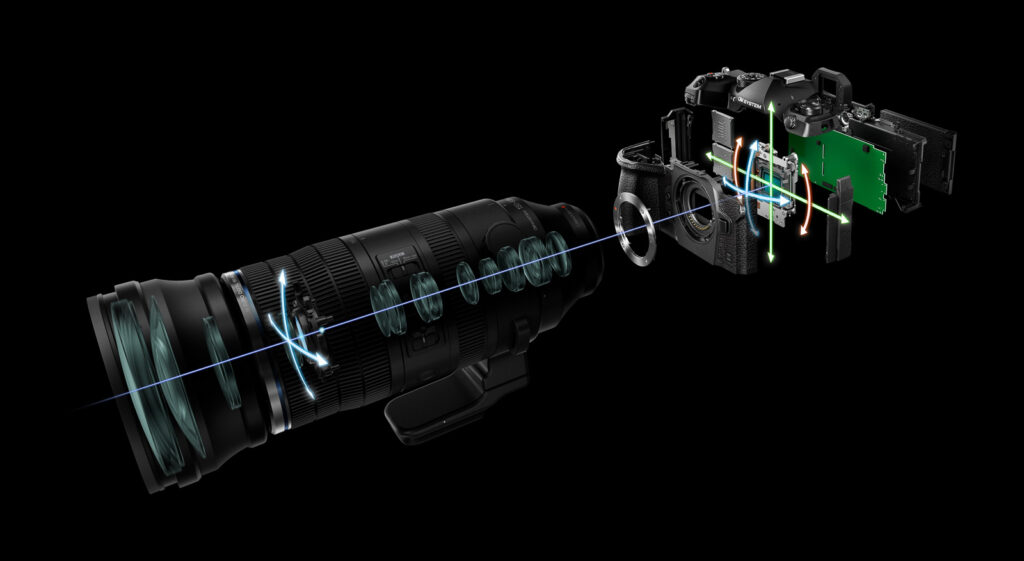
OM System says, when used with an OM-1 body, up to 7 EV steps of stability are available at 150mm, reducing to 6 steps at 600mm.
Size and weight
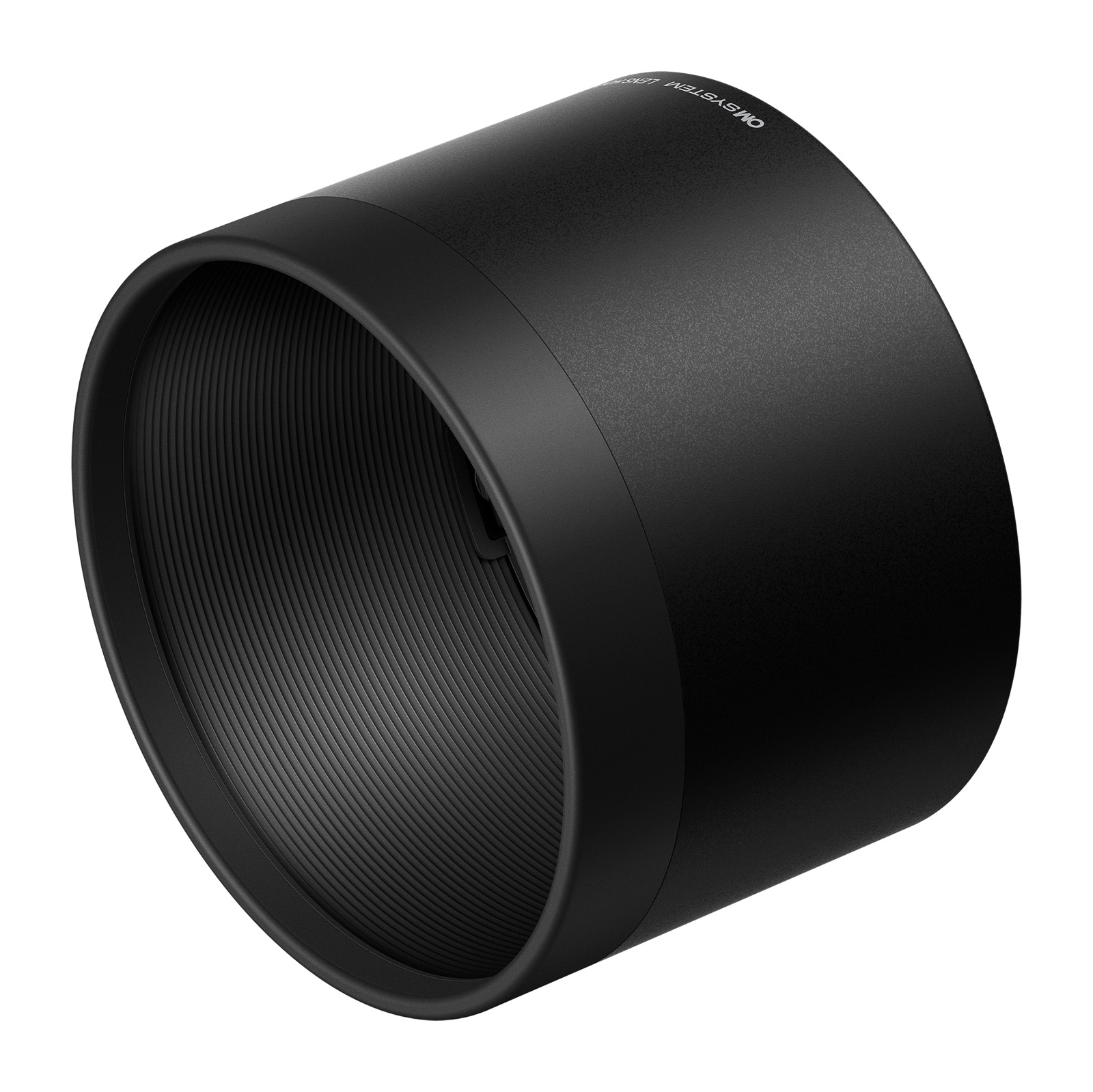
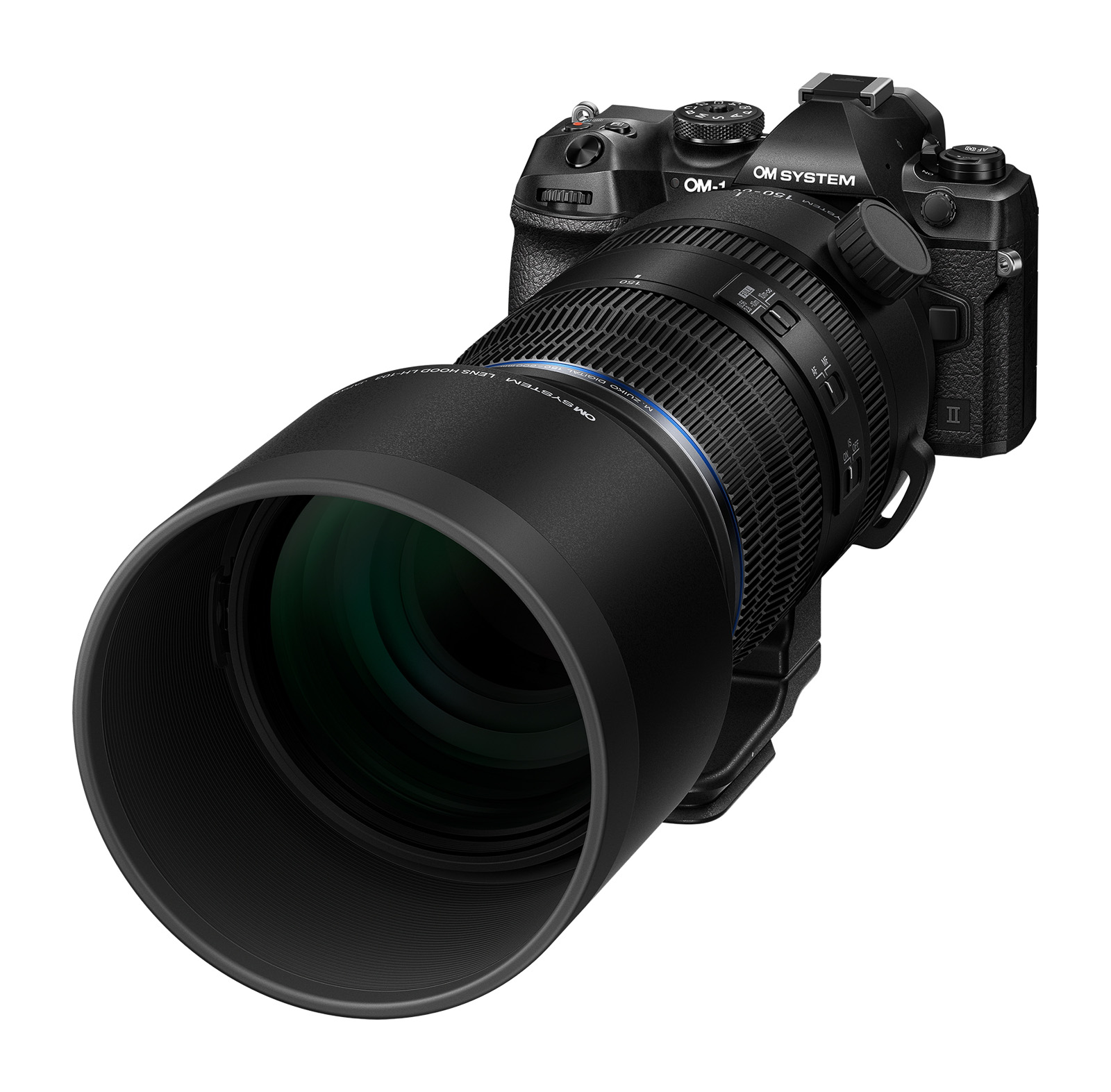
The 150-600 is, understandably, a large and heavy lens, weighing a smidgen over 2kg (without its 151g LH-103 lens hood). Focusing is internal, but the zoom mechanism increases the overall length from 26.4cm by about 10cm at the longer end of the zoom range.
On the following page, we delve into what the features and specifications could add up to.
[nextpage title=”The same, but different”]
There has been a lot of speculation about the origins of the OM System m.Zuiko ED 150-600mm f/5-6.3.
Both Tamron and Sigma have made 150-600mm DSLR zooms for years. More recently, Sigma produced a 150-600mm f/5-6.3, its DG DN OS model, designed specifically for mirrorless cameras.
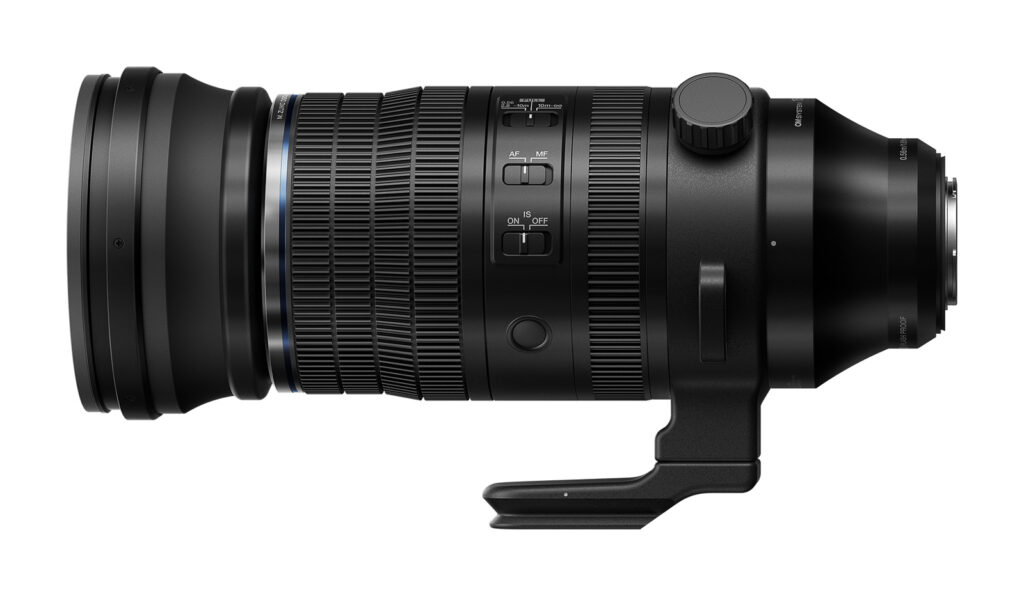
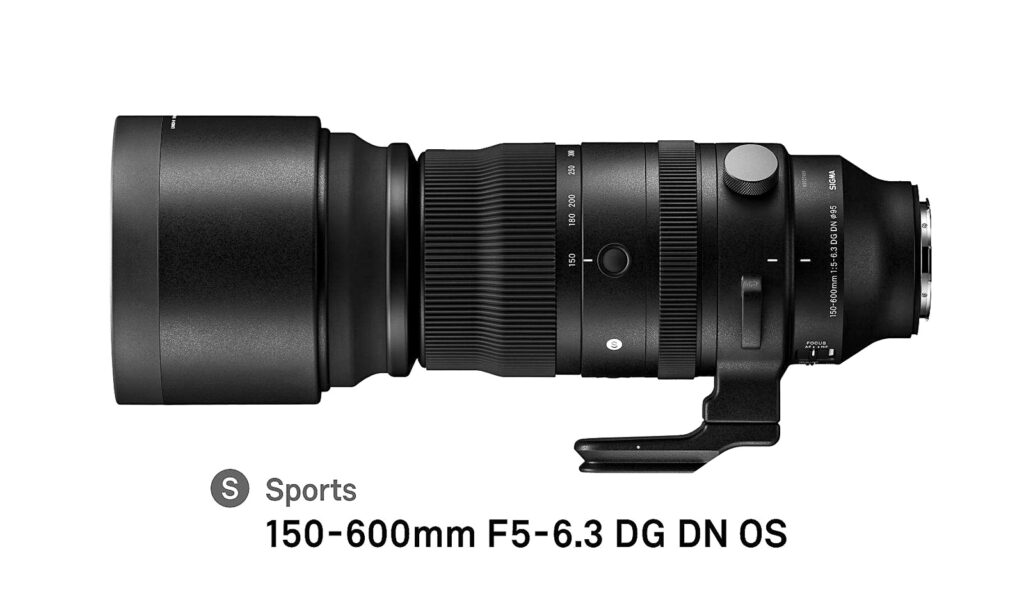
OM System won’t talk about their lens’ provenance, but you only have to look at the exterior appearance to see that it bears more than just a passing resemblance to the Sigma optic. It has very similar dimensions, weight, filter size, external controls, and the same number of lens elements designed into the same number of groups.
But there are some very important differences to consider. The Sigma was designed for full frame sensors. Some adjustment of the optics to optimise for the smaller Micro Four Thirds sensor is only to be expected.
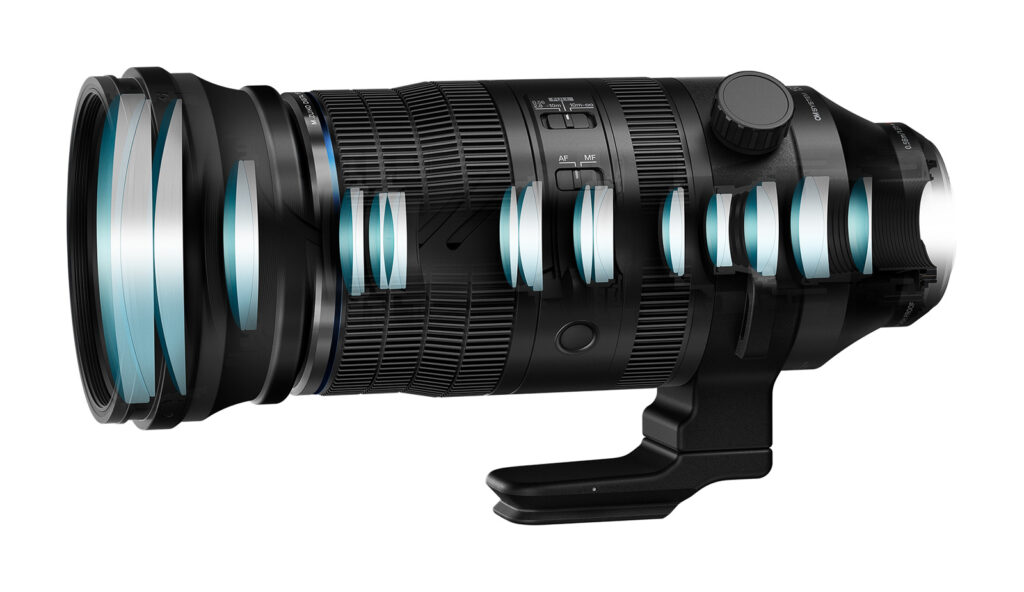
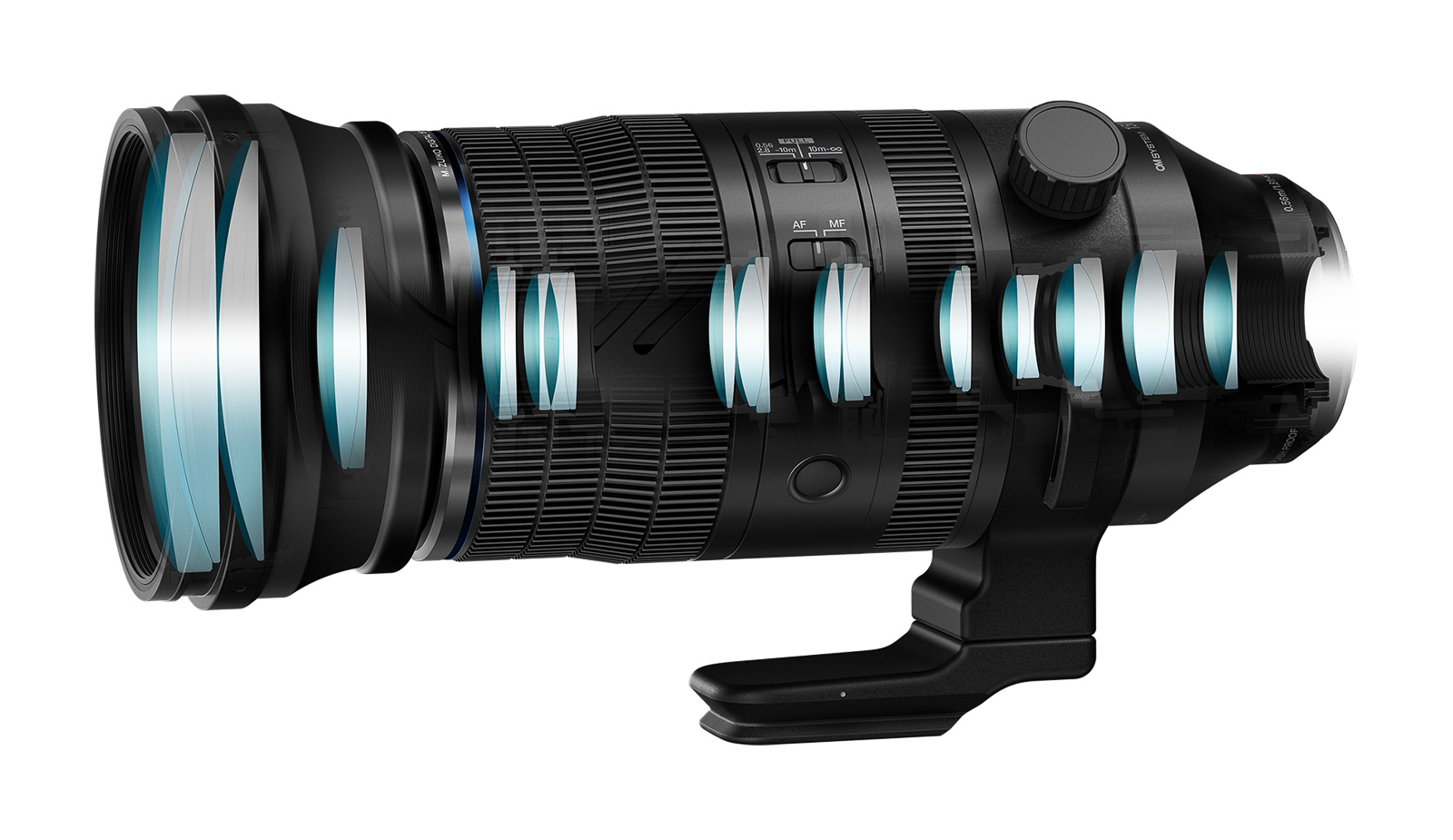
OM Systems’s official specifications list 25 elements in 15 groups, with 4 Super ED lenses, 2 ED lenses, 6 HR lenses and one 1 HD lens. The Sigma is listed as having 25 elements in 15 groups, with 4 FLD and 2 SLD elements. This, of course, could simply be emphasis, on Sigma’s part, of its use of FLD and SLD low dispersion glass. These could, respectively, be Super ED and ED (extra low dispersion) in OM System parlance.
Technical reviews of the Sigma 150-600 sometimes indicate that sharpness towards the corners of the frame isn’t as good as at the centre. Because Micro Four Thirds is a ‘crop’ sensor, we must hope that if there is any corner softness, it lies outside the confines of a Micro Four Thirds frame.
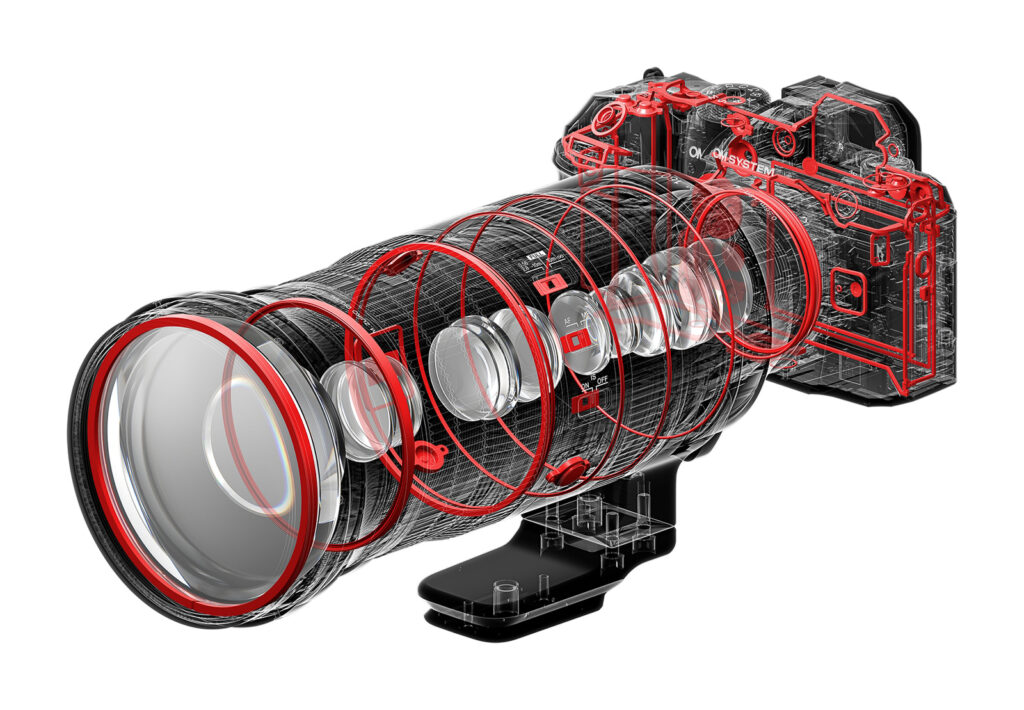
Sigma says its lens features a “highly effective dust and splash resistant structure with special sealing at the mount connection, manual focus ring, zoom ring, and cover connection.” We can only guess, but OM System appear suggest a more determined approach to environmental sealing, and Sigma doesn’t give any industry standard rating for effectiveness, while OM System quote IPX1.
Most significantly of all, OM System decided to endow the 150-600 with full Sync IS, which makes the in body sensor image stabilisation (IBIS) work optimally, over 5 axes, in tandem with the optical image stabilisation built into the lens. Sync IS is featured in high-end m.Zuiko lenses, like the 300mm f/4 Pro and the 150-400mm f/4.5 Pro, but the 100-400mm f/5 does not.
The proof will be in the pudding, as they say. I’m told that the 150-600 is very sharp, right up to 600mm. Sigma’s 150-600 covers the same full frame field of view zoom range as OM System’s more affordable, compact and lightweight 75-300mm f/4.8-6.7 on Micro Four Thirds. A 150-600 on Micro Four Thirds is aimed at photographers who need exceptional long-distance reach. You can photograph birds in flight, hand held, with a 300mm, on Micro Four Thirds. Perhaps the 150-600 will be resting on its Arca-Swiss foot in a hide more often than not? And we haven’t even explored the possibilities of using the MC-14 and MC-20 converters.
Certainly, the inevitable reviews, especially in the field, will be highly interesting. Meanwhile, a little nugget for you – a Canon RF 1200mm f/8 ultra telephoto is twice as long as the 150-600, over 50% heavier, is 1.3 stops less bright and doesn’t even offer you the convenience of zooming out. It also costs nearly £20,000.
To see the latest discussions on today’s news, check out our famously informative and friendly discussion forum.
On the next page we have OM System’s specifications for the 150-600.
[nextpage title=”Specifications”]
M.ZUIKO DIGITAL ED 150-600mm F5.0-6.3 IS
Focal Length 150-600mm
35mm Equivalent Focal Length 300-1200mm
Lens Construction 25 elements in 15 groups
(4 Super ED lenses, 2 ED lenses, 6 HR lenses, 1 HD lens)
Splashproof Type / Dustproof “IEC Standard publication 60529 IPX1
(applies when the lens is used with OMDS splashproof Body) / Dustproof construction”
Angle of View 8.2 degrees – 2.1 degrees
Closest Focusing Distance Wide:0.56m / Tele:2.8m
Maximum Image Magnification Wide:0.35x / Tele:0.20x
35mm Equivalent Max. Image Magnification Wide:0.70x / Tele:0.39x
Minimum Field Size Wide:49.4×37.1mm / Tele:88.6×66.6mm
Number of Blades 9 (circular aperture diaphragm)
Maximum Aperture F5.0(f:150mm) – F6.3(f:600mm)
Minimum Aperture F22
Lens IS Mechanism VCM
IS Performance 5-axis sync IS 7 steps*
* According to CIPA standards. When attached to OM-1, with yaw and pitch applied to camera, half-press IS set to Off, and focal length set to 150mm.
5-axis sync IS 6 steps*
* According to CIPA standards. When attached to OM-1, with yaw and pitch applied to camera, half-press IS set to Off, and focal length set to 600mm.
“Lens IS 6 steps*
*Focal length : 150mm”
“Lens IS 5 steps*
*Focal length : 600mm”
Filter Size Diameter 95 mm
Dimensions ⌀109.4×264.4mm
Weight 2,065g (without Lens Cap, Lens Rear Cap and Lens Hood)
Box Contents LH-103 Lens Hood, LC-95 Lens Cap, LR-2 Lens Rear Cap, Lens Strap, Instruction Manual, Warranty Card
Specifications and design are subject to change without notice.
Separately Availbale Accessories Zuiko PRF-ZD95 PRO Protection Filter, LH-103 Lens Hood, LC-95 Lens Cap, LR-2 Lens Rear Cap, LSC-1642 Lens Case, CSS-P121 Lens Strap
with MC-14
Focal Length 210-840mm
35mm Equivalent Focal Length 420-1,680mm
Angle of View 5.9 degrees – 1.5 degrees
Closest Focusing Distance Approx. 0.58m(f:210mm)-2.8m(f:840mm)
Maximum Image Magnification Wide:0.50x/ Tele:0.28x
35mm Equivalent Max. Image Magnification Wide:0.99x/ Tele:0.55x
Minimum Field Size Wide:34.9×26.2mm / Tele:62.7×47.1mm
Maximum Aperture F7.1(f:210mm)-F9.0(f:840mm)
Minimum Aperture F22
with MC-20
Focal Length 300-1,200mm
35mm Equivalent Focal Length 600-2,400mm
Angle of View 4.1 degrees – 1.0 degrees
Closest Focusing Distance Approx. 0.59m(f:300mm)-2.8m(f:1200mm)
Maximum Image Magnification Wide:0.70x/ Tele:0.39x
35mm Equivalent Max. Image Magnification Wide:1.4x/ Tele:0.78x
Minimum Field Size Wide:24.7×18.5mm / Tele:44.3×33.3mm
Maximum Aperture F10.0(f:300mm)-F13(f:1200mm)
Minimum Aperture F22
LC-95 Lens Cap
Dimensions Diameter 98.5 x 9.8 mm
Weight 24.3 g
LH-103 Lens Hood
Dimensions Diameter 120.0 x 84.6 mm
Weight 151.4 g
[nextpage title=”OM System 150-600 product gallery”]
Feast your eyes on our gallery of official product imagery from OM System: