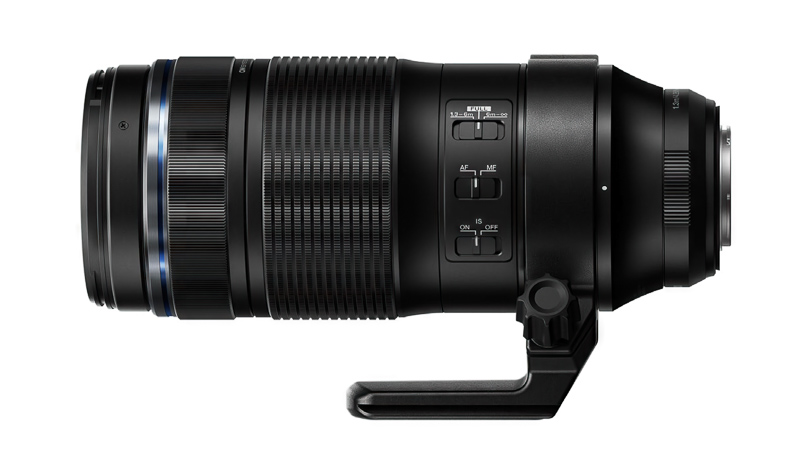
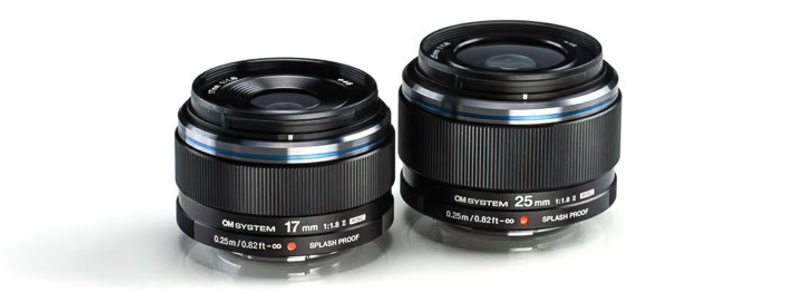
OM System has made some welcome updates to three of its existing lenses; the 17mm f/1.8, 25mm f/1.8, and 100-400mm f/5-6.3, and all now sport the ‘II’ suffix. For anyone reading this who is unfamiliar with the comparable focal lengths in ‘full frame’ terms, these are 34mm, 50mm, and 200-800mm, respectively.
Although not 100% confirmed, we don’t think there are any changes to the optical designs of these lenses. They all appear to share the same optical element construction configurations with their predecessors.
Neither the original 17mm, nor 25mm, were dust and splash-proofed. They have, now, both acquired environmental sealing and an IPX rating.
The 100-400 did have environmental sealing but Olympus did not state what the IP rating was, but it is now confirmed to be IPX, too.
Subtle external differences are discernible with the new 17mm and 25mm lenses. The focusing rings look wider, for example. We assume the 17mm retains its sliding focus ring clutch arrangement, for instant manual focus access, though in the pictures we’ve seen so far, it’s not clear. The original 25mm lens was always a budget design and didn’t feature a focus clutch ring; it would be nice if it acquired this feature.
There is little external difference to the 100-400mm f/5-6.3 Mark II compared to it predecessor. However, this new edition of the lens now supports 5-axis Sync IS, which enables the moving sensor image stabilisation in the camera body (selected models) to work in tandem with the optical image stabilisation of the lens. This improves maximum stabilisation headroom from 3 stops to 7 stops.
There is a lot of nonsense flying around about OM System’s new ULTRA-telephoto zoom lens. And there are also some honest concerns. Indeed, my own feelings about the 150-600 have changed the more I have thought about this lens. So let’s delve in.
Perusing comments on our very own discussion forum, many of which reflect influencers and so-called experts on YouTube and other social media platforms, it’s clear to me that the new OM System m.Zuiko ED 150-600mm f.5-6.3, launched last Tuesday, is frequently misunderstood.
So the lens is based on a Sigma design
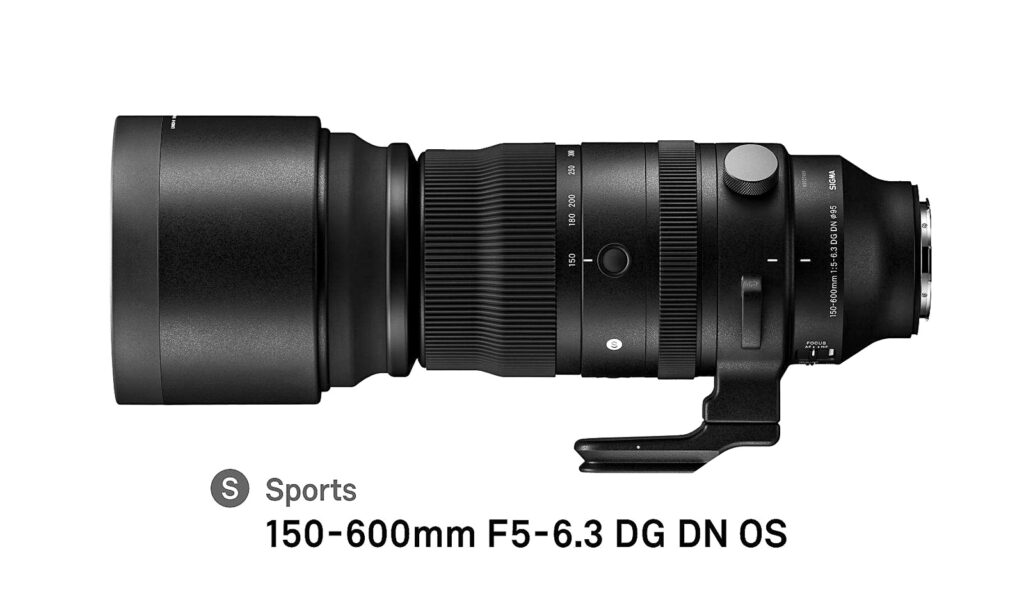
OM System won’t say anything about the provenance of the lens, but why should they? It’s not the first time a Micro Four Thirds lens with an Olympus or Panasonic Lumix brand has been designed and even made by Sigma. OEM manufacturing is a big part of Sigma’s business. The OM System 150-600 is very clearly a re-engineered Sigma 150-600mm f/5-6.3 DG DN OS | Sports optic. Its appearance, specifications, and dimensions, are all convincing evidence.
But this isn’t simple badge-engineering
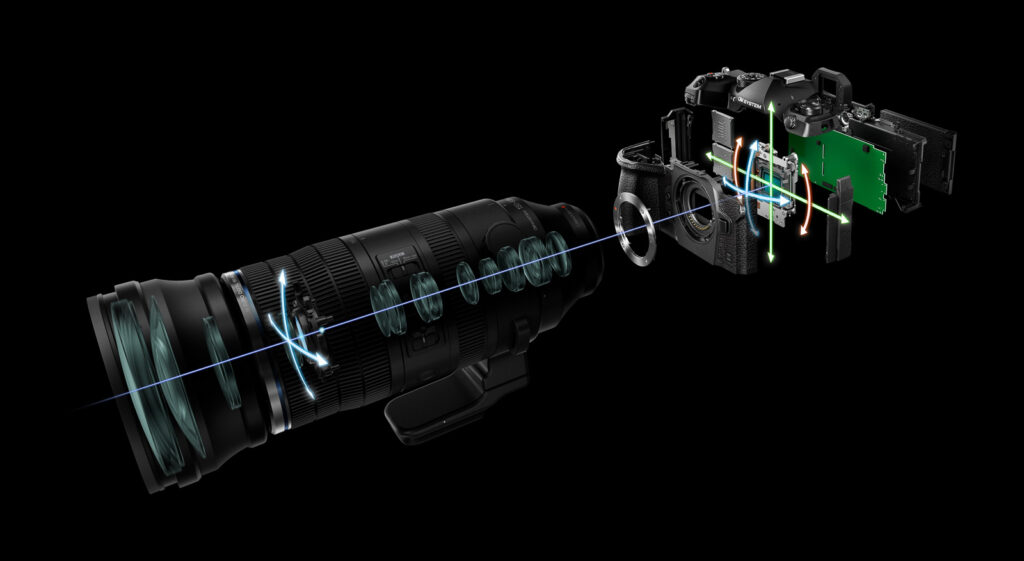
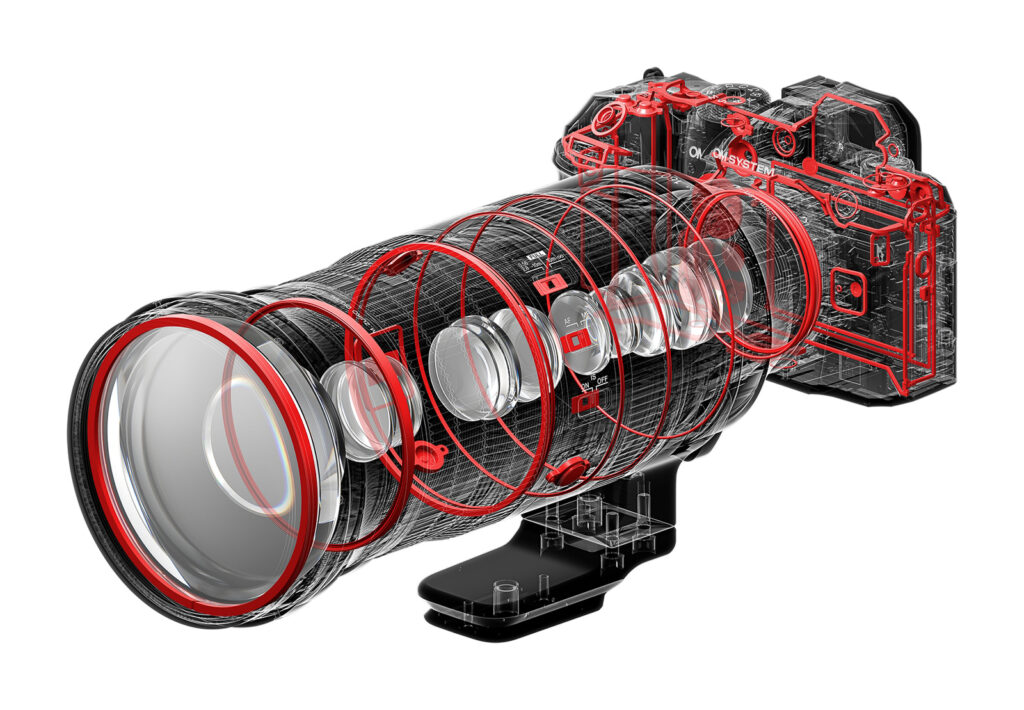
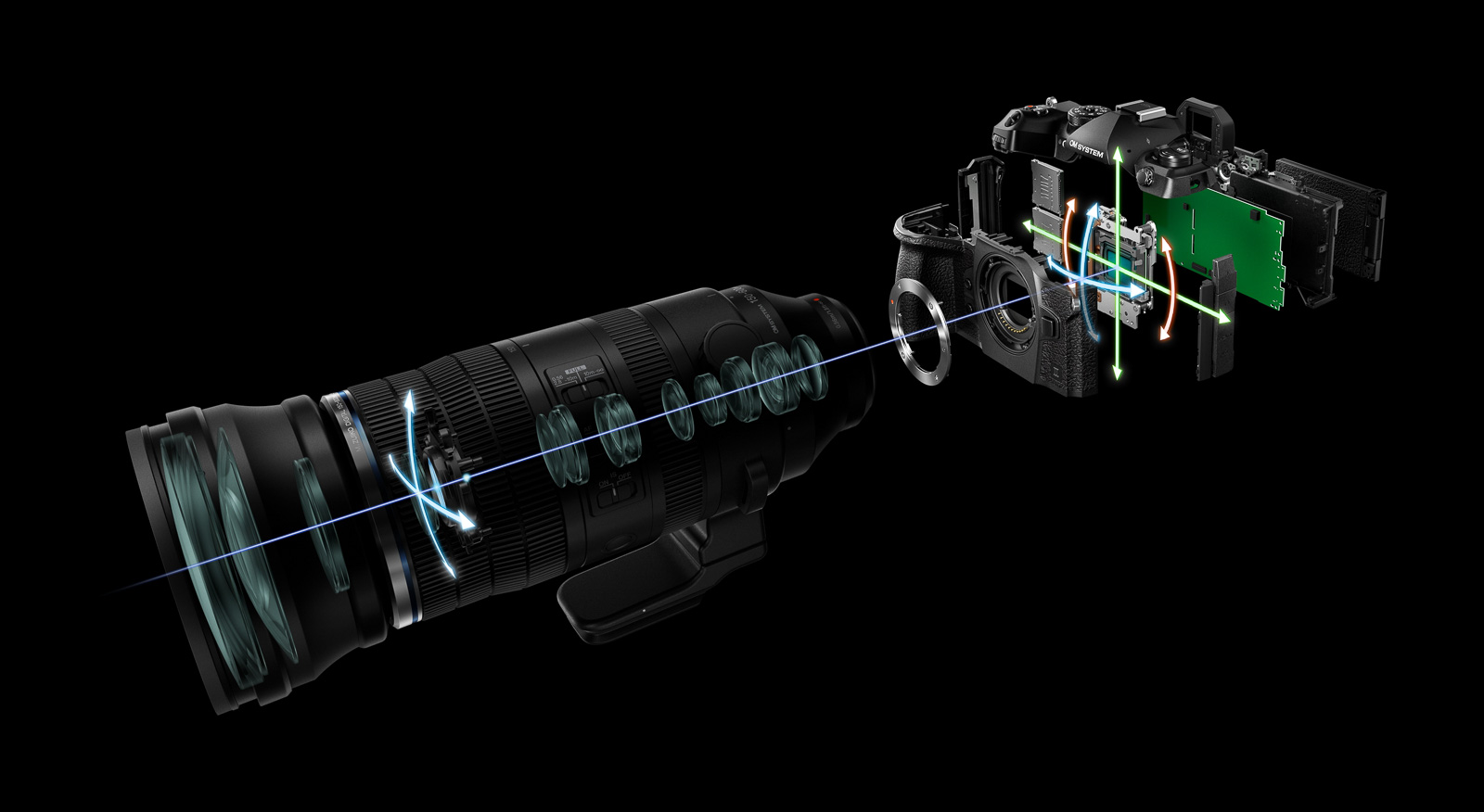
The lens will have modified electronics and firmware to enable it to communicate with the Micro Four Thirds protocols for fly-by-wire autofocus and image stabilisation controls. Stabilisation, in particular, is an OM System industry-leading forté and the 150-600 gets the full-fat Sync IS treatment. This is the magic that enables the camera body’s IBIS (In Body Image Stabilisation) to synchronize in real-time with the lens’ own OIS (Optical Image Stabilisation) to maximise stabilisation. The system works across 5 axes and delivers up to 7 stops of added stability, as define by CIPA standards, at 150mm, and 6 stops at 600mm. With OIS on its own, you can get up to 5 stops, which is one stop better than Sigma’s own version of the lens.
There is no way of knowing for certain, without OM System and/or Sigma briefing us, but there might even be some optical modifications. The image circle for Four Thirds sensors is smaller and, perhaps, some fine-tuning has been done to enable the existing m.Zuiko MC-14 1.4x, and MC-20 2.0x teleconverters, to be optimally matched, but that’s just a guess.
This is not a re-warmed DSLR design
Sigma currently sells three 150-600mm f/5-6.3 lenses and they are all quite different. Two, were introduced ten years ago (2014) and were designed specifically for DSLR cameras. In August 2021 Sigma’s third 150-600 was launched; the brand new 150-600mm F5-6.3 DG DN OS, designed specifically for mirrorless cameras. Optical design, the engineering of the autofocus hardware, etc., were new. This is what the OM System 150-600 was based on.
But isn’t the OM System 150-600, therefore, an adapted full frame lens?
The simple answer is, yes. But that’s missing the point.
Just because the lens was originally designed with full frame (and APS-C) sensor cameras in mind, doesn’t mean it is unnecessarily large and heavy compared to a lens designed, from the ground up, for Micro Four Thirds. And neither does it mean it won’t perform well on a Micro Four Thirds body. Most importantly, the lens is a thoroughbred mirrorless design.
Anyway, are we comparing apples with apples?
Well, not really!
A 150-600mm lens fitted to a full frame camera is doing the same job as a 75-300mm lens fitted to a Micro Four Thirds camera. For the record, the OM System 75-300mm f/4.8-6.7 is – OK I exaggerate – microscopic, compared to the 150-600.
On Micro Four Thirds, the 150-600 is doing the job of a 300-1200 on full frame! This is a completely different game to using a 75-300 on MFT. And you can even boost that to 600-2400 using an MC-20 converter.
So who is OM System aiming at with the 150-600?
My initial reaction was to suppose it would only be of interest to those that REALLY needed to get substantially closer to a subject than, say, using a 400mm lens. That would be quite a limited market.
But my thoughts on this have evolved. Olympus and OM System have been triumphant with the m.Zuiko 150-400mm f/4.5 Pro, the BWL (Big White Lens). Users rave about its optical performance, Sync IS stabilisation, and supreme portability compared to lenses from rival systems. It also includes a built-in switchable 1.25x converter, also of excellent quality, so you can turn your 150-400 into a 188-500mm f/5.6 without removing the lens from the camera body.
But at £7K, the glorious 150-400 is basically a limited-edition lens affordable only to those few who can really afford it.
Until now, the only in-house alternative has been the m.Zuiko 100-400 f/5-6.3, which is affordable and a good performer, if not in the same league as the 150-400 Pro. But now we have the new 150-600. Yes, it’s twice the cost of a 100-400, but it’s almost a third of the cost of the 150-400 Pro. It’s a little brighter at matching focal lengths, too. If you need more than 400mm, you can just turn the zoom ring further – no need to stop and fit a converter to the 100-400.
The 150-600 also has a Pro lens feature, Sync IS, which the 100-400 doesn’t. But the 150-600 isn’t a Pro lens and it’s limited to 25 fps sequential shooting compared to 50fps for Pro lenses. But is that a huge drawback for most?
I automatically assumed the 150-600 would be far too heavy for hand-held photography, but it’s only 10% heavier than the 150-400 Pro. You do need to be fit, but I am sure the 150-600 can deliver, hand-held.
But what about the price?
Ah, the price. OM System has priced the 150-600 at double that the Sigma version of the 150-600 sells for. That is, undoubtedly, disappointing. I’ve argued that OM System might not be expecting to sell a big enough volume of the 150-600 to permit it to be commercially viable at a lower price. But the more I think about it, OM System could be pleasantly surprised – at the right price. I think the best we can hope for is that the lens sells better than hoped for and the price can be reduced over time.
Get the paparazzi interested!
I also have a fun suggestion for OM System – sell an OM-1 Mark II + 150-600 kit, with some teleconverters thrown in, at an attractive price, for the paparazzi. I reckon this is just what they have been waiting for!
I hope you found this article useful. As ever, I recommend you have a look at our friendly discussion forum dedicated to anyone interested in Olympus/OM System and compatible gear.
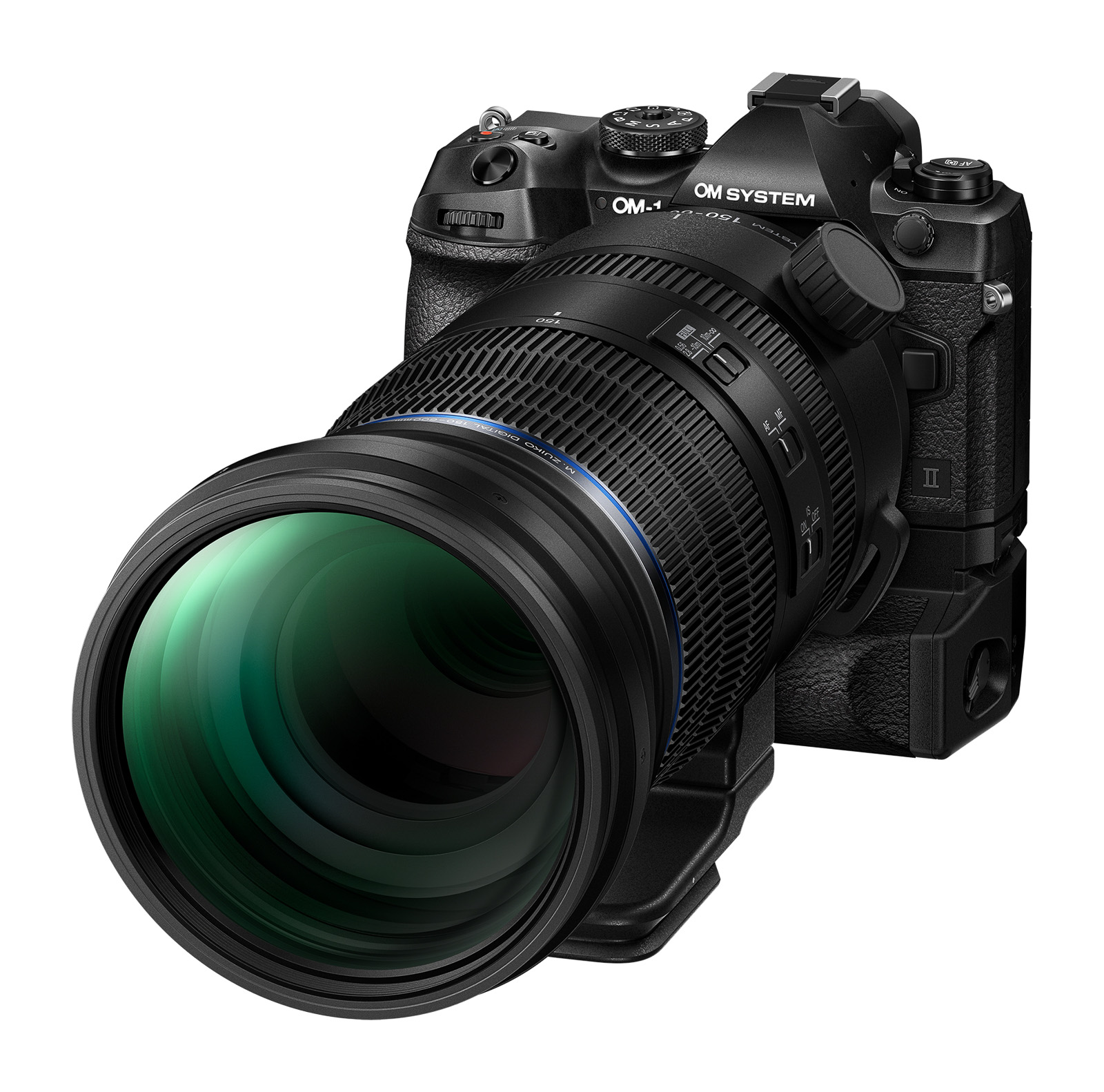
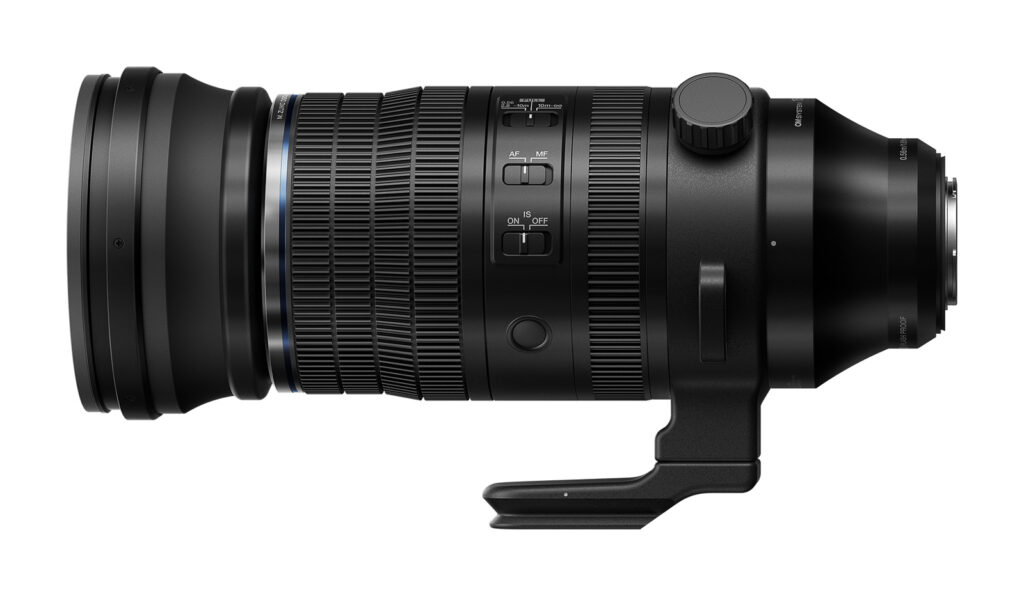
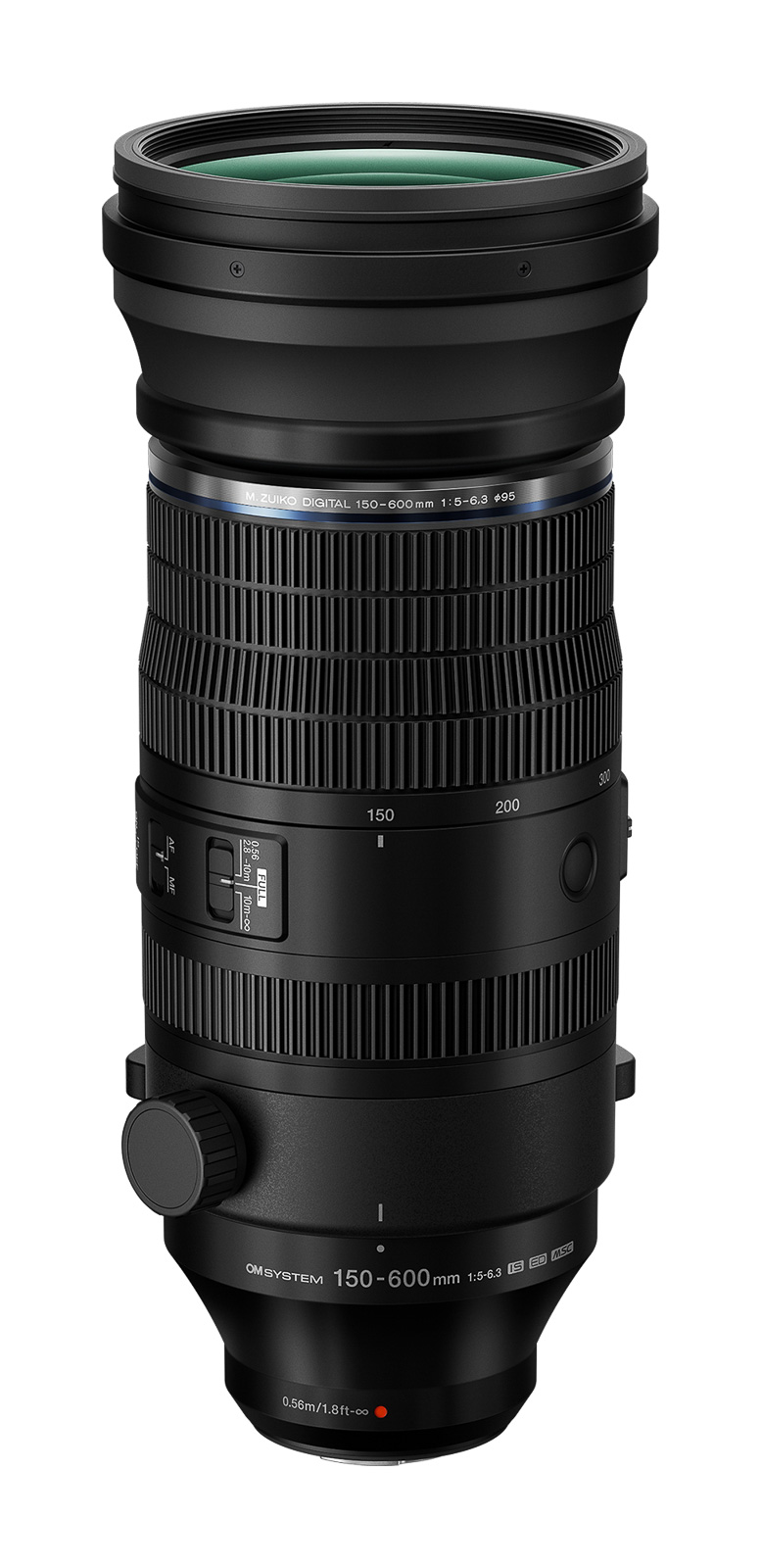
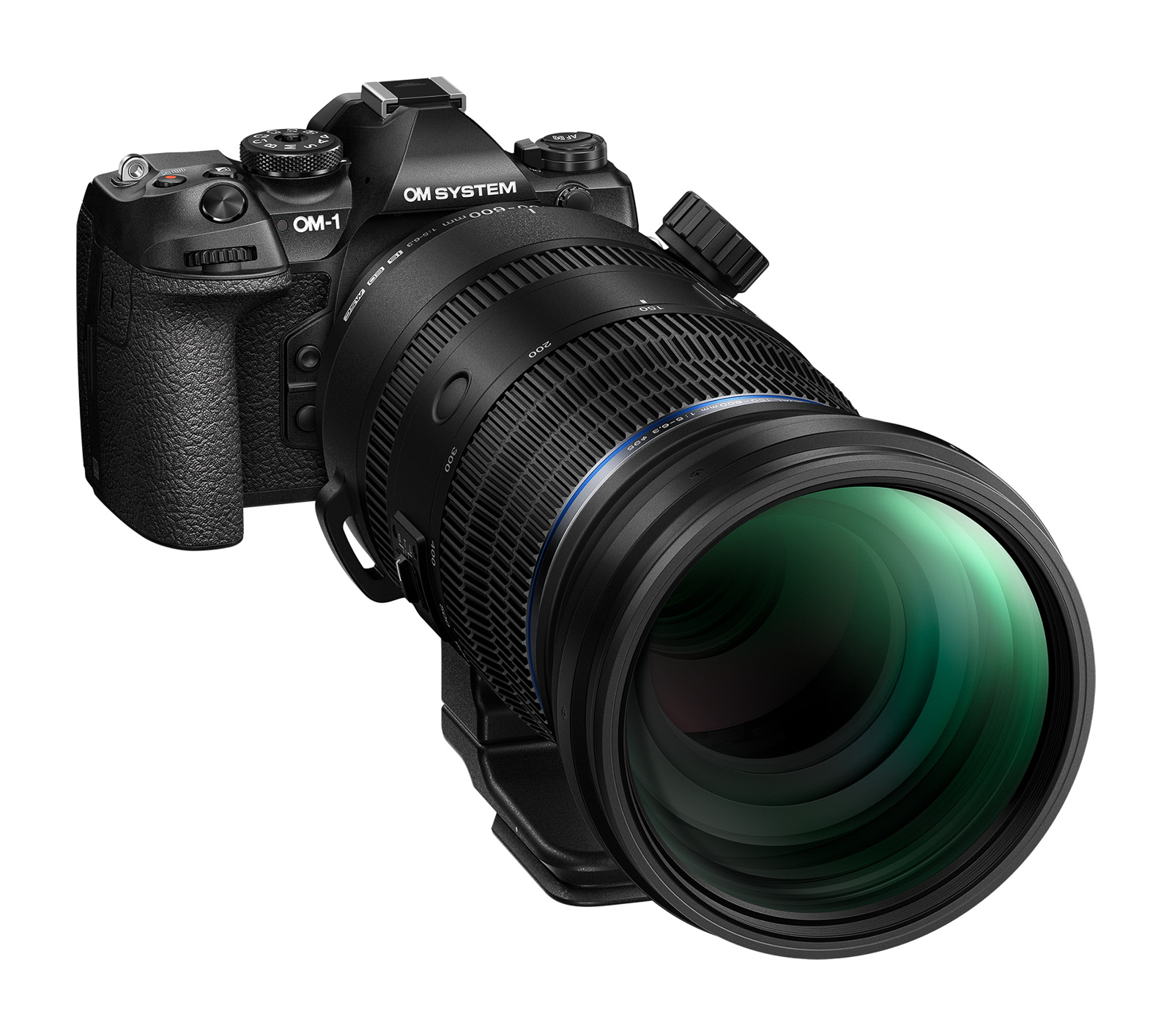
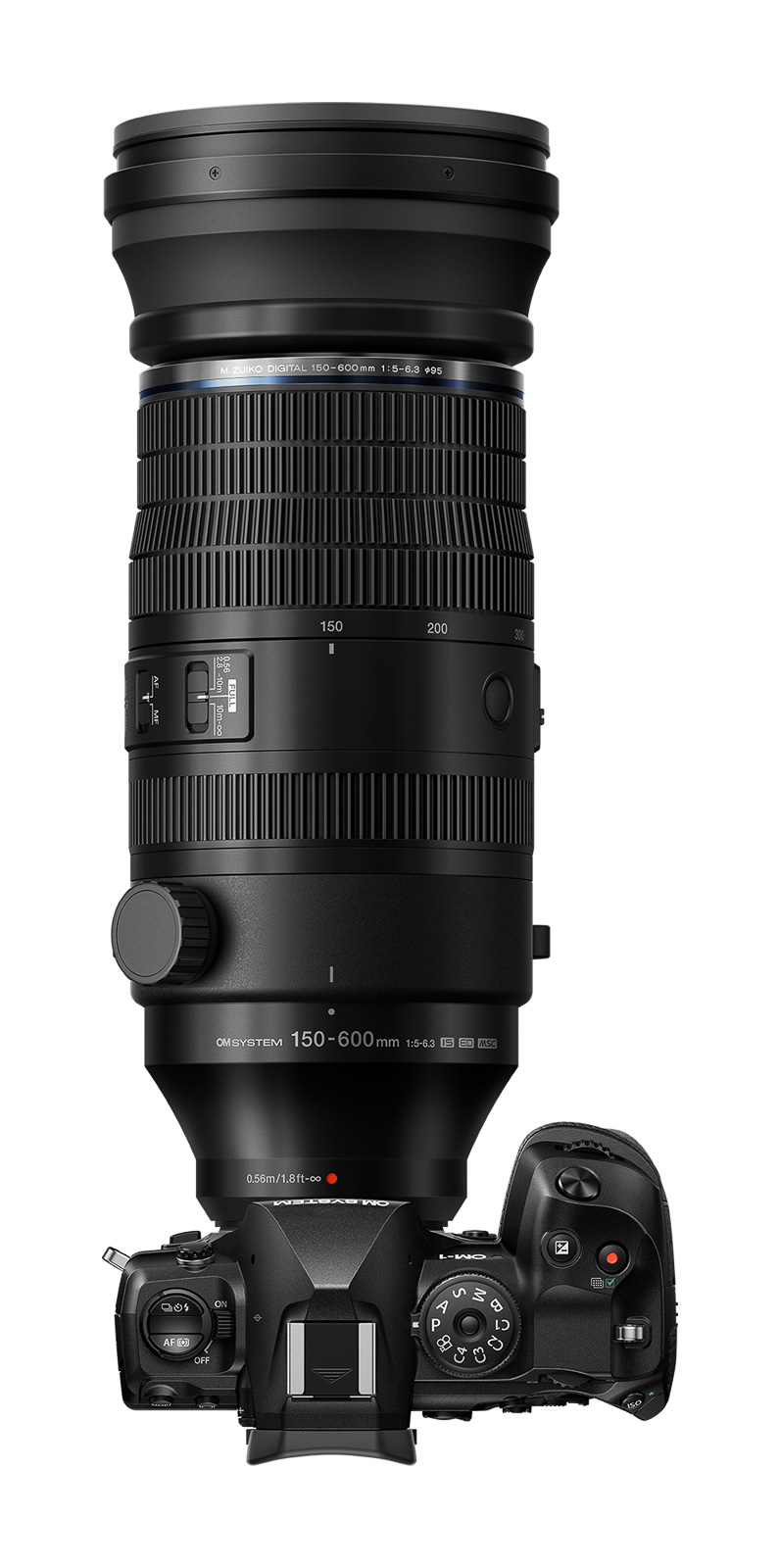
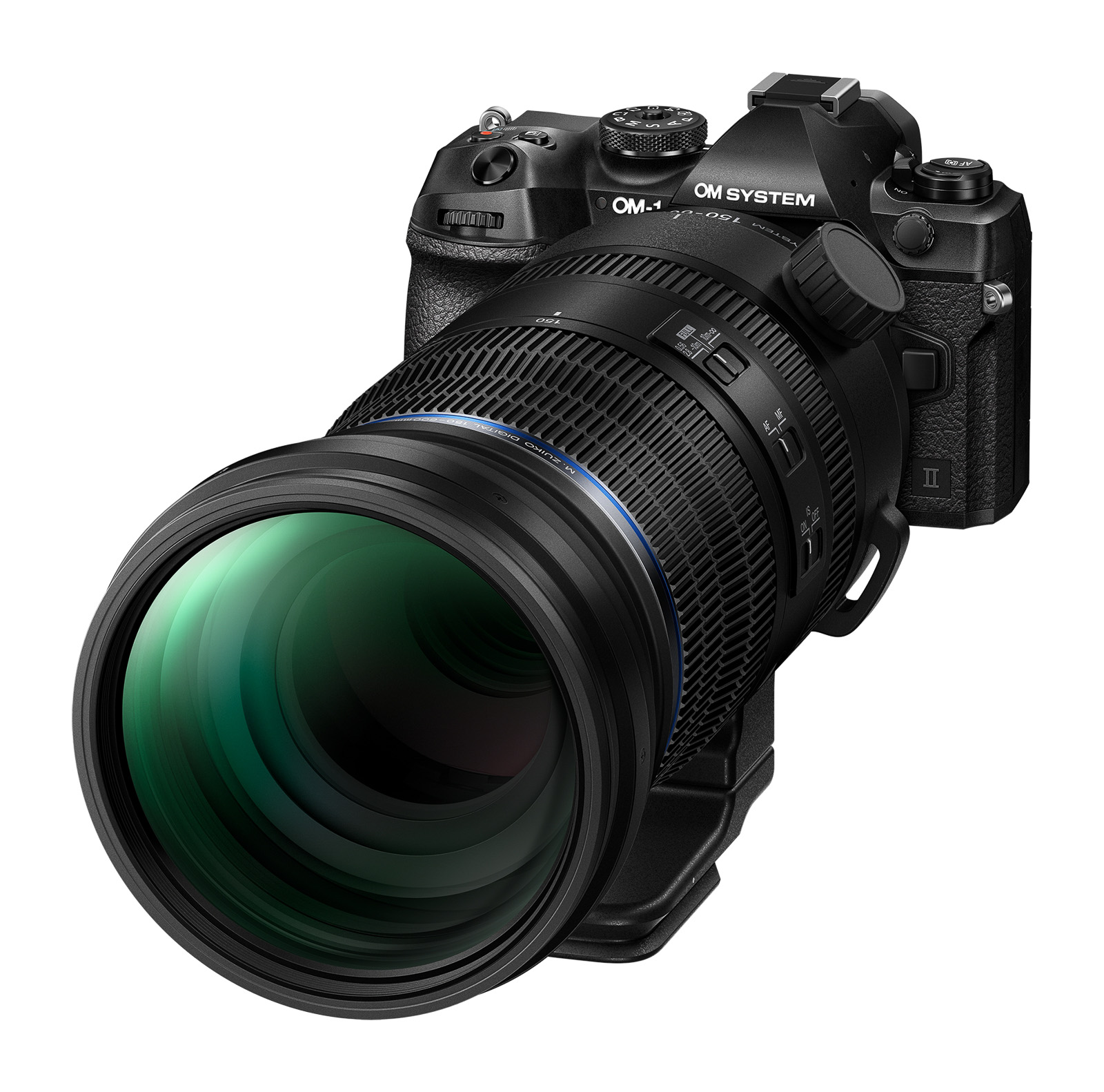
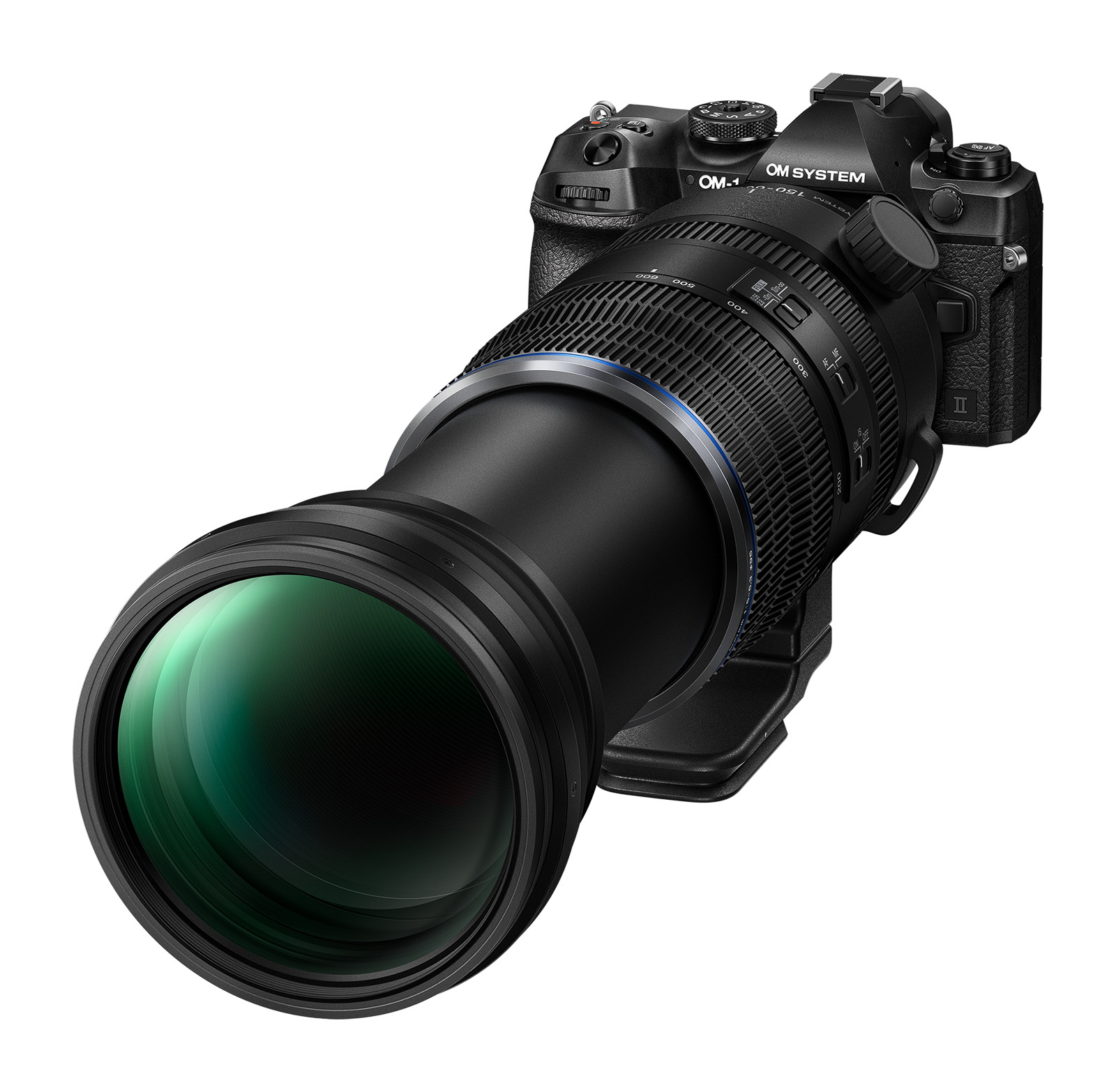
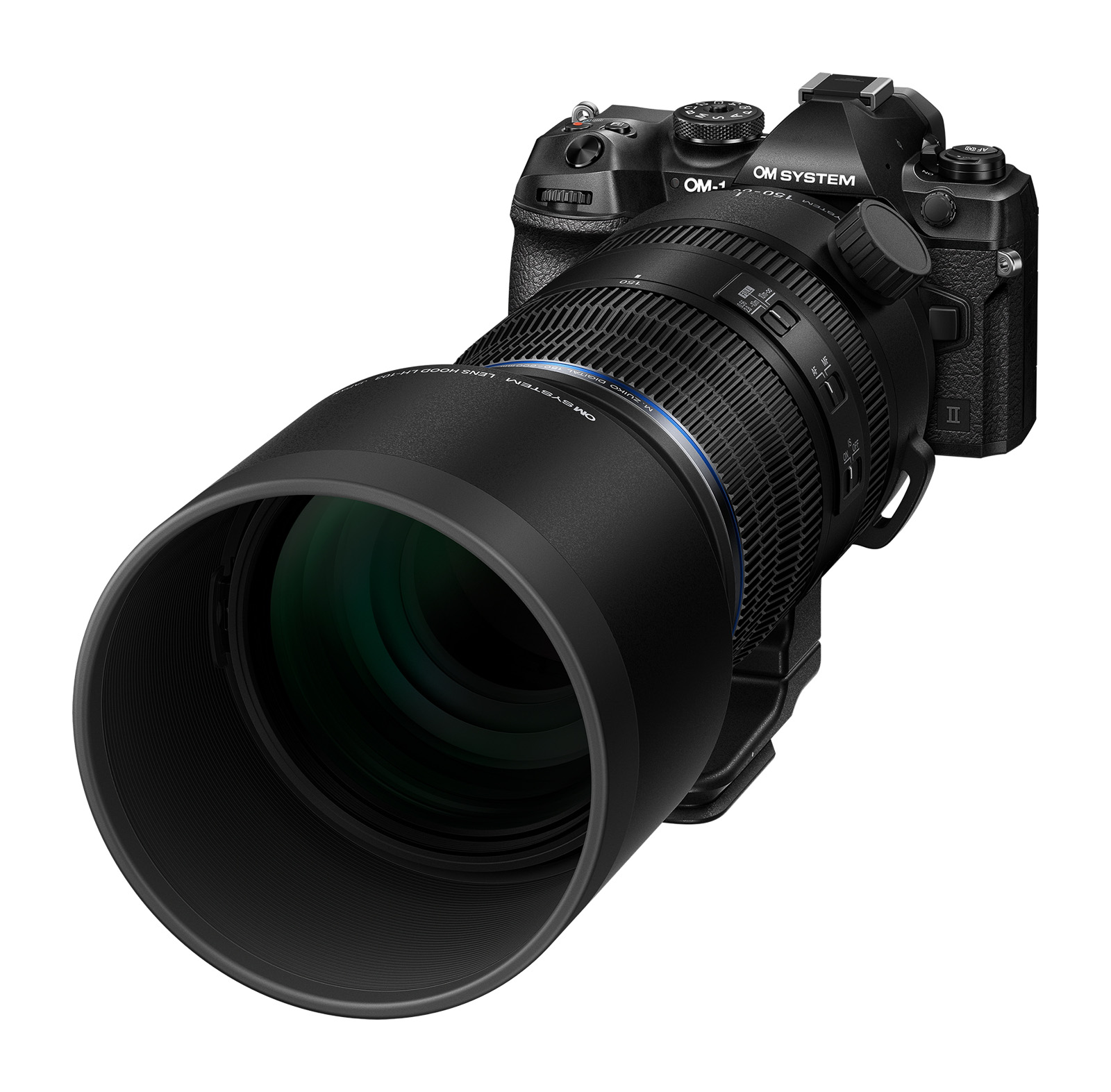
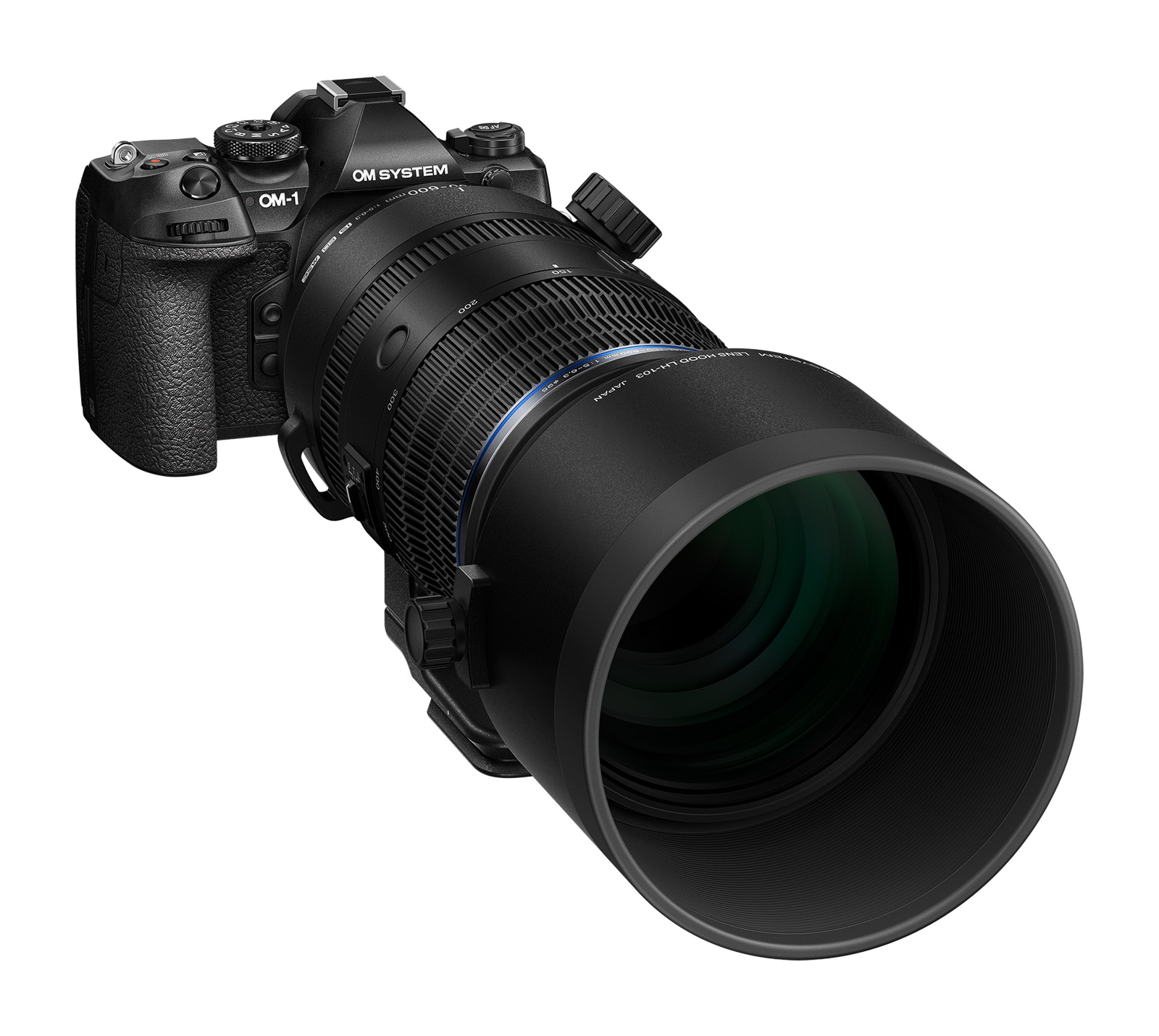
If a 400mm super telephoto (800mm in full frame terms) isn’t enough, OM System now has a solution; the new ultra tele m.Zuiko ED 150-600mm f/5-6.3 IS. That’s a 300-1200mm field of view if you are shooting full frame. And you can use MC-14 1.4x and MC-20 2x teleconverters, if you wish. With the MC-20, that gives you a 300-1200mm f/10-13 Micro Four Thirds view, or full frame 600-2400mm.
Headline features:
150-600mm f/5-6.3 ultra telephoto zoom 300-1200mm full frame field of view)
Compatible with MC-14 and MC-20 teleconverters
Features Sync IS (up to 7 steps of image stabilisation headroom extension)
Just over 2kg weight
Focuses as close as 0.56m at 150mm (0.7x semi-macro usability)
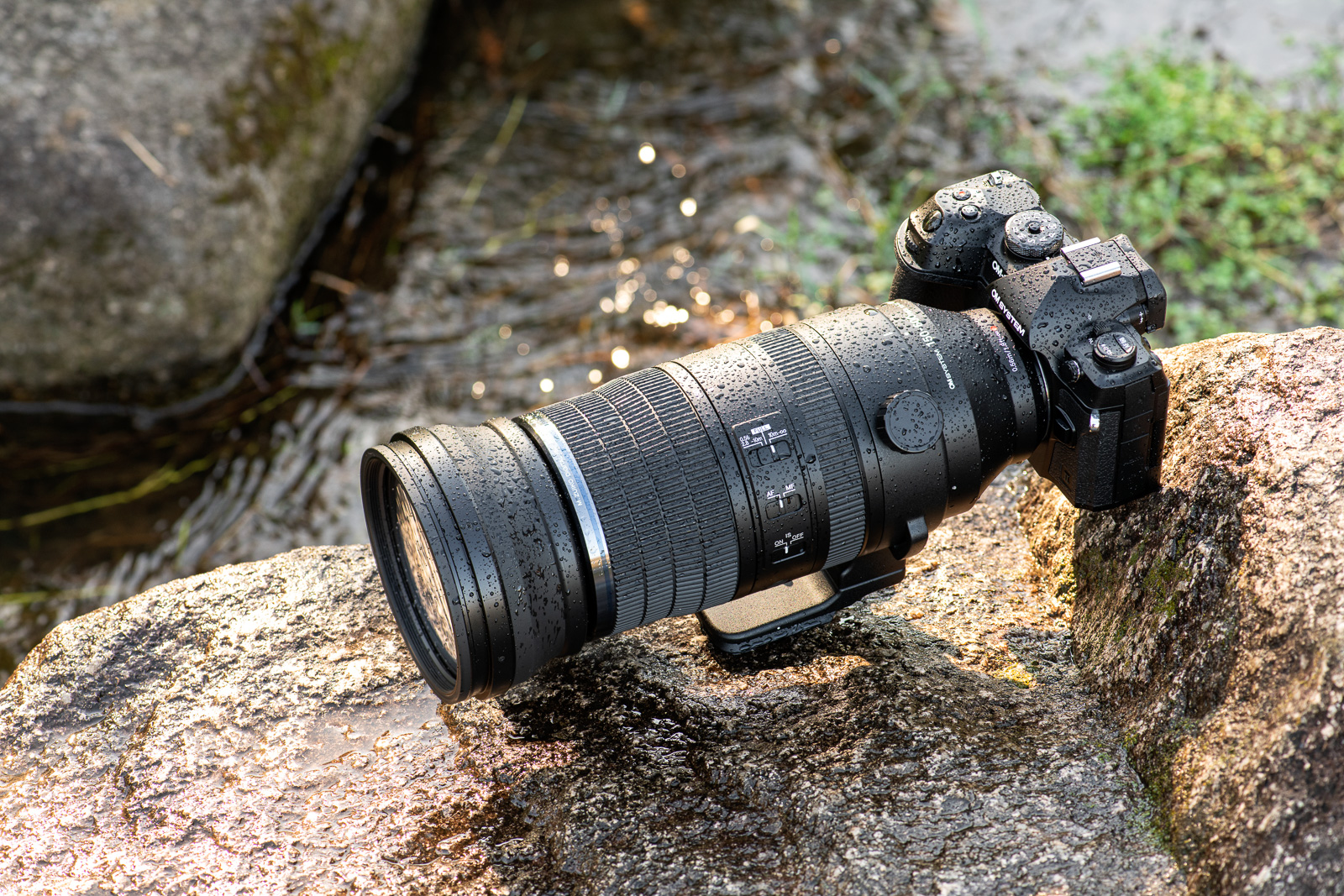
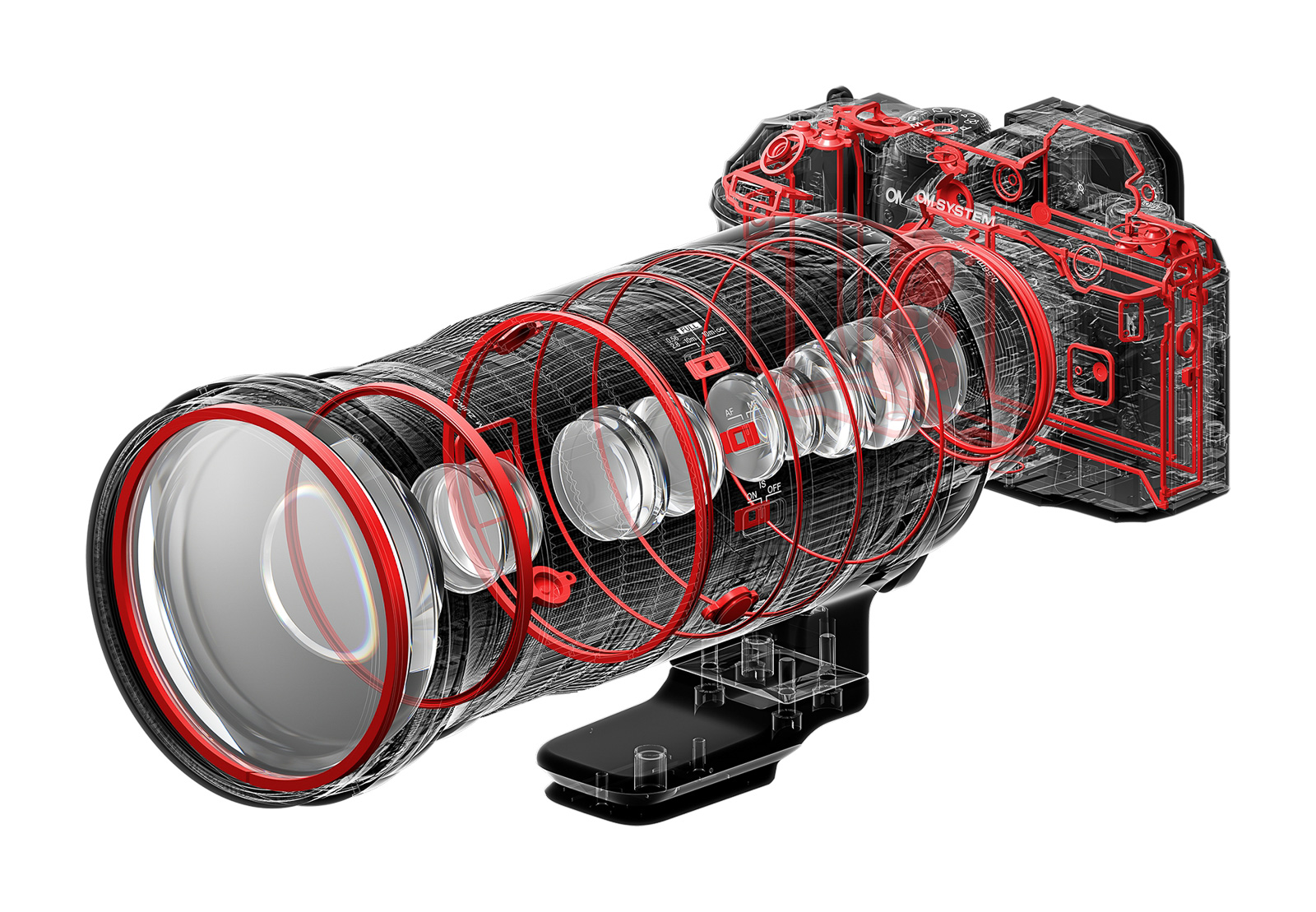
IPX1 dust and splash-proof sealing
Water droplet and dust-resistant fluorine front element coating
95mm filter thread
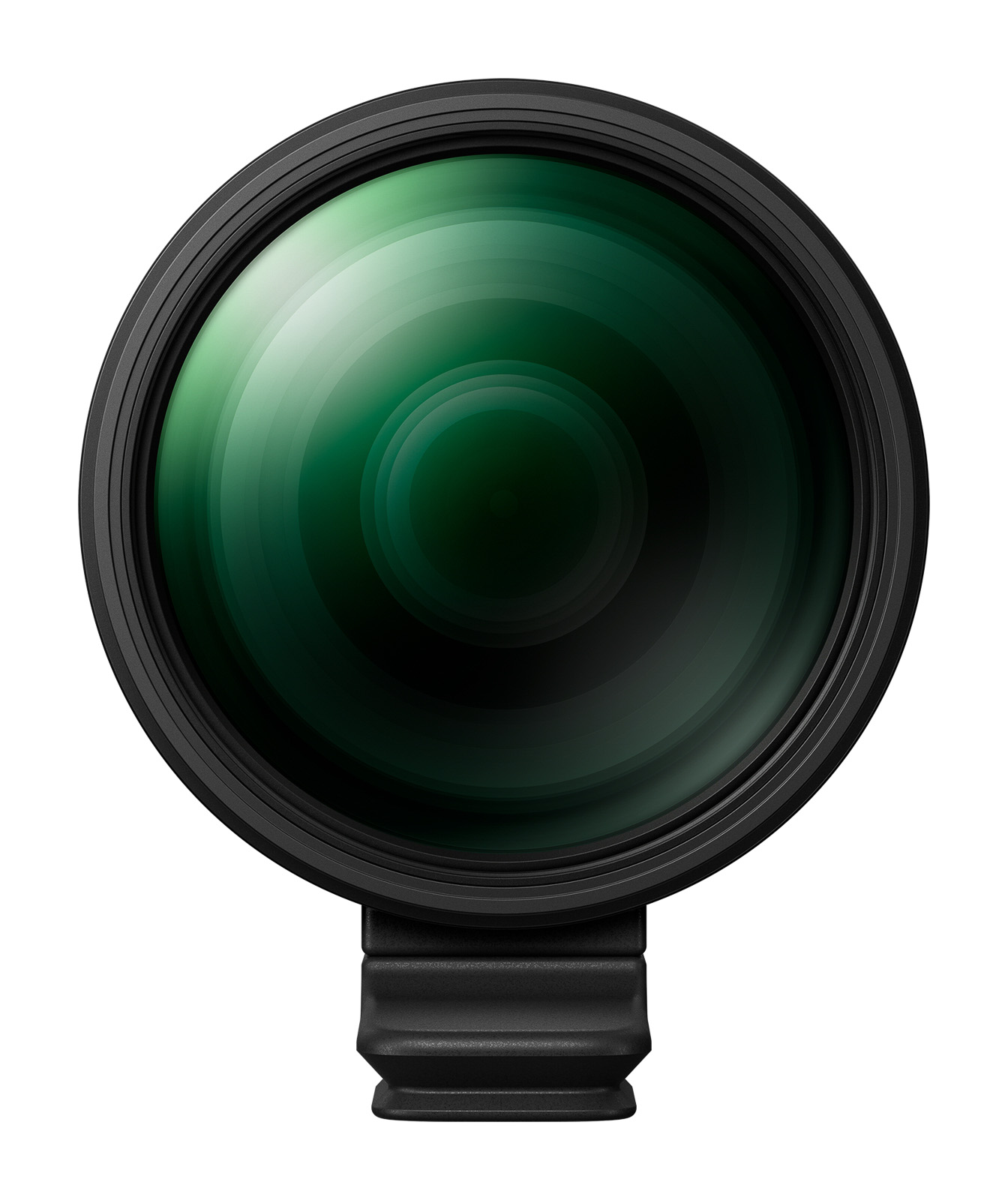
Arca-Swiss compatible tripod foot
Price: £2,399.99, €2,699.00, $2699.99 US
Availability, late February
Sync IS
While the 150-600 is not a ‘Pro’ moniker lens, it does benefit from Sync IS. This is the smart combination of camera body sensor-shift image stabilisation, and in-lens optical stabilisation.
OM System says, when used with an OM-1 body, up to 7 EV steps of stability are available at 150mm, reducing to 6 steps at 600mm.
Size and weight
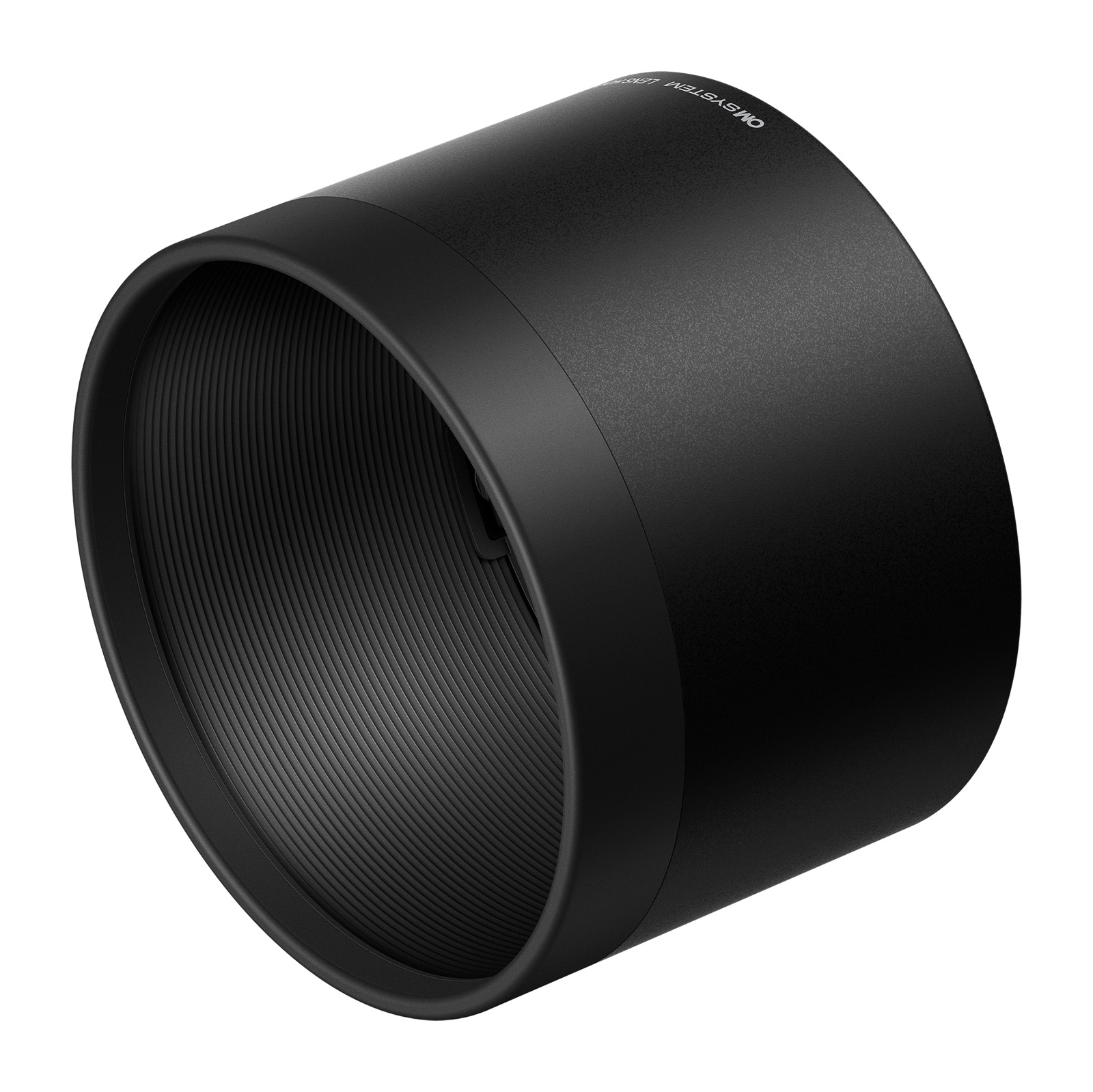
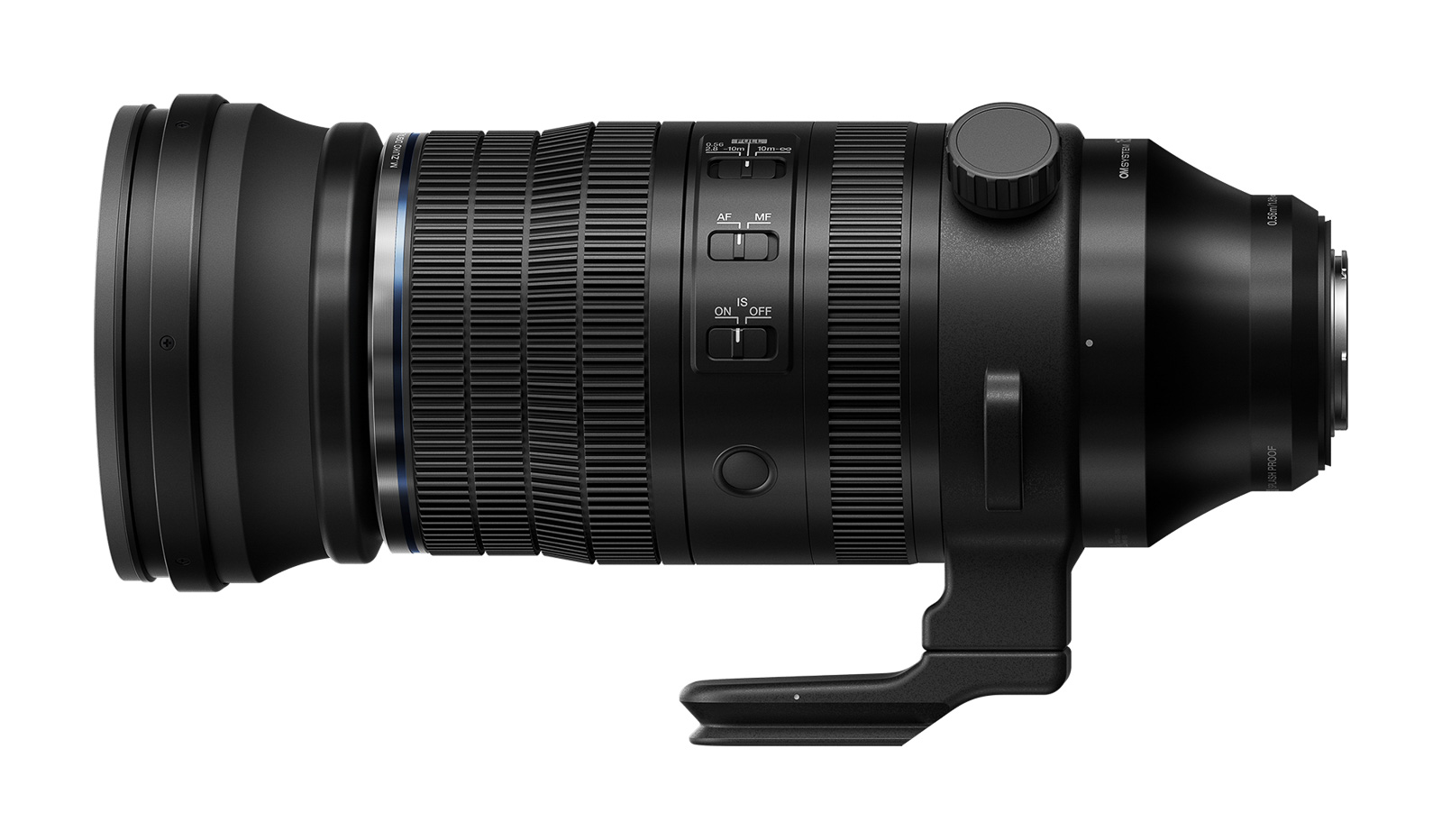
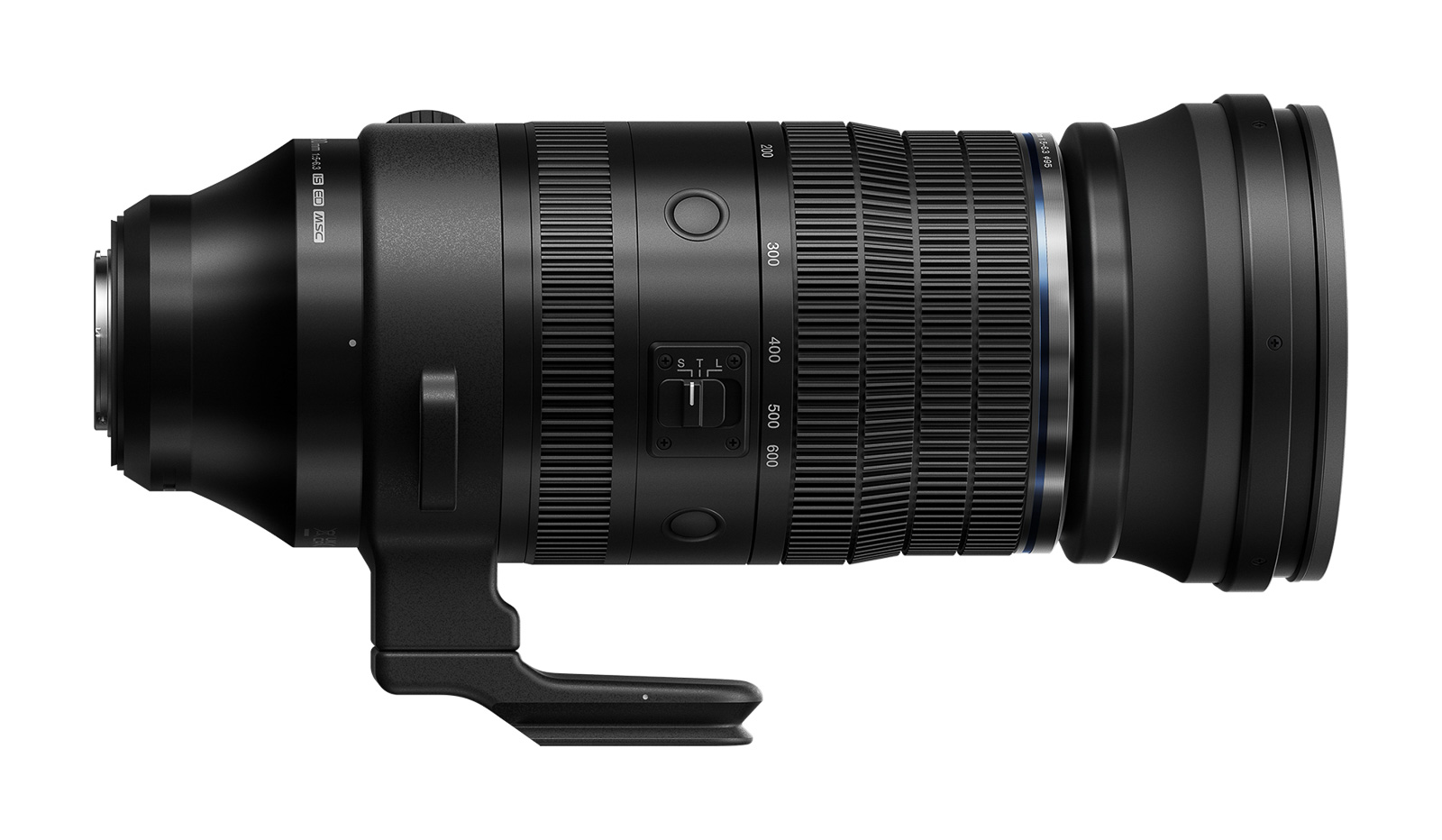
The 150-600 is, understandably, a large and heavy lens, weighing a smidgen over 2kg (without its 151g LH-103 lens hood). Focusing is internal, but the zoom mechanism increases the overall length from 26.4cm by about 10cm at the longer end of the zoom range.
On the following page, we delve into what the features and specifications could add up to.
[nextpage title=”The same, but different”]
There has been a lot of speculation about the origins of the OM System m.Zuiko ED 150-600mm f/5-6.3.
Both Tamron and Sigma have made 150-600mm DSLR zooms for years. More recently, Sigma produced a 150-600mm f/5-6.3, its DG DN OS model, designed specifically for mirrorless cameras.
Comparisons with the Sigma 150-600mm F5-6.3 DG DN OS | Sports (bottom) are inevitable
OM System won’t talk about their lens’ provenance, but you only have to look at the exterior appearance to see that it bears more than just a passing resemblance to the Sigma optic. It has very similar dimensions, weight, filter size, external controls, and the same number of lens elements designed into the same number of groups.
But there are some very important differences to consider. The Sigma was designed for full frame sensors. Some adjustment of the optics to optimise for the smaller Micro Four Thirds sensor is only to be expected.
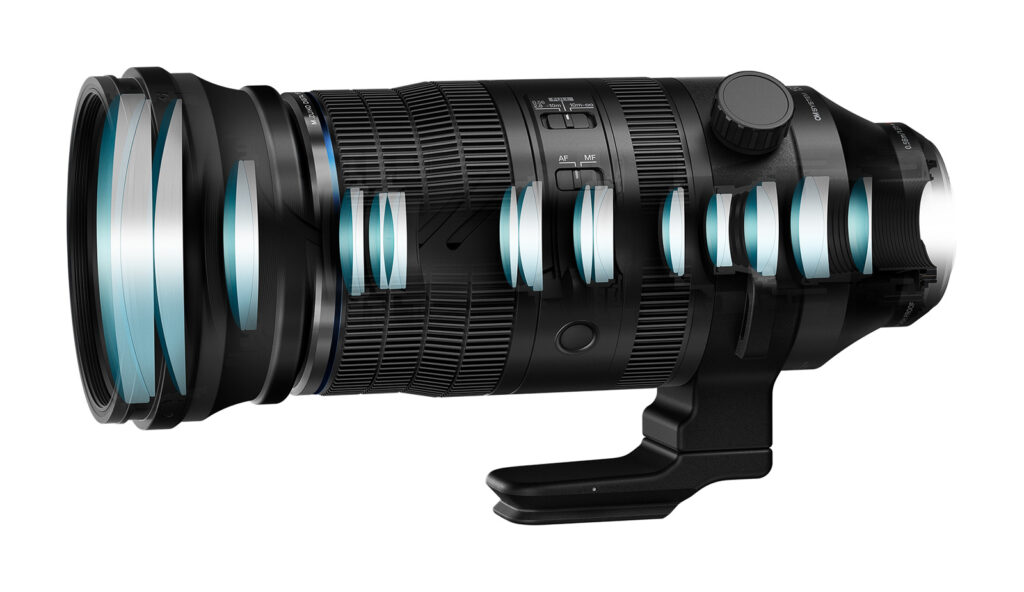
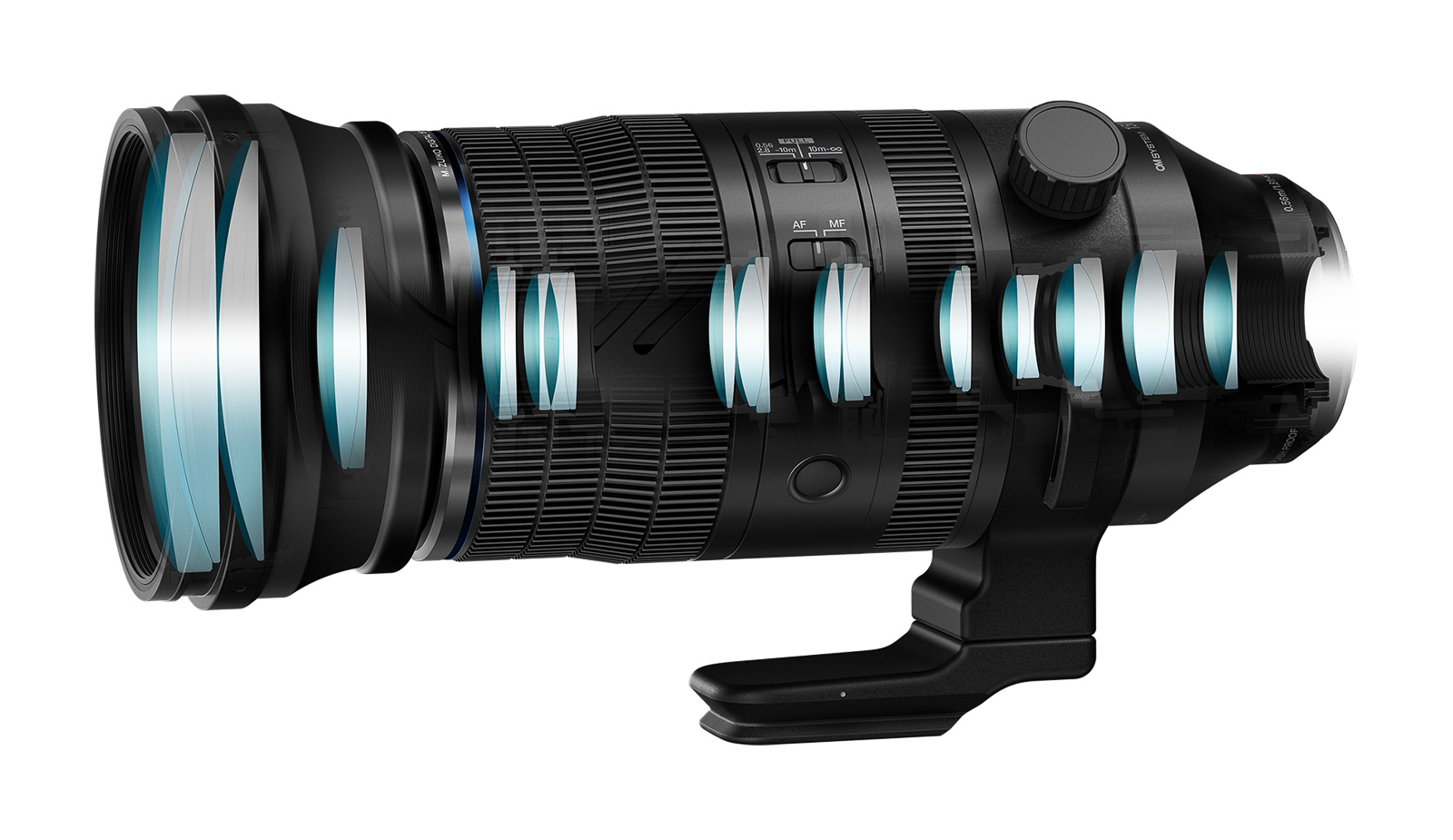
OM Systems’s official specifications list 25 elements in 15 groups, with 4 Super ED lenses, 2 ED lenses, 6 HR lenses and one 1 HD lens. The Sigma is listed as having 25 elements in 15 groups, with 4 FLD and 2 SLD elements. This, of course, could simply be emphasis, on Sigma’s part, of its use of FLD and SLD low dispersion glass. These could, respectively, be Super ED and ED (extra low dispersion) in OM System parlance.
Technical reviews of the Sigma 150-600 sometimes indicate that sharpness towards the corners of the frame isn’t as good as at the centre. Because Micro Four Thirds is a ‘crop’ sensor, we must hope that if there is any corner softness, it lies outside the confines of a Micro Four Thirds frame.
Sigma says its lens features a “highly effective dust and splash resistant structure with special sealing at the mount connection, manual focus ring, zoom ring, and cover connection.” We can only guess, but OM System appear suggest a more determined approach to environmental sealing, and Sigma doesn’t give any industry standard rating for effectiveness, while OM System quote IPX1.
Most significantly of all, OM System decided to endow the 150-600 with full Sync IS, which makes the in body sensor image stabilisation (IBIS) work optimally, over 5 axes, in tandem with the optical image stabilisation built into the lens. Sync IS is featured in high-end m.Zuiko lenses, like the 300mm f/4 Pro and the 150-400mm f/4.5 Pro, but the 100-400mm f/5 does not.
The proof will be in the pudding, as they say. I’m told that the 150-600 is very sharp, right up to 600mm. Sigma’s 150-600 covers the same full frame field of view zoom range as OM System’s more affordable, compact and lightweight 75-300mm f/4.8-6.7 on Micro Four Thirds. A 150-600 on Micro Four Thirds is aimed at photographers who need exceptional long-distance reach. You can photograph birds in flight, hand held, with a 300mm, on Micro Four Thirds. Perhaps the 150-600 will be resting on its Arca-Swiss foot in a hide more often than not? And we haven’t even explored the possibilities of using the MC-14 and MC-20 converters.
Certainly, the inevitable reviews, especially in the field, will be highly interesting. Meanwhile, a little nugget for you – a Canon RF 1200mm f/8 ultra telephoto is twice as long as the 150-600, over 50% heavier, is 1.3 stops less bright and doesn’t even offer you the convenience of zooming out. It also costs nearly £20,000.
To see the latest discussions on today’s news, check out our famously informative and friendly discussion forum.
On the next page we have OM System’s specifications for the 150-600.
[nextpage title=”Specifications”]
M.ZUIKO DIGITAL ED 150-600mm F5.0-6.3 IS
Focal Length 150-600mm
35mm Equivalent Focal Length 300-1200mm
Lens Construction 25 elements in 15 groups
(4 Super ED lenses, 2 ED lenses, 6 HR lenses, 1 HD lens)
Splashproof Type / Dustproof “IEC Standard publication 60529 IPX1
(applies when the lens is used with OMDS splashproof Body) / Dustproof construction”
Angle of View 8.2 degrees – 2.1 degrees
Closest Focusing Distance Wide:0.56m / Tele:2.8m
Maximum Image Magnification Wide:0.35x / Tele:0.20x
This website uses cookies to improve your experience. We'll assume you're ok with this, but you can opt-out if you wish. AcceptRejectRead More
Privacy & Cookies Policy
Privacy Overview
This website uses cookies to improve your experience while you navigate through the website. Out of these, the cookies that are categorized as necessary are stored on your browser as they are essential for the working of basic functionalities of the website. We also use third-party cookies that help us analyze and understand how you use this website. These cookies will be stored in your browser only with your consent. You also have the option to opt-out of these cookies. But opting out of some of these cookies may affect your browsing experience.
Necessary cookies are absolutely essential for the website to function properly. This category only includes cookies that ensures basic functionalities and security features of the website. These cookies do not store any personal information.
Any cookies that may not be particularly necessary for the website to function and is used specifically to collect user personal data via analytics, ads, other embedded contents are termed as non-necessary cookies. It is mandatory to procure user consent prior to running these cookies on your website.