Posted on

Three revised lenses from OM System

6AM GMT, 6th February 2025

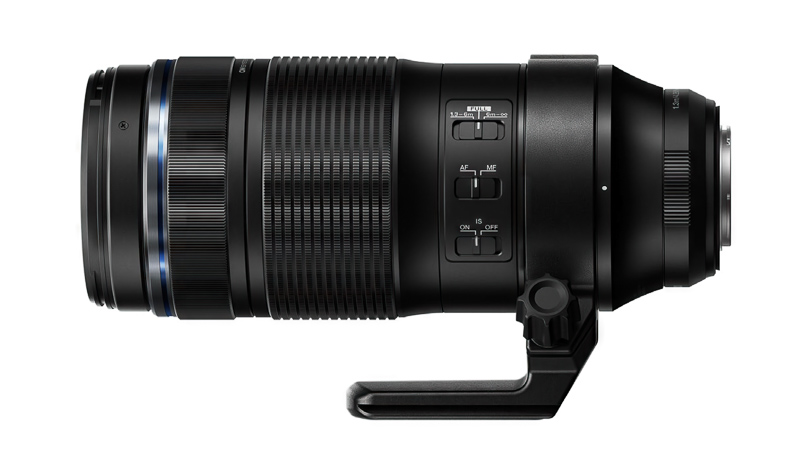
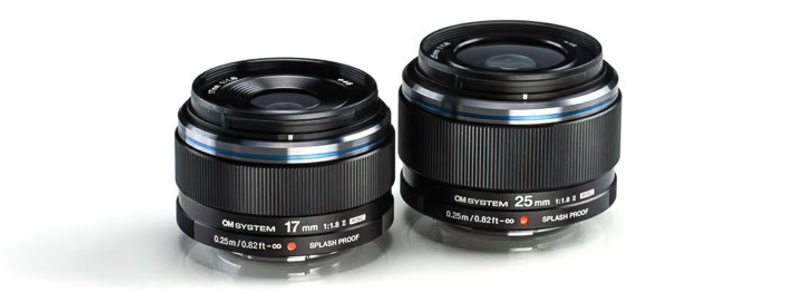
OM System has made some welcome updates to three of its existing lenses; the 17mm f/1.8, 25mm f/1.8, and 100-400mm f/5-6.3, and all now sport the ‘II’ suffix. For anyone reading this who is unfamiliar with the comparable focal lengths in ‘full frame’ terms, these are 34mm, 50mm, and 200-800mm, respectively.

Although not 100% confirmed, we don’t think there are any changes to the optical designs of these lenses. They all appear to share the same optical element construction configurations with their predecessors.

Neither the original 17mm, nor 25mm, were dust and splash-proofed. They have, now, both acquired environmental sealing and an IPX rating.

The 100-400 did have environmental sealing but Olympus did not state what the IP rating was, but it is now confirmed to be IPX, too.

Subtle external differences are discernible with the new 17mm and 25mm lenses. The focusing rings look wider, for example. We assume the 17mm retains its sliding focus ring clutch arrangement, for instant manual focus access, though in the pictures we’ve seen so far, it’s not clear. The original 25mm lens was always a budget design and didn’t feature a focus clutch ring; it would be nice if it acquired this feature.

There is little external difference to the 100-400mm f/5-6.3 Mark II compared to it predecessor. However, this new edition of the lens now supports 5-axis Sync IS, which enables the moving sensor image stabilisation in the camera body (selected models) to work in tandem with the optical image stabilisation of the lens. This improves maximum stabilisation headroom from 3 stops to 7 stops.

In the UK the new lenses are officially priced:

m.Zuiko 17mm f/1.8 II – £499

m.Zuiko 25mm f/1.8 II – £399

m.Zuiko 100-400mm f/5-6.3 II – £1299.99

Availability for all three lenses is slated to commence from 27th February.

Posted on

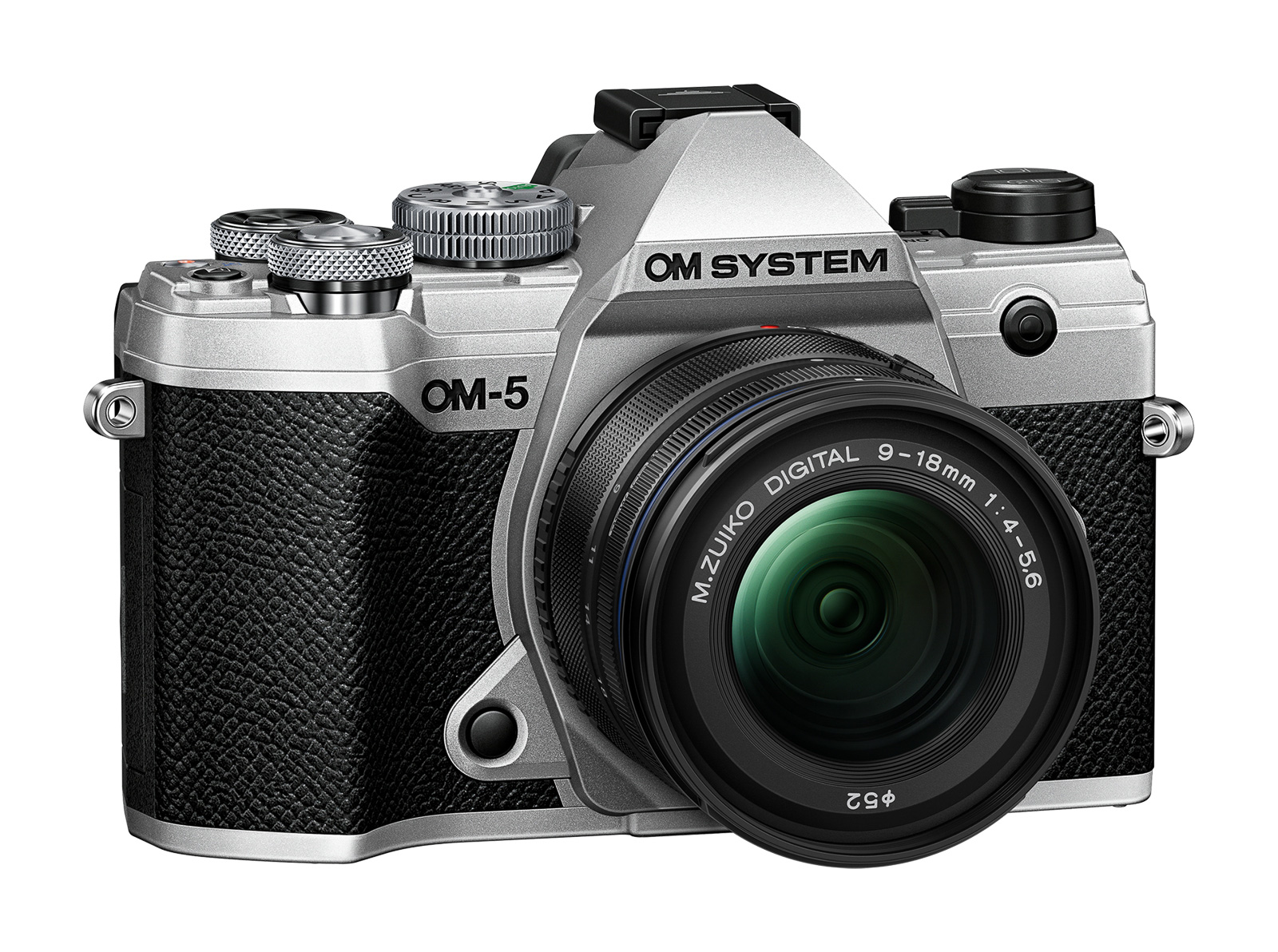
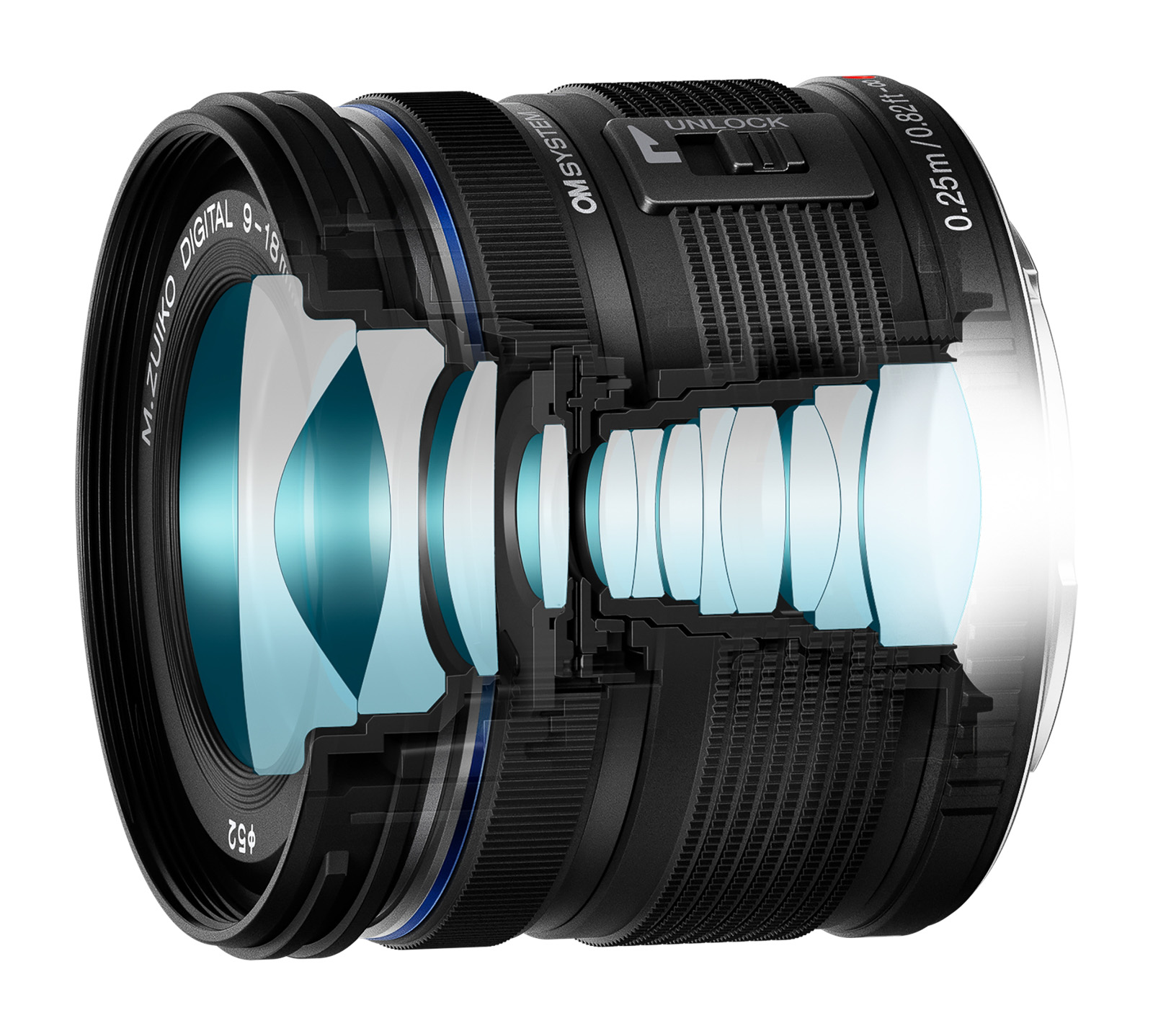
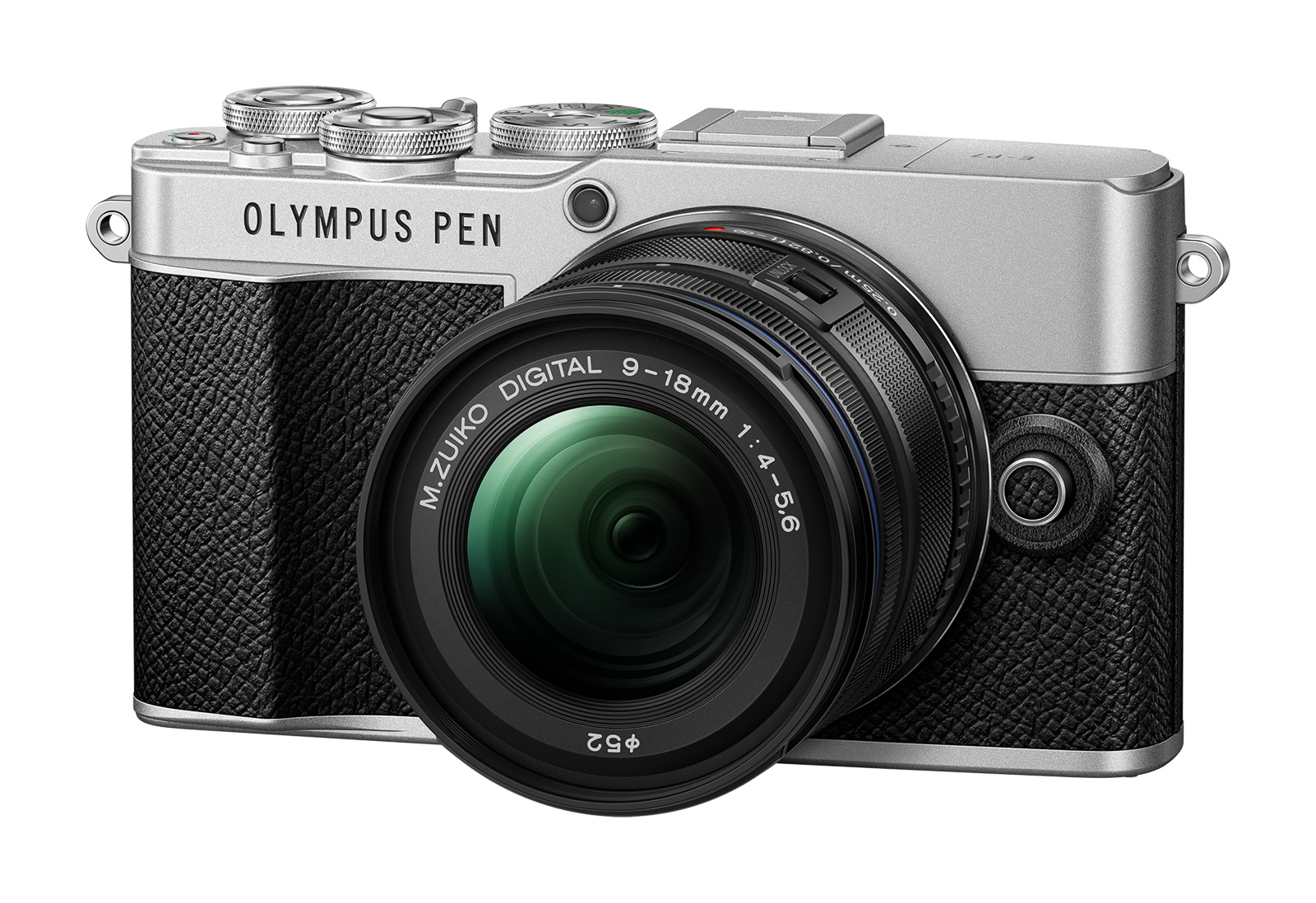
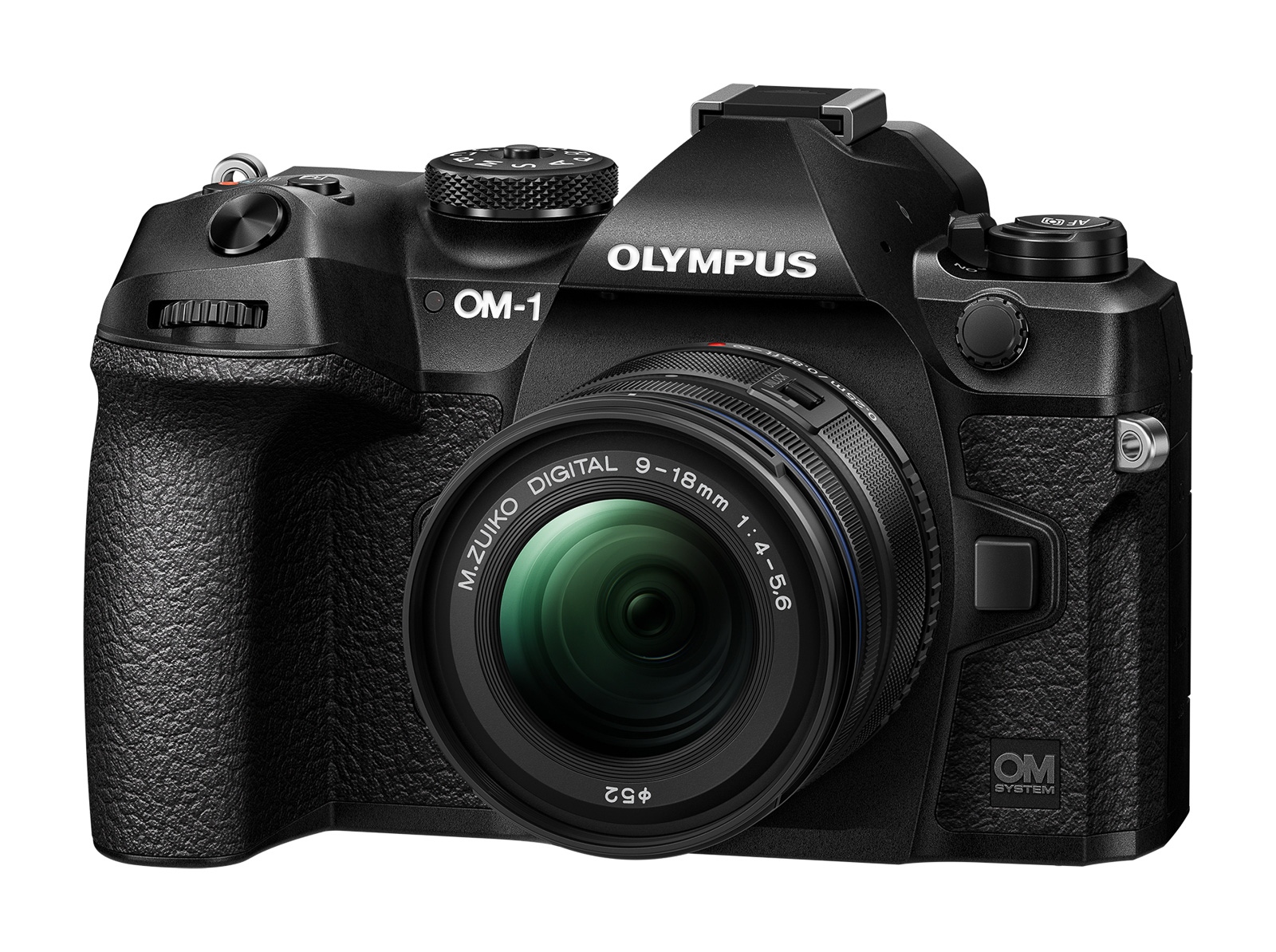
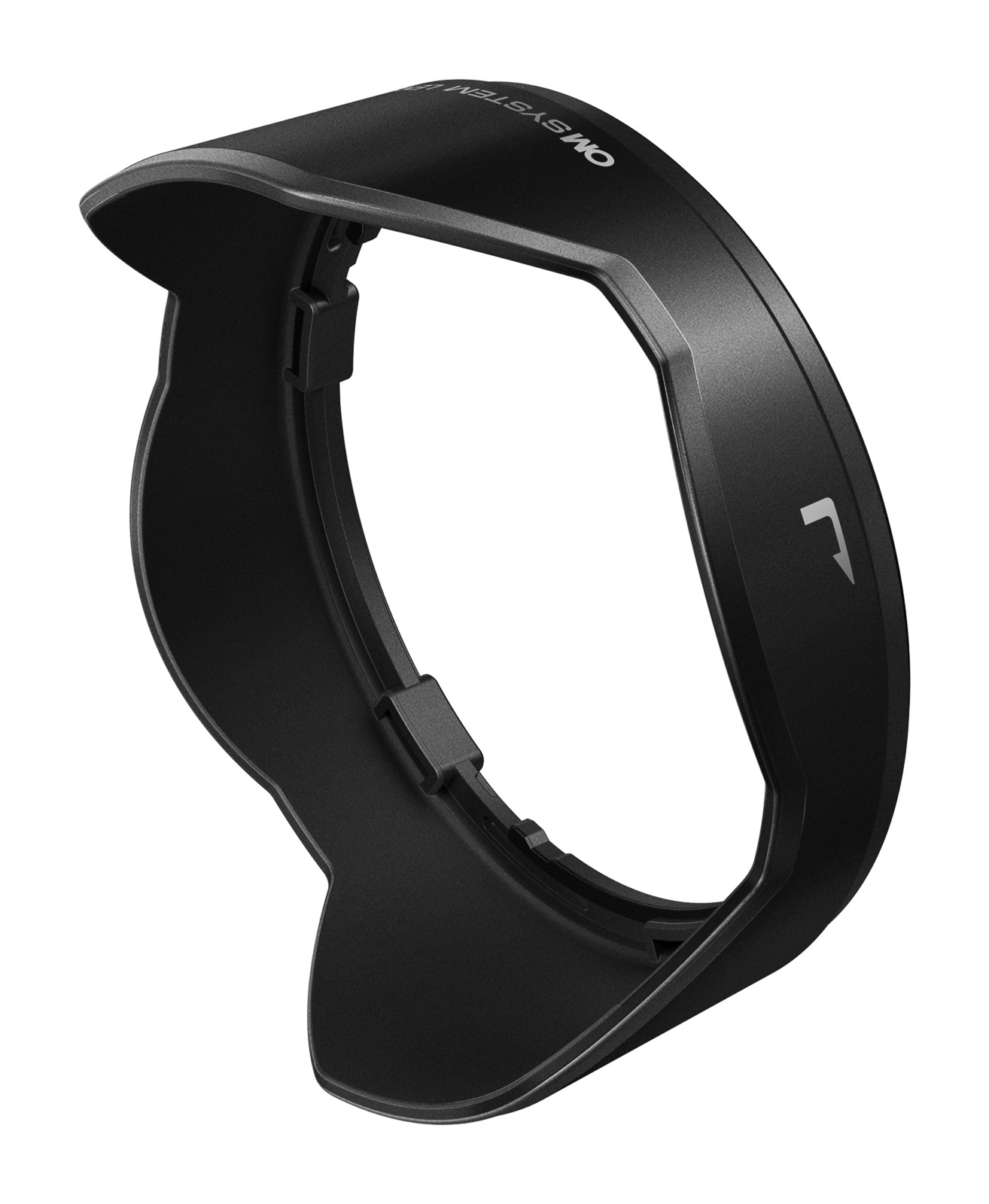
m.Zuiko 9-18mm f/4-5.6 Mark II facelift by OM System

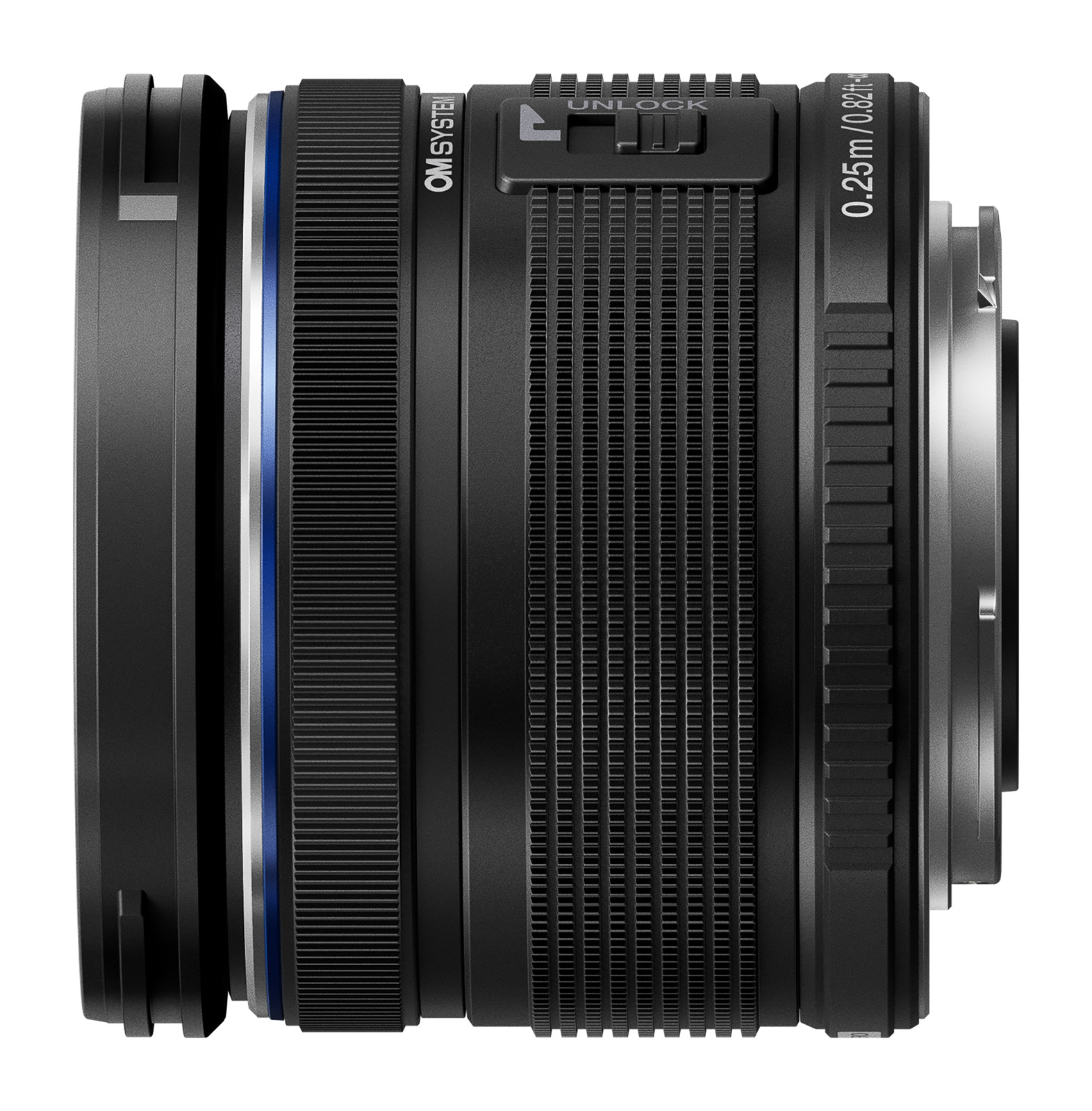
OM System m.Zuiko 9-18mm f/4-5.6 Mark II

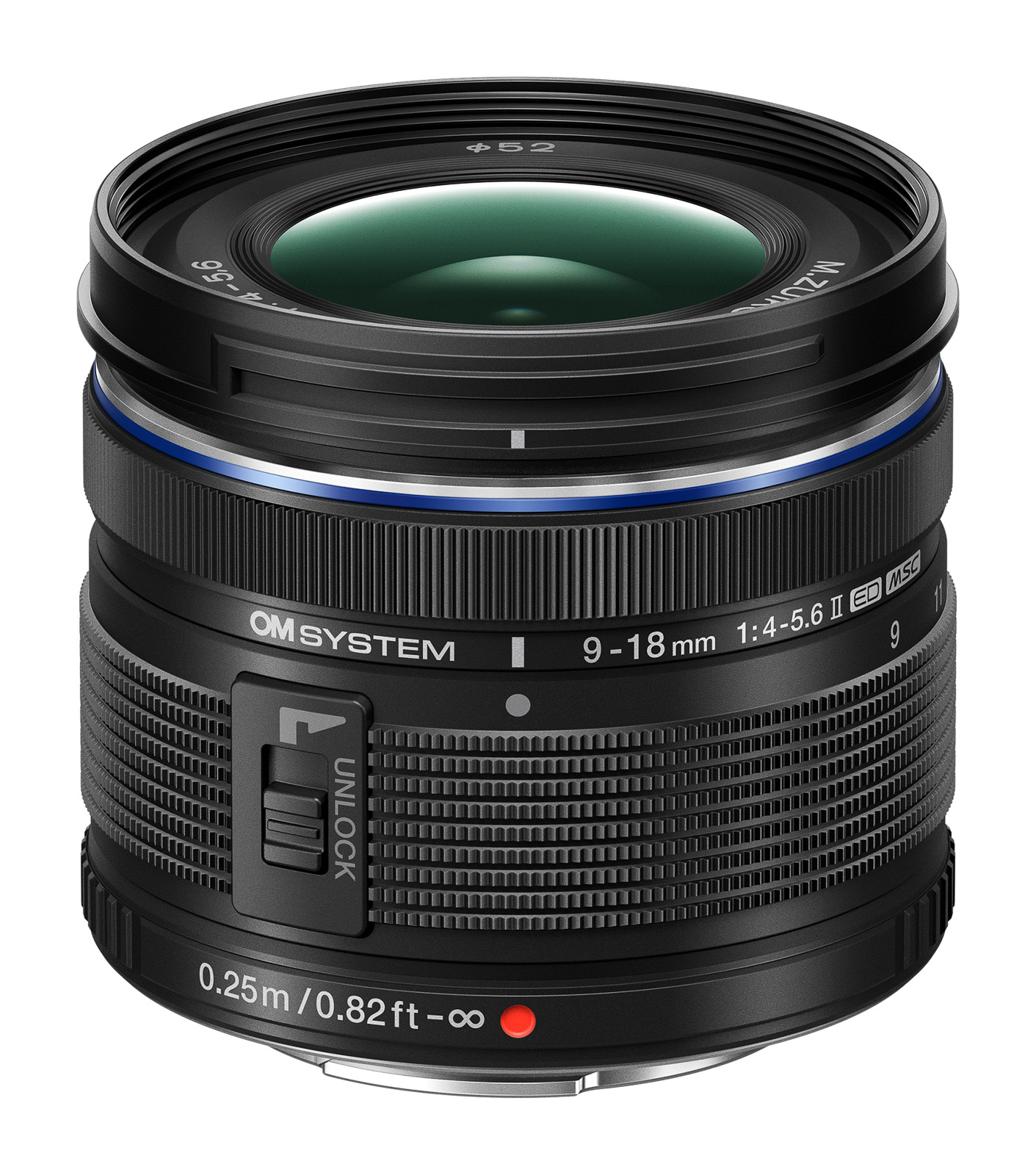
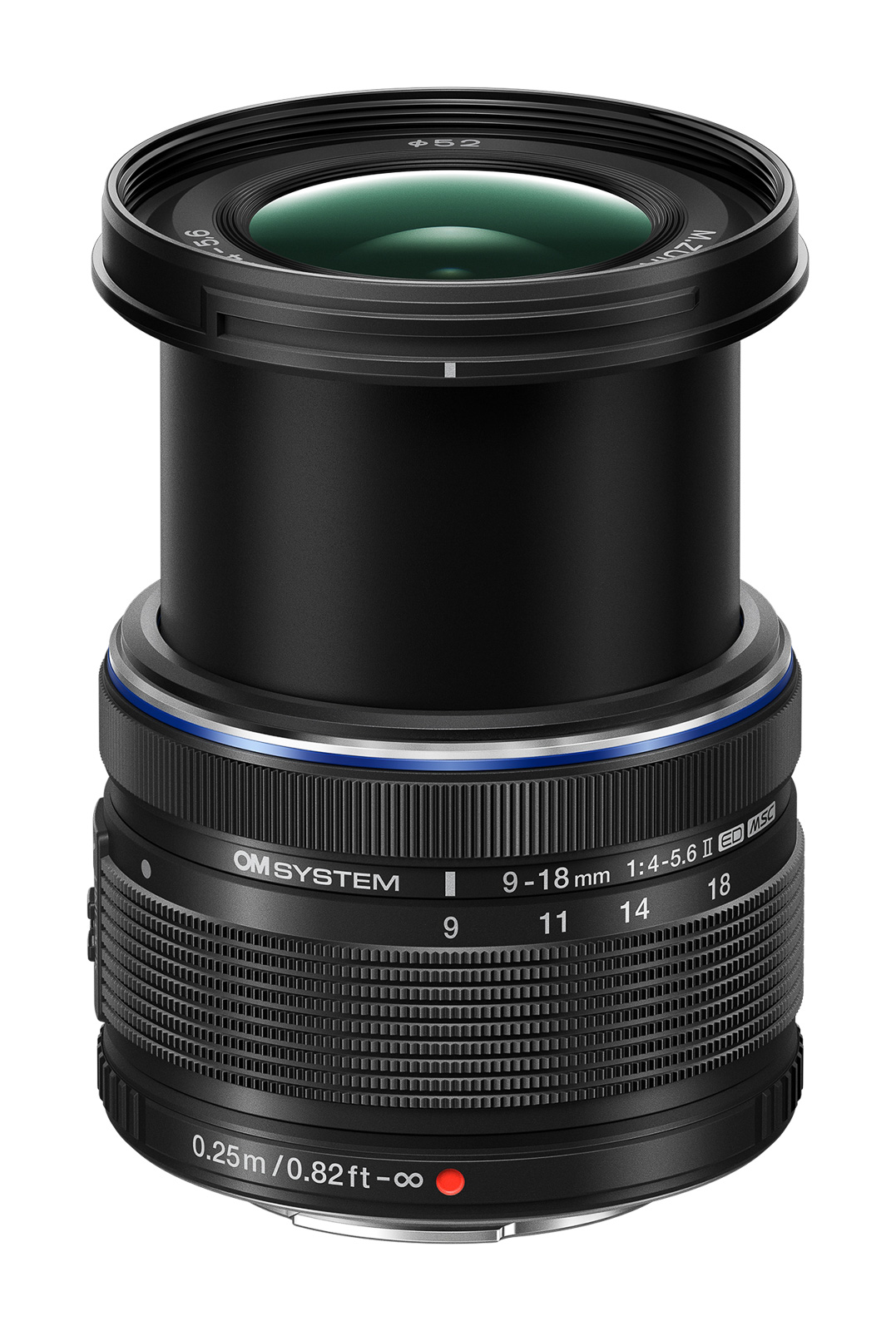
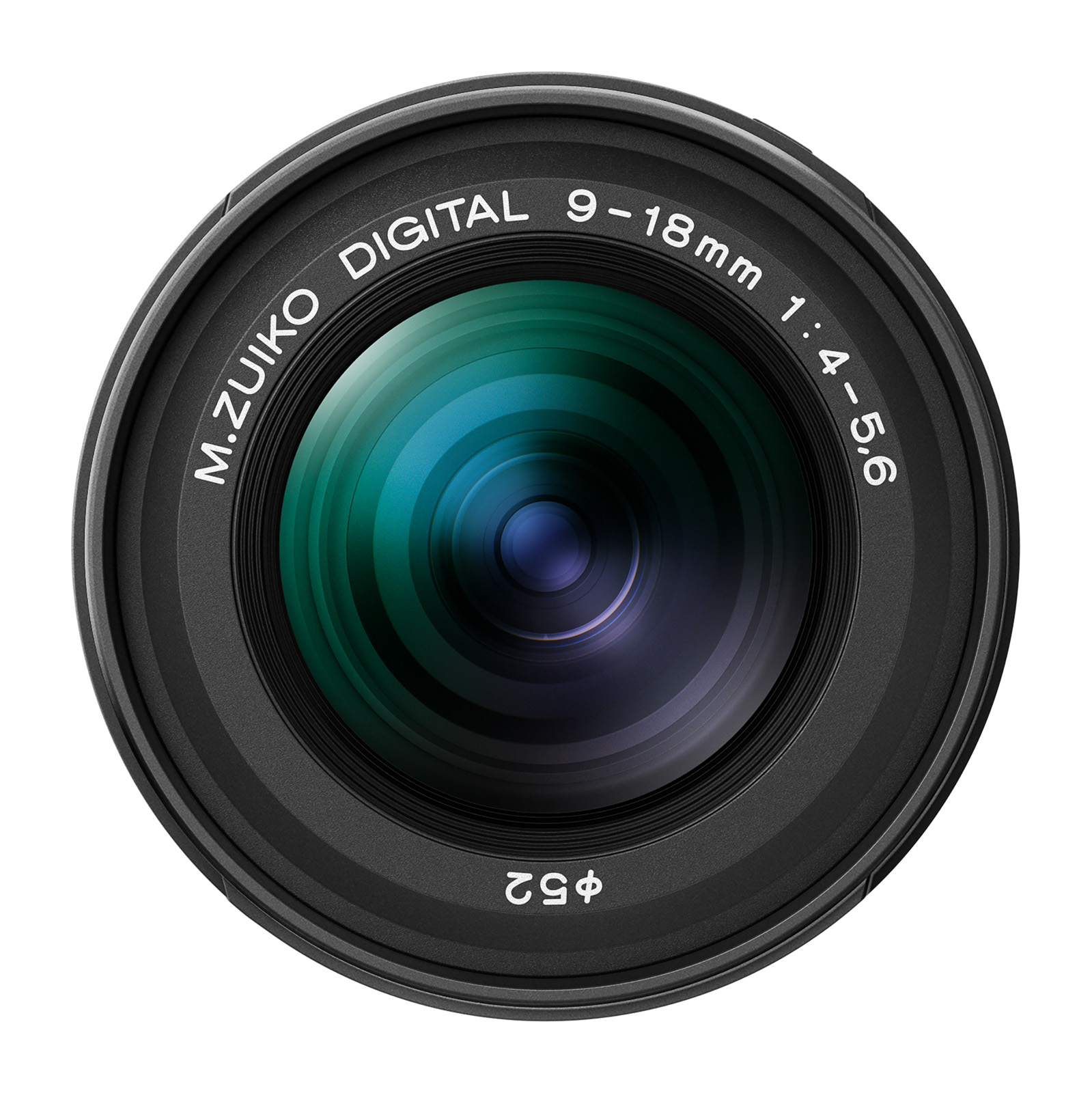
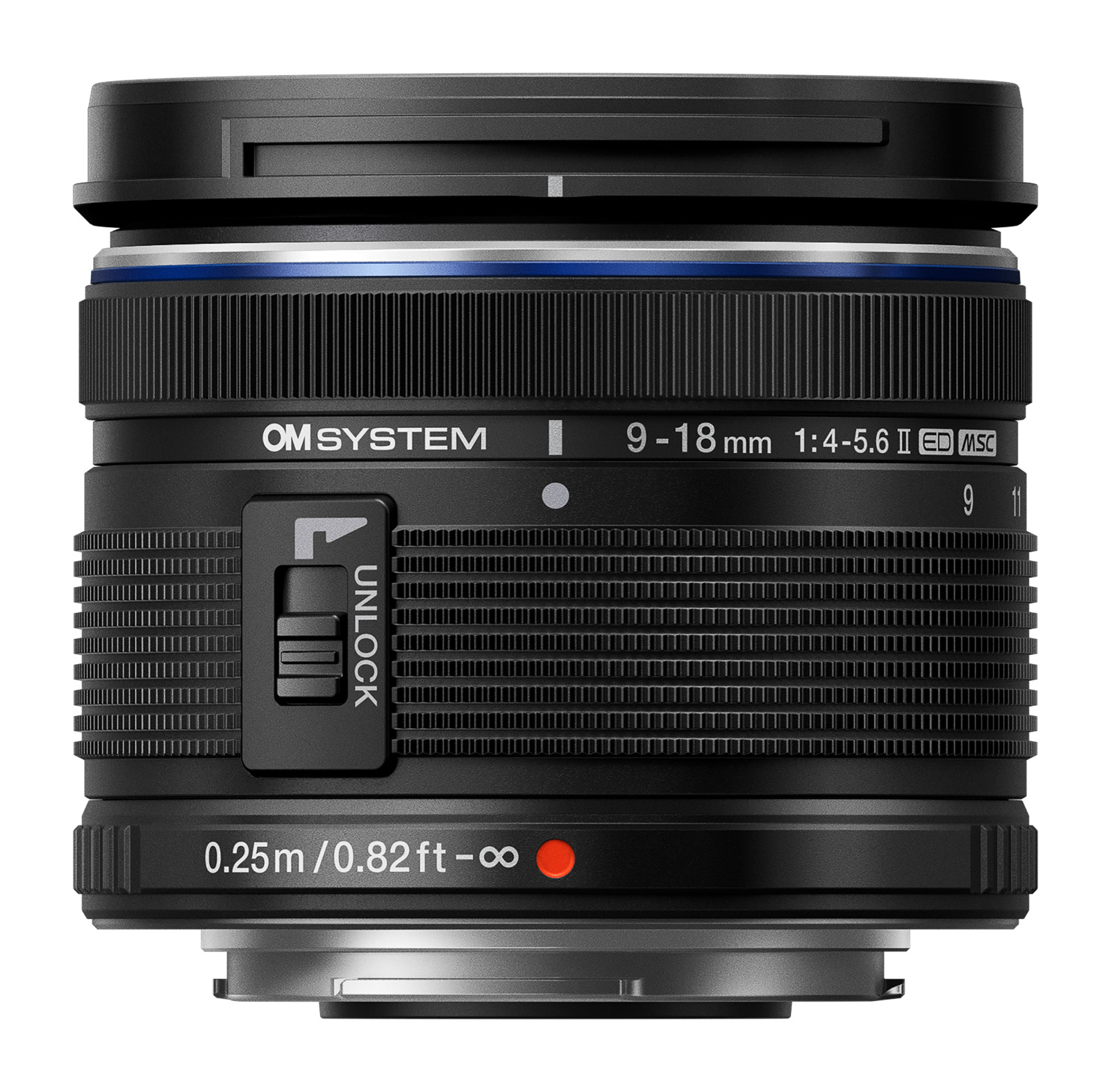
A little old and affordable friend has returned; the m.Zuiko ED 9-18mm f/4-5.6 ultra wide angle zoom, now in Mark II guise.

One of Olympus’ earlier Micro Four Thirds lenses, launched back in 2010, the m.Zuiko 9-18mm (18-36mm in full frame field of view) is a marvel in compactness and light weight. Its design is collapsible for ultimate compactness when not in use. Twist the barrel to unlock and the lens extends and locks ready for use.

OM System m.Zuiko 9-18mm f/4-5.6 Mark II

The 9-18 is relatively affordable for its type, which means lightweight construction, but this is forgiven considering its diminutive size and portability. It’s a decent performer for its price range, too.

The new Mark II version is only lightly modified, with the old retro zoom and focusing ring styles, which matched the original Olympus Pen cameras, now replaced by a more contemporary design. The optical design and specifications remain unchanged, apart from an upgrade to the anti-reflection lens coatings.

If you haven’t seen a 9-18, do check this lens out; it’s mini marvel. It only weighs 154 grams.

Expect the 9-18 Mark II to go on sale in March, priced £599 (€699).

Product image gallery:

Posted on

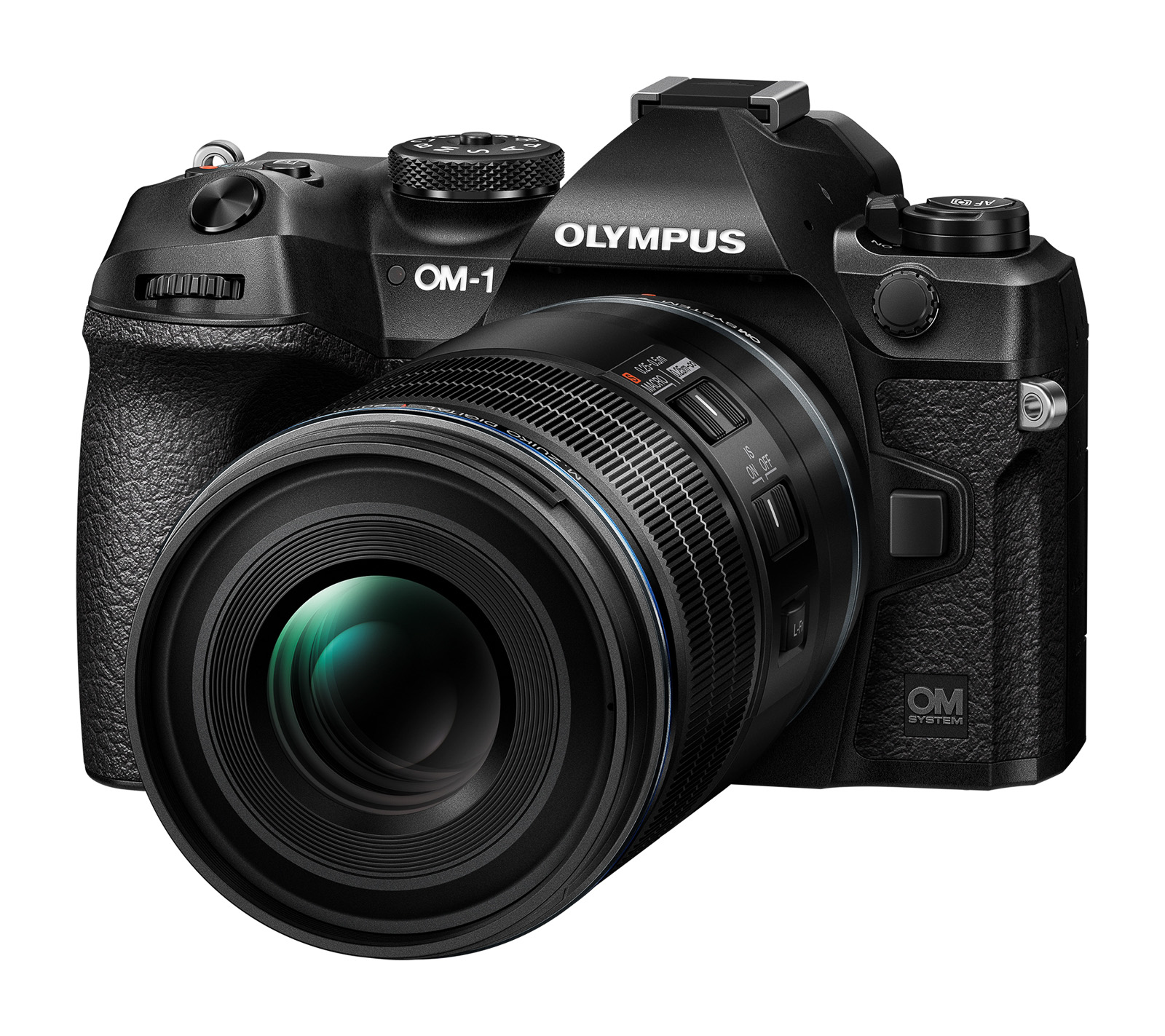
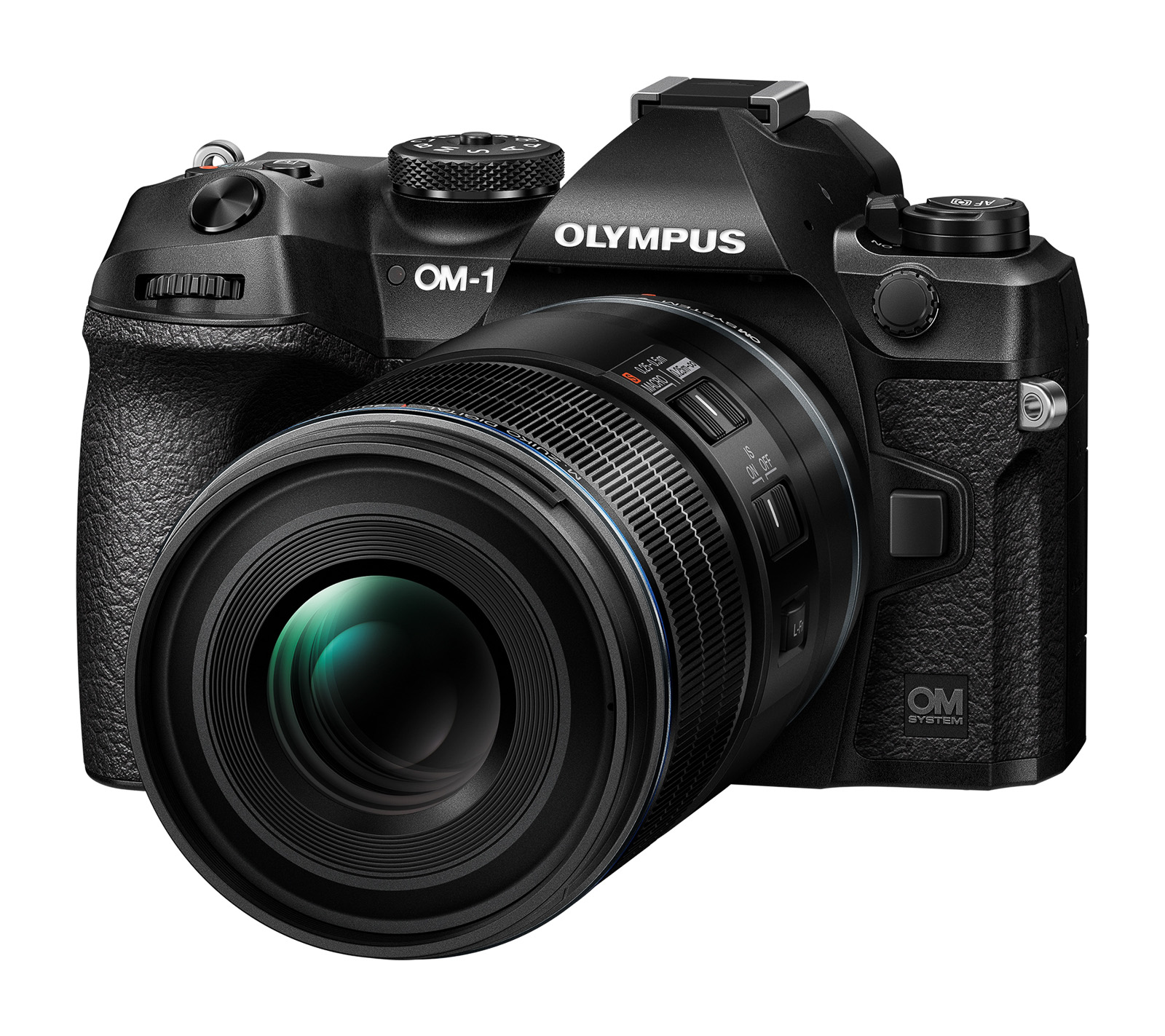
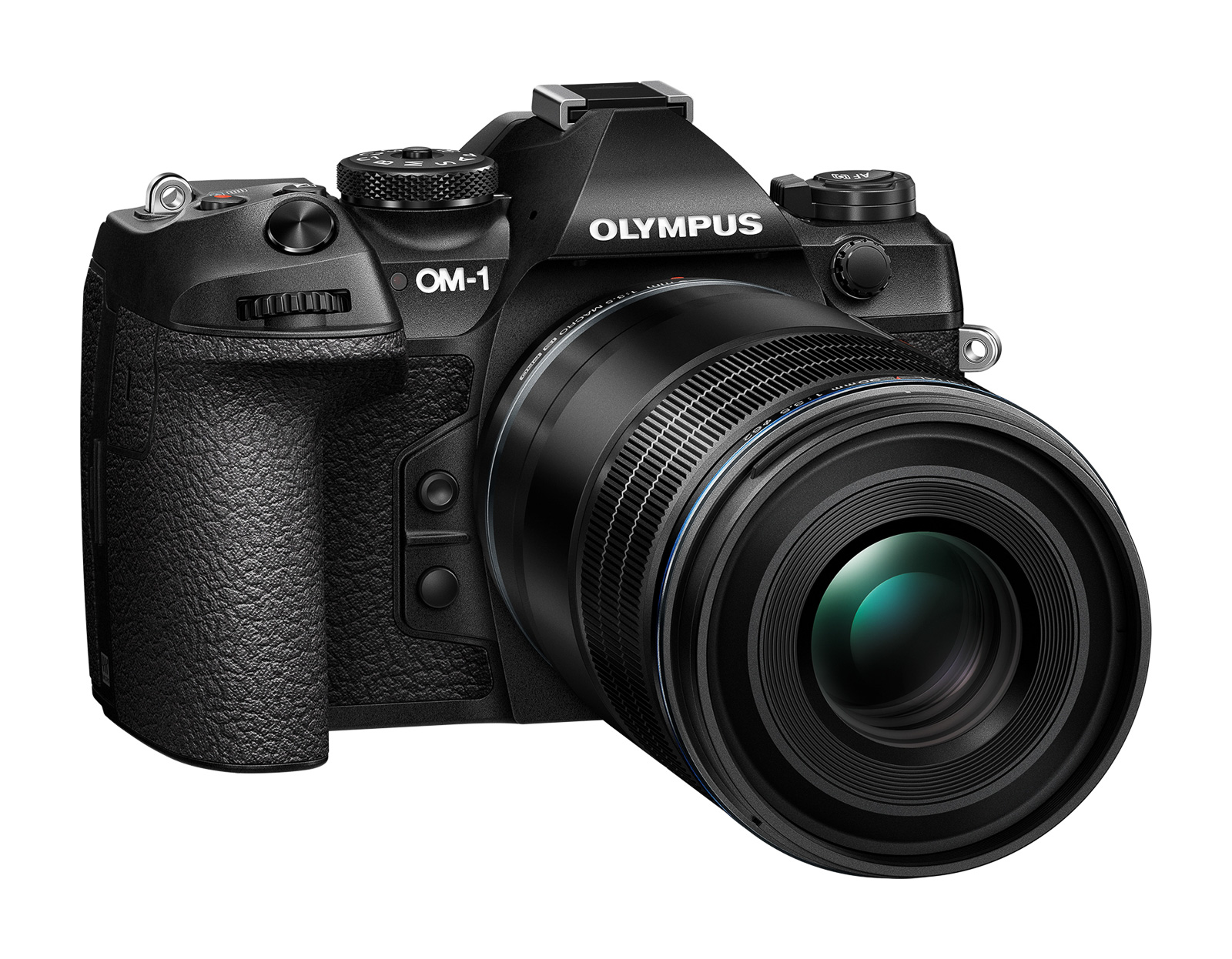
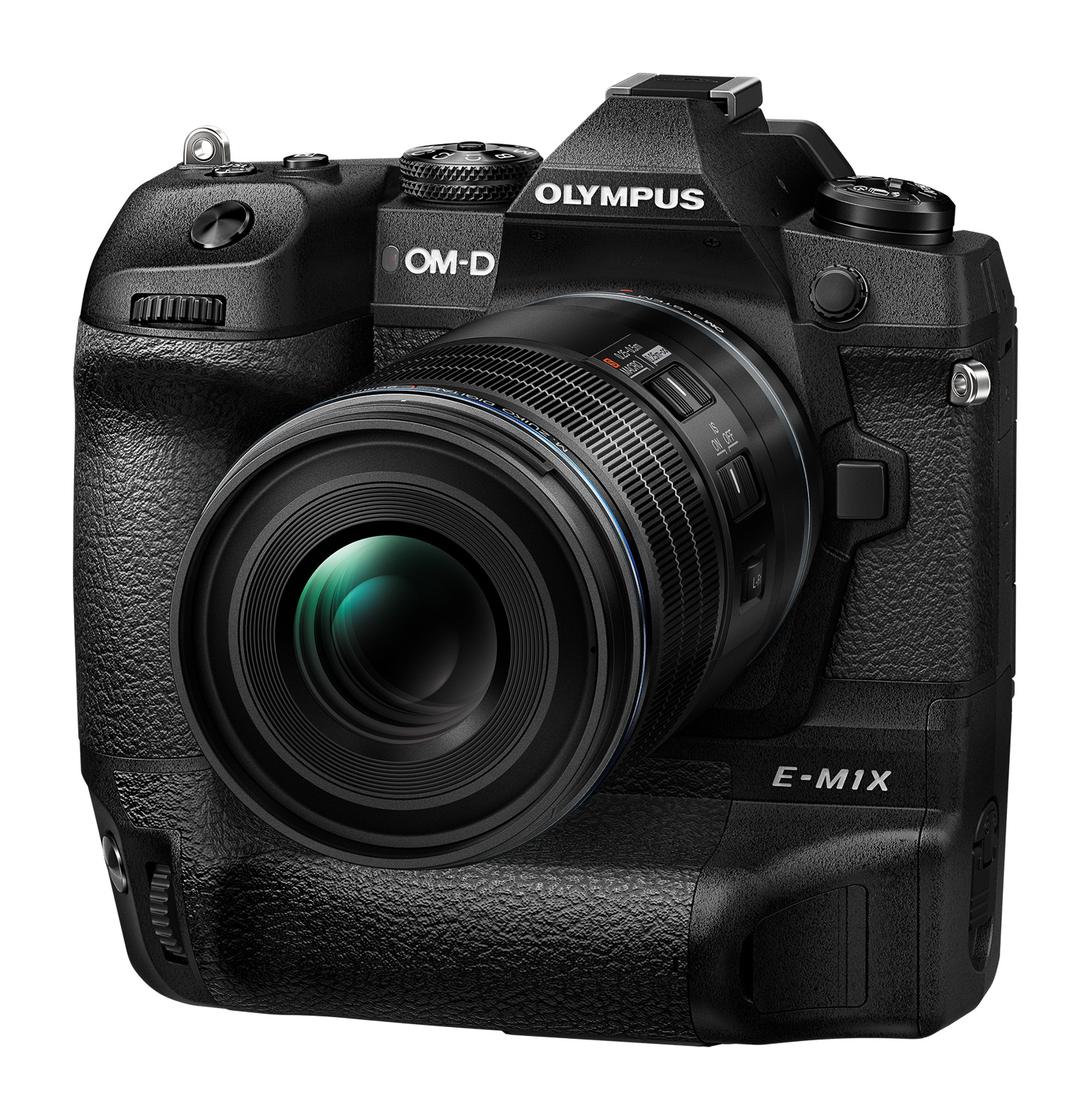
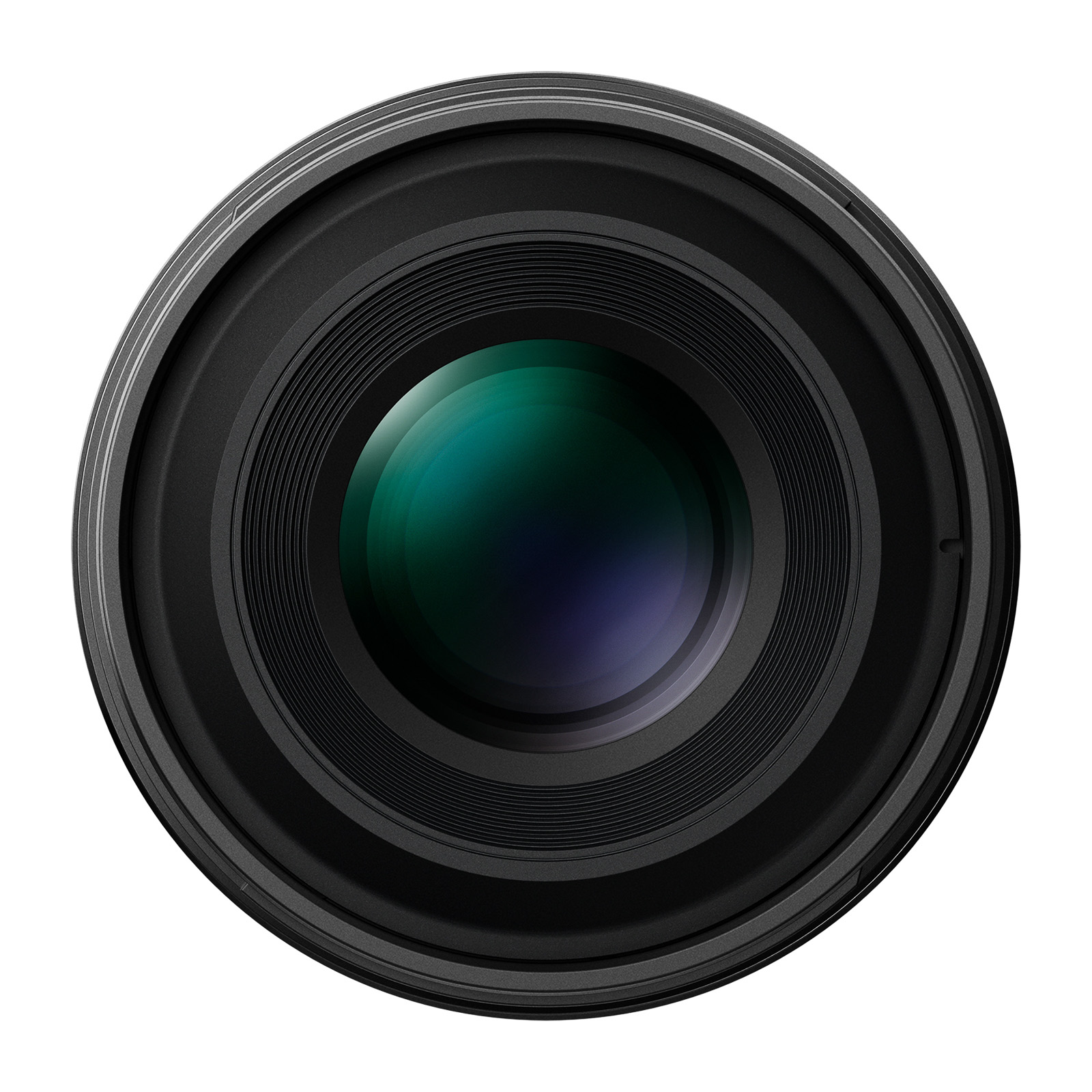
OM System launches the m.Zuiko ED Digital 90mm f/3.5 IS Pro macro lens

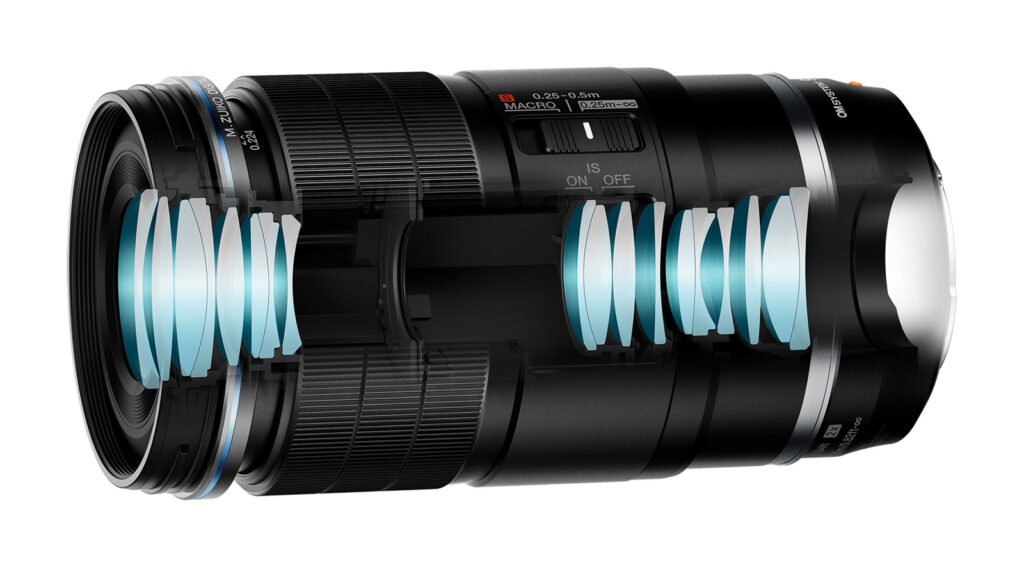
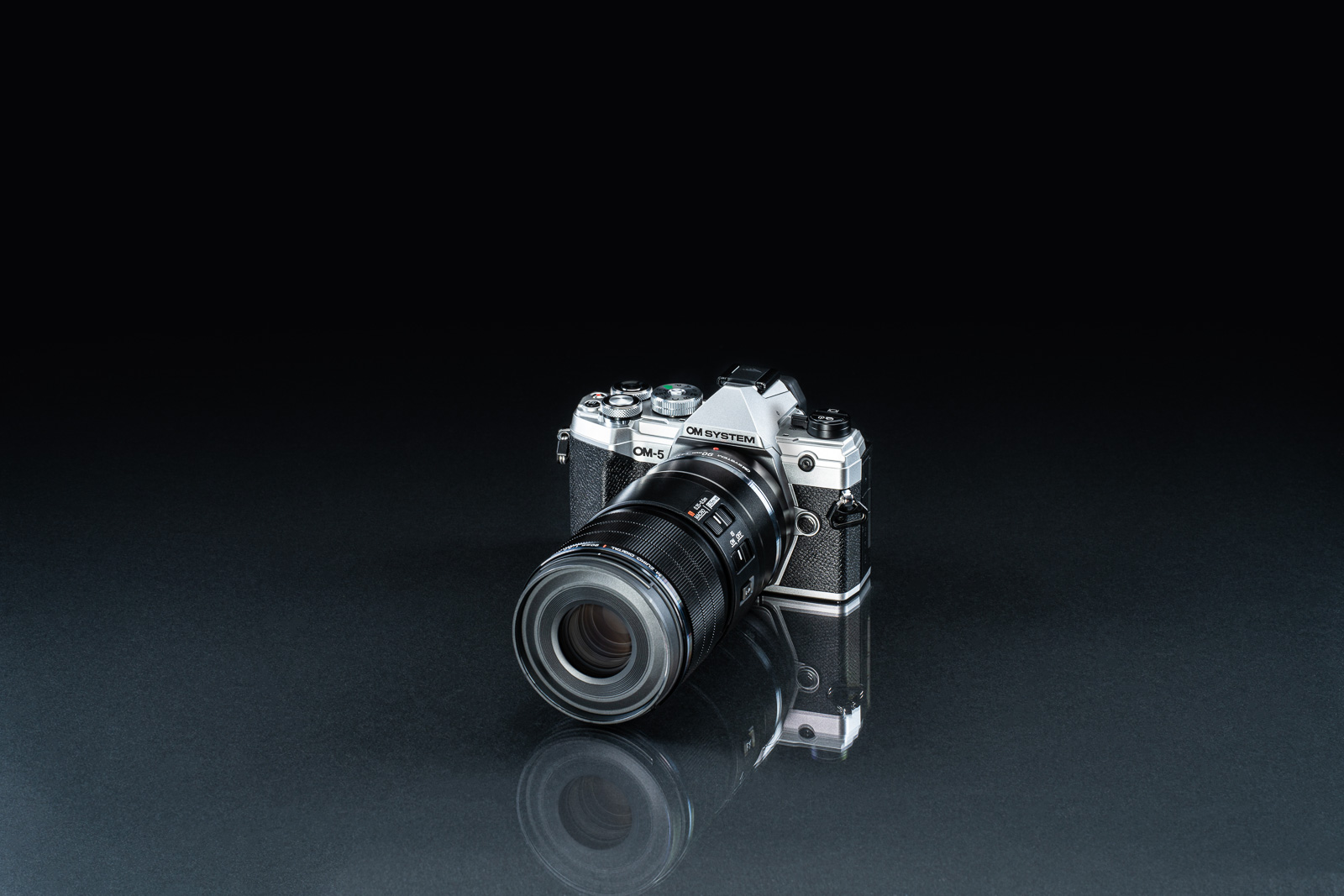
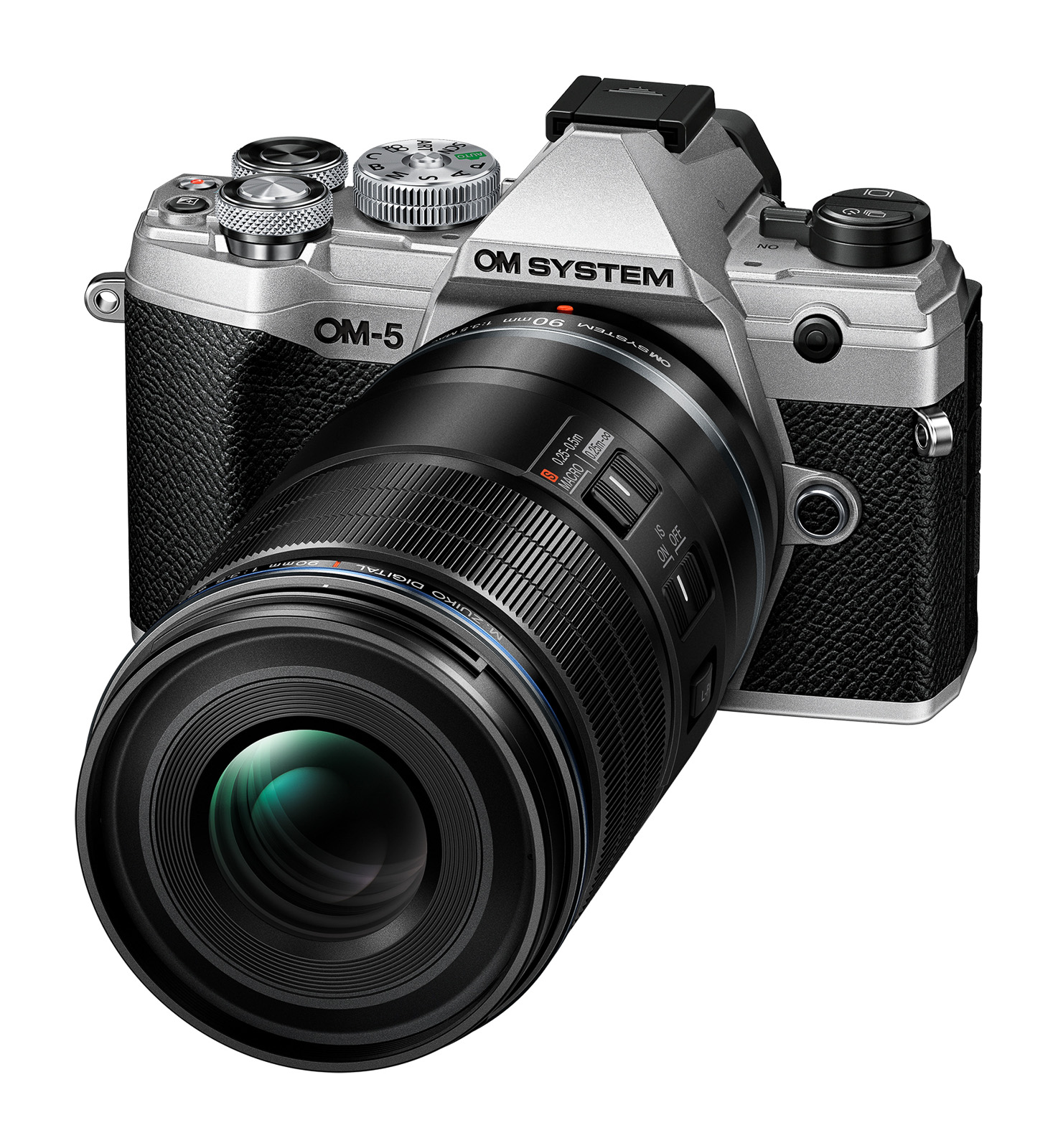
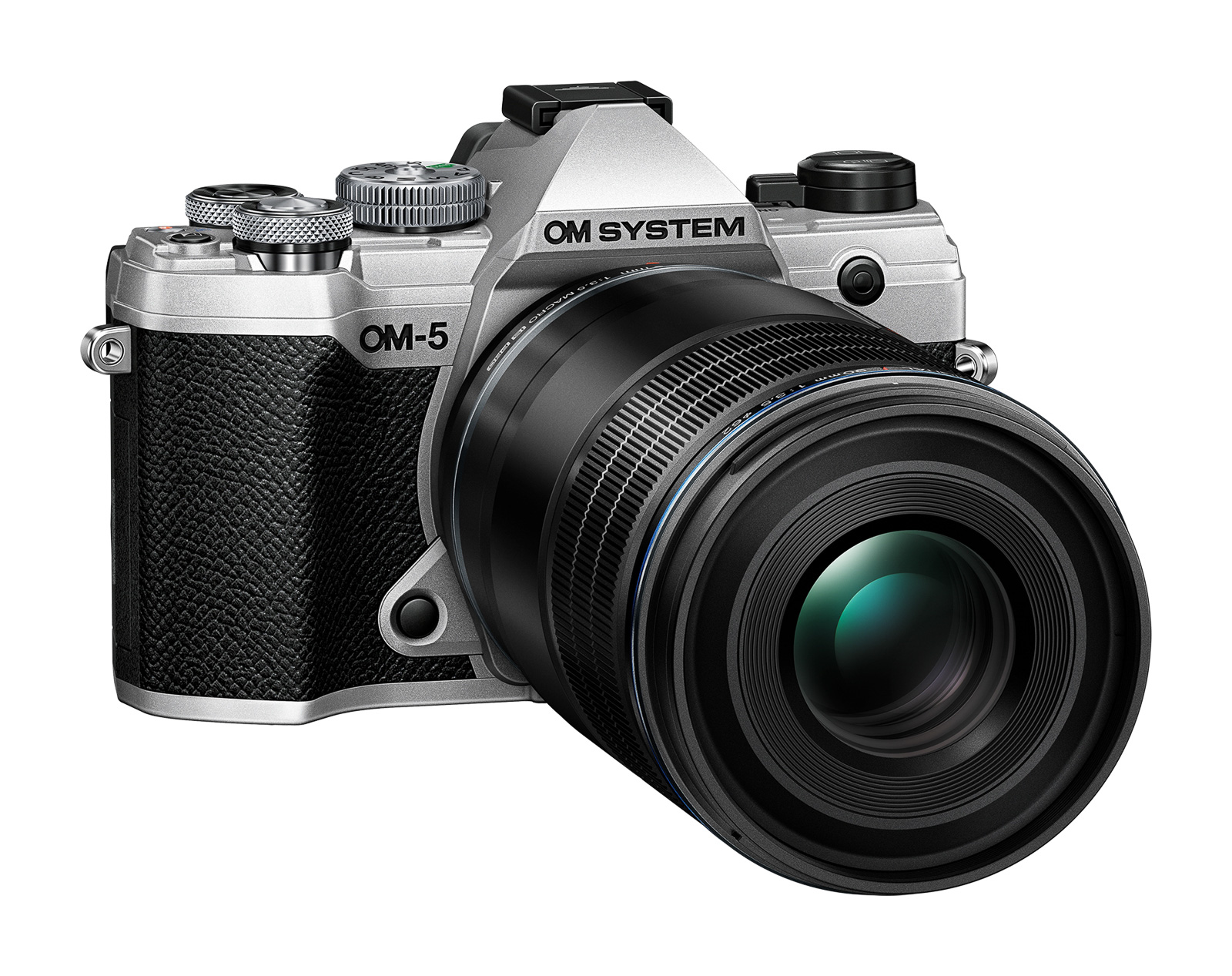
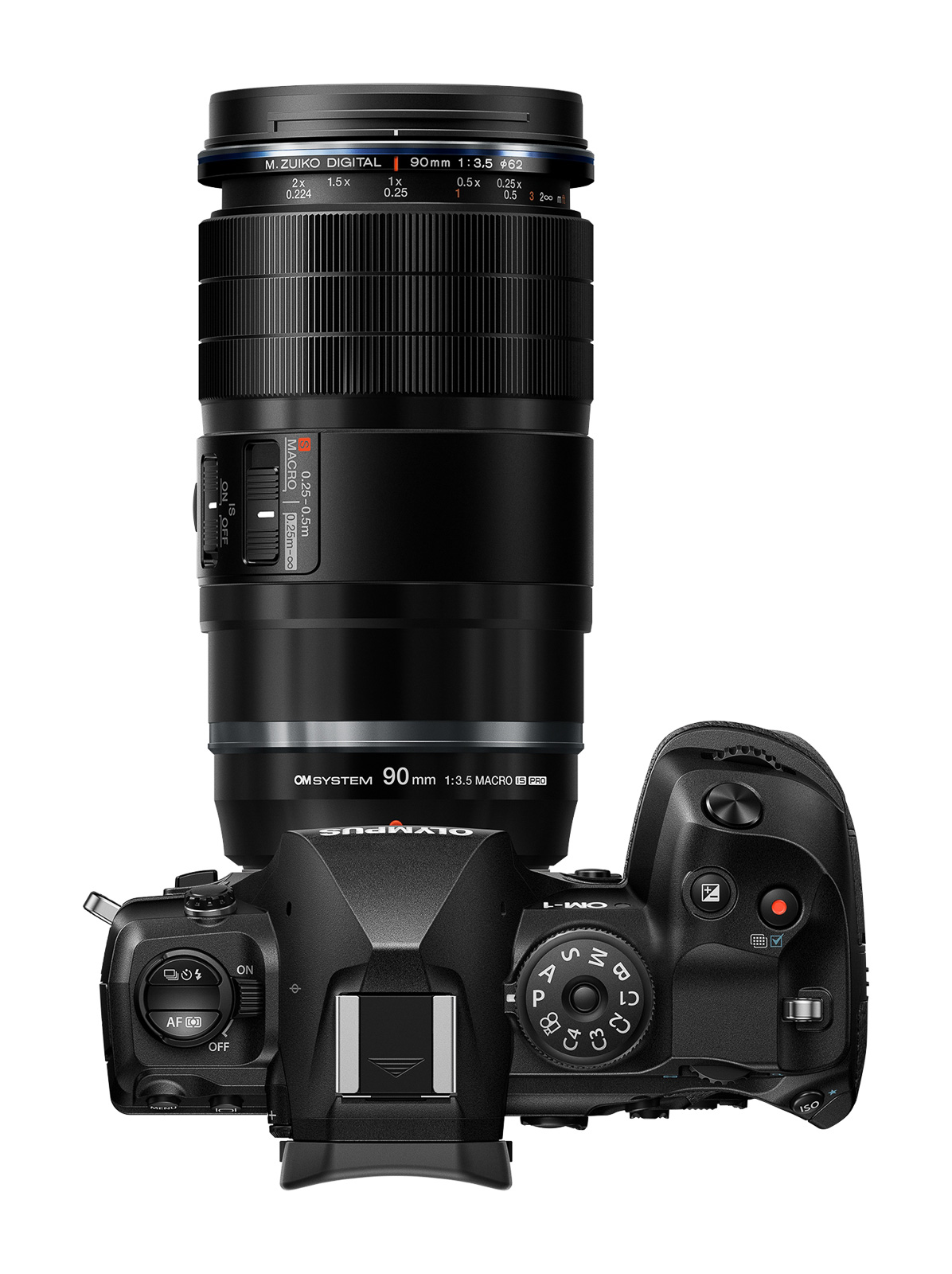
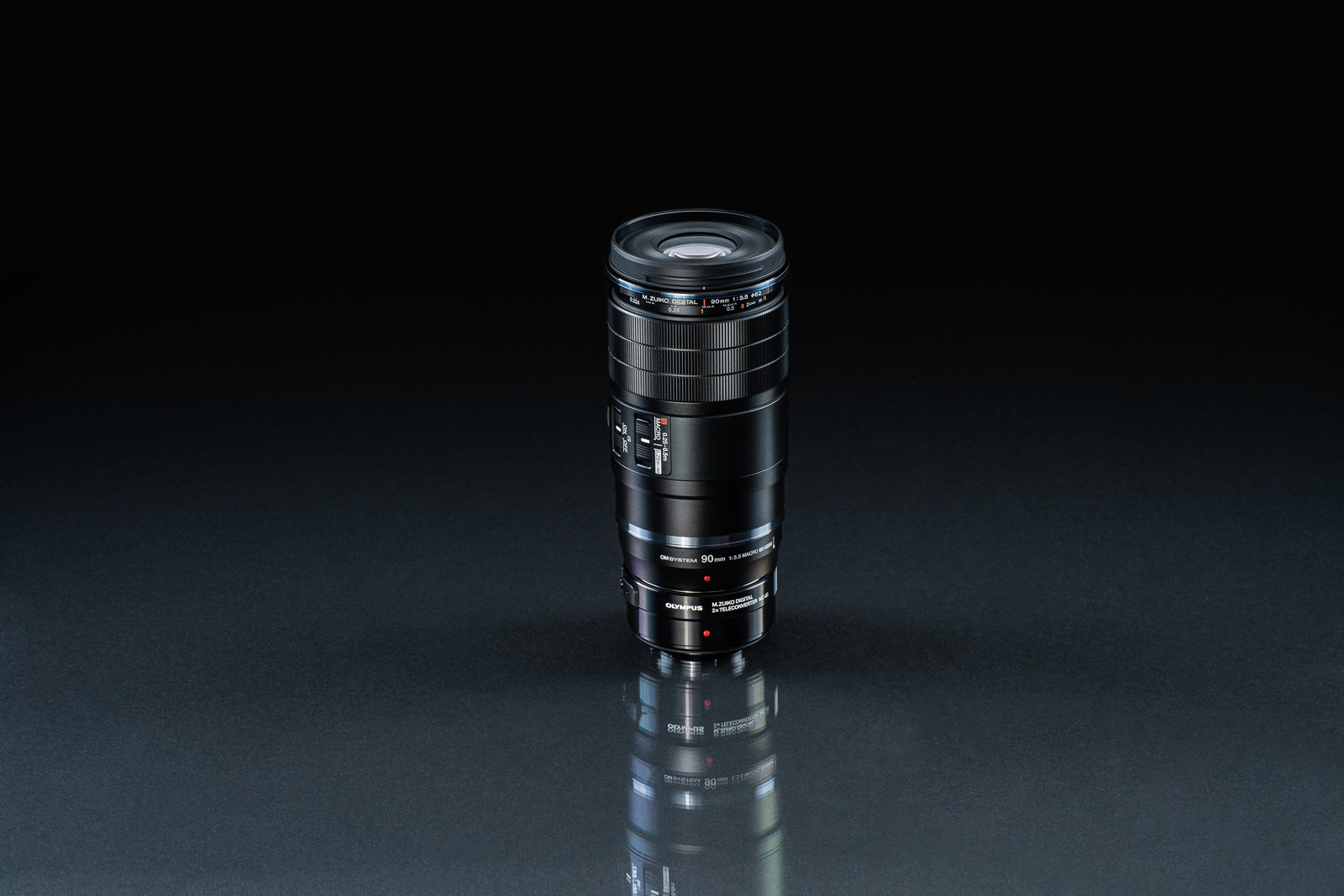
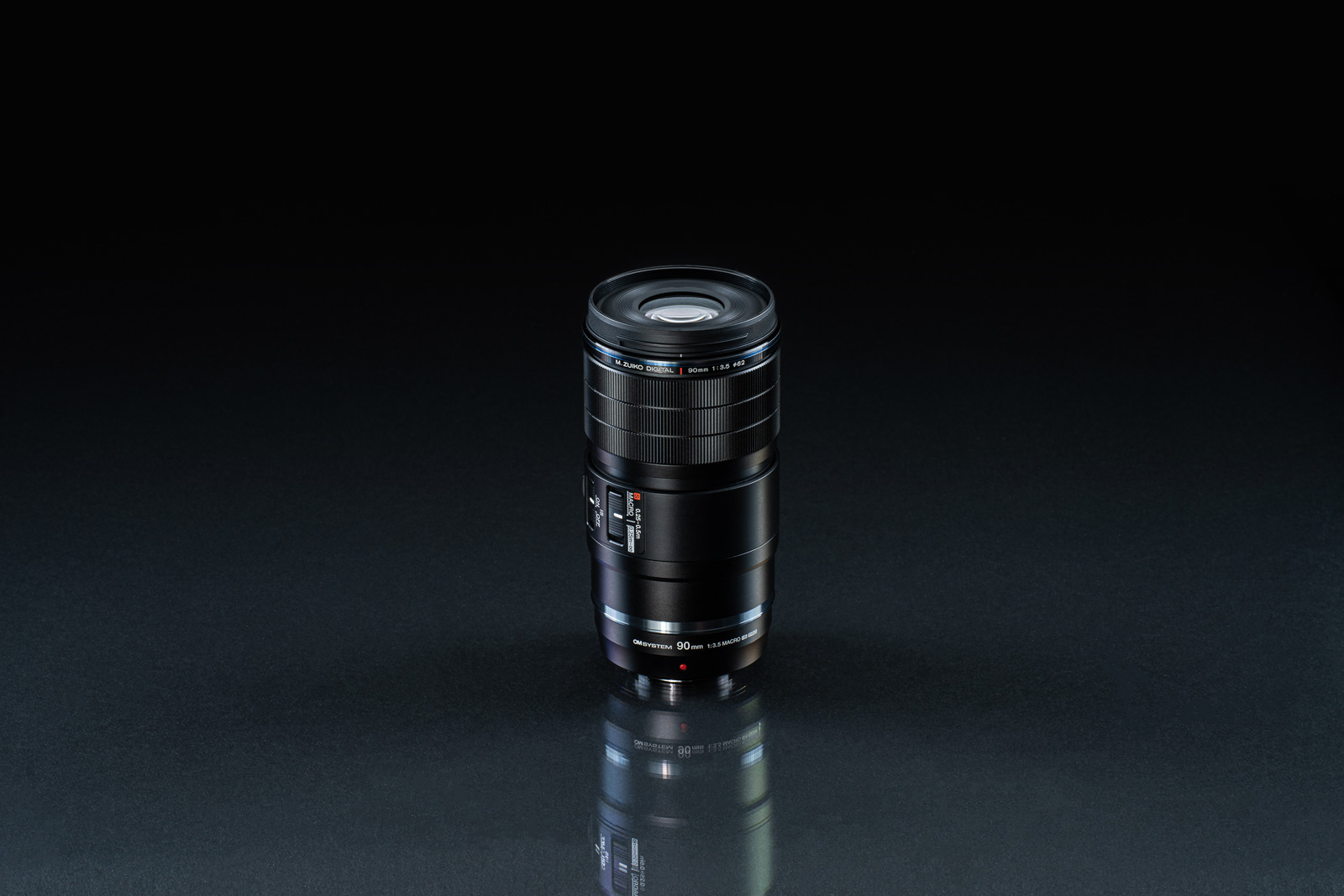
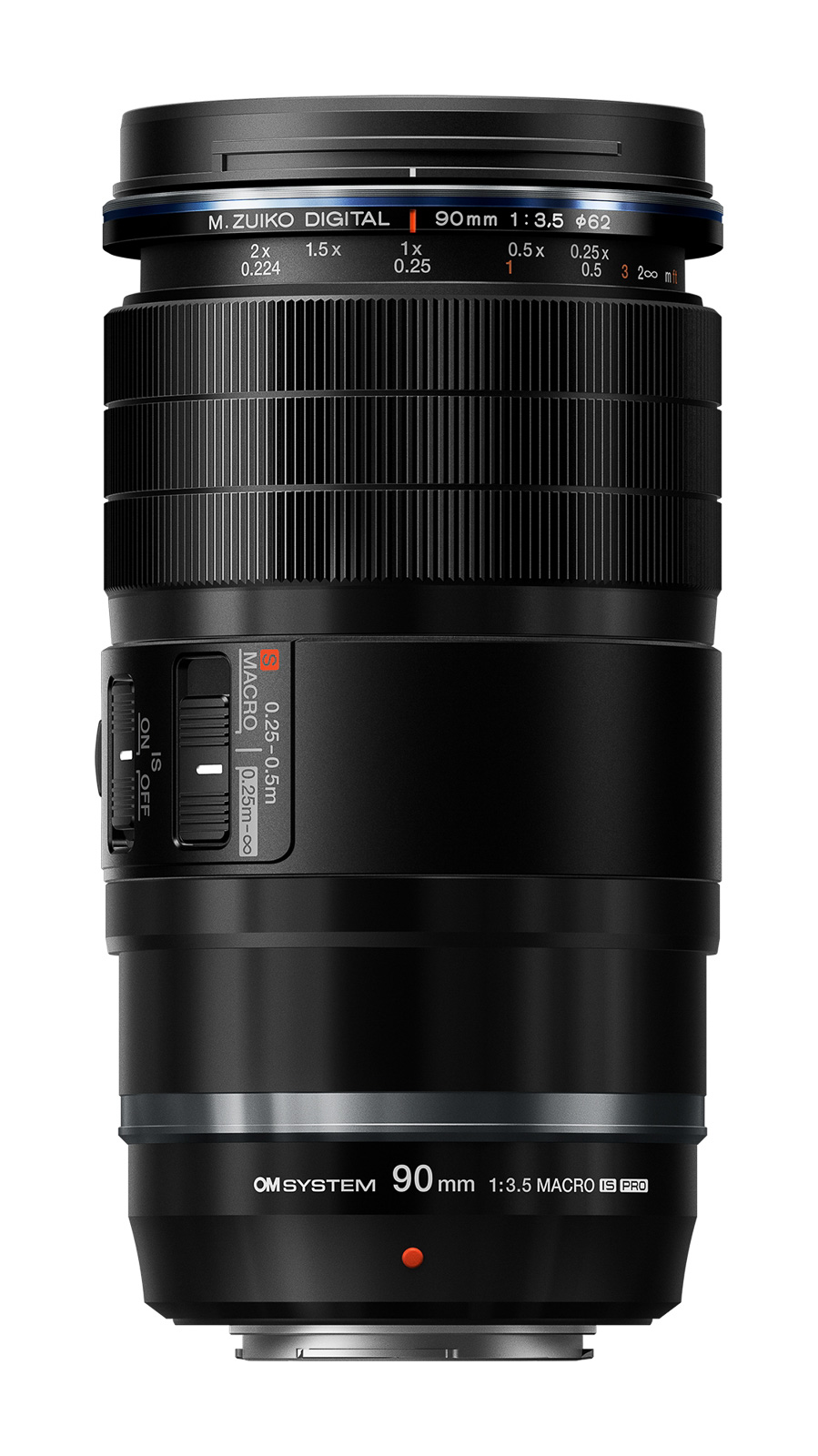
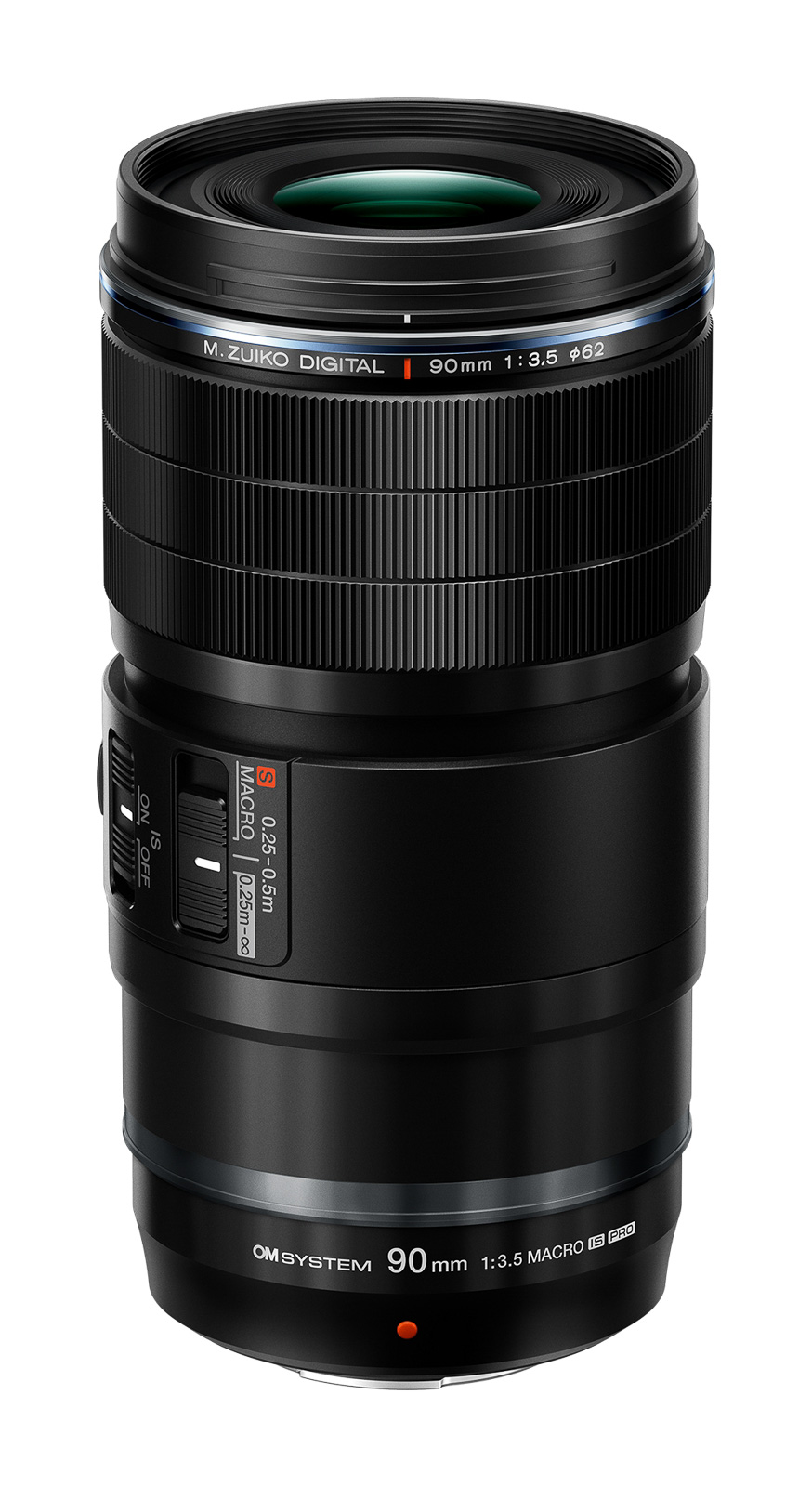
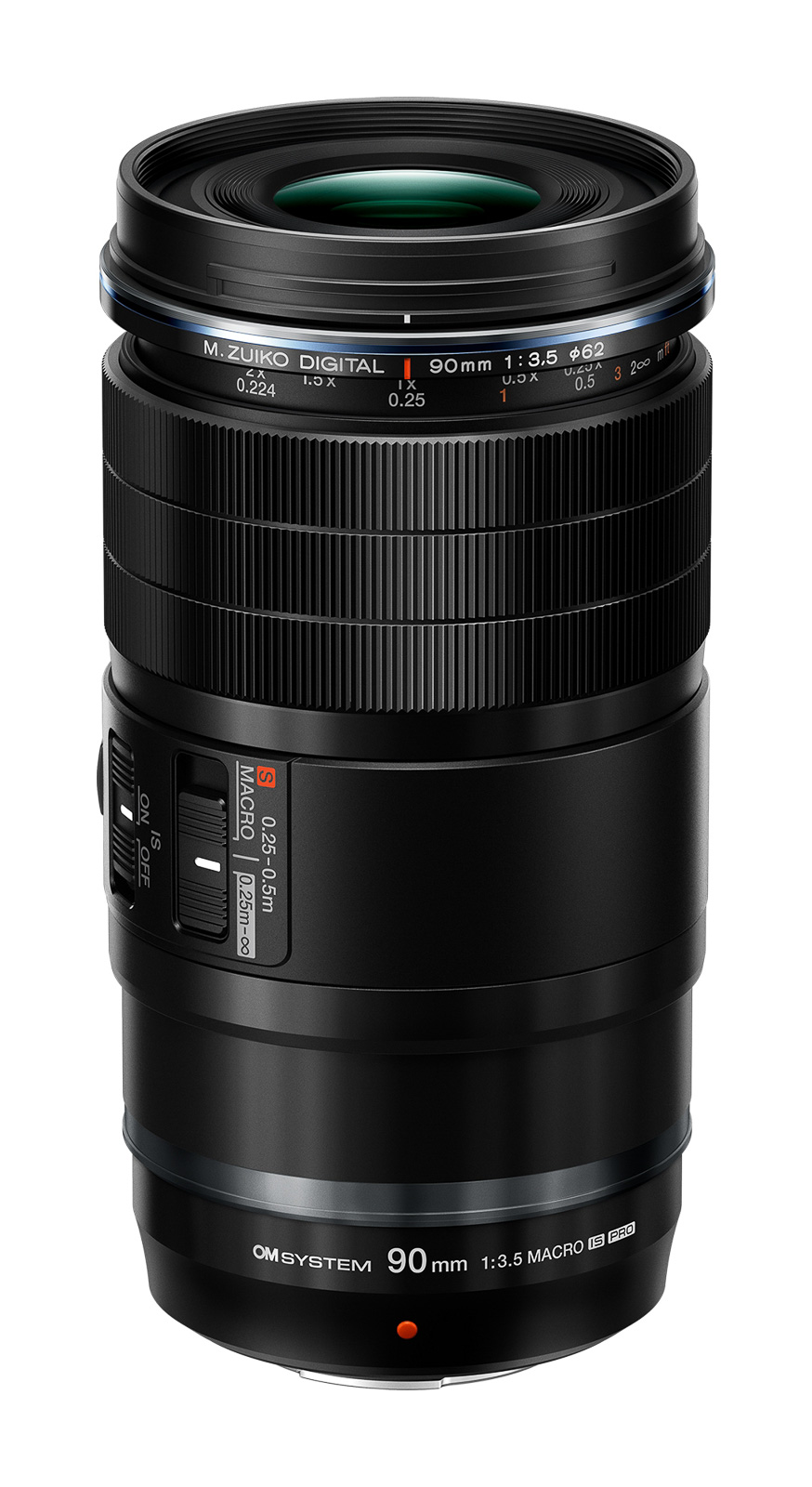
It’s been a ghost on Olympus, and, subsequently, OM System lens roadmap charts for several years, but now it’s a reality, the OM System m.Zuiko ED Digital 90mm f/3.5 IS Pro 2:1 macro lens.

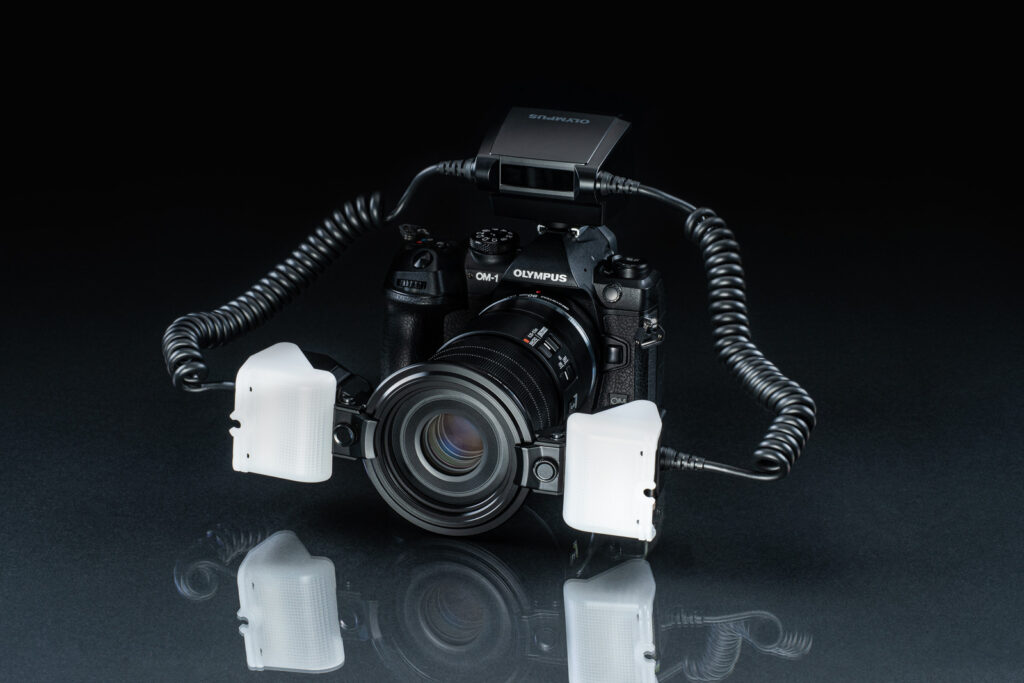
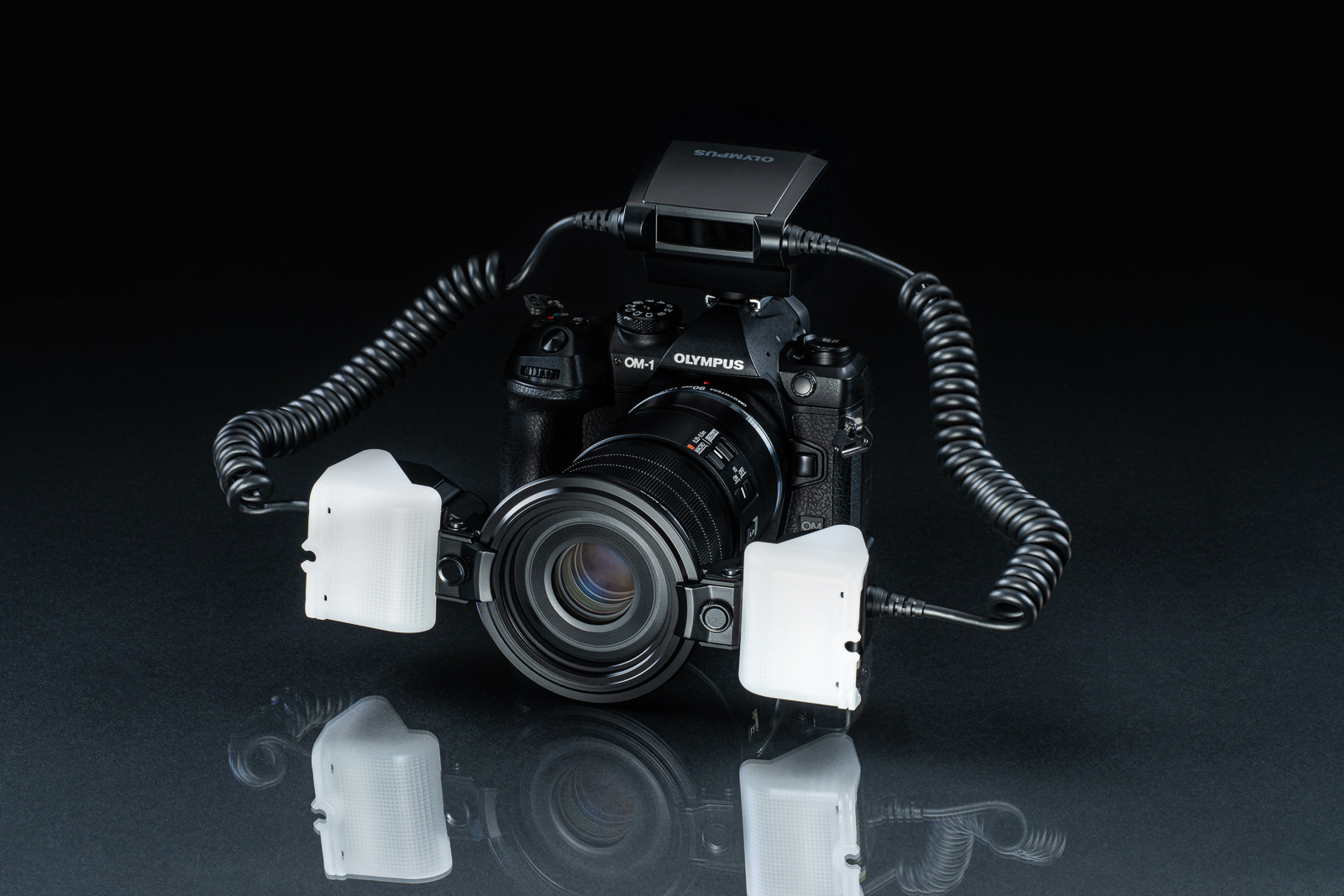
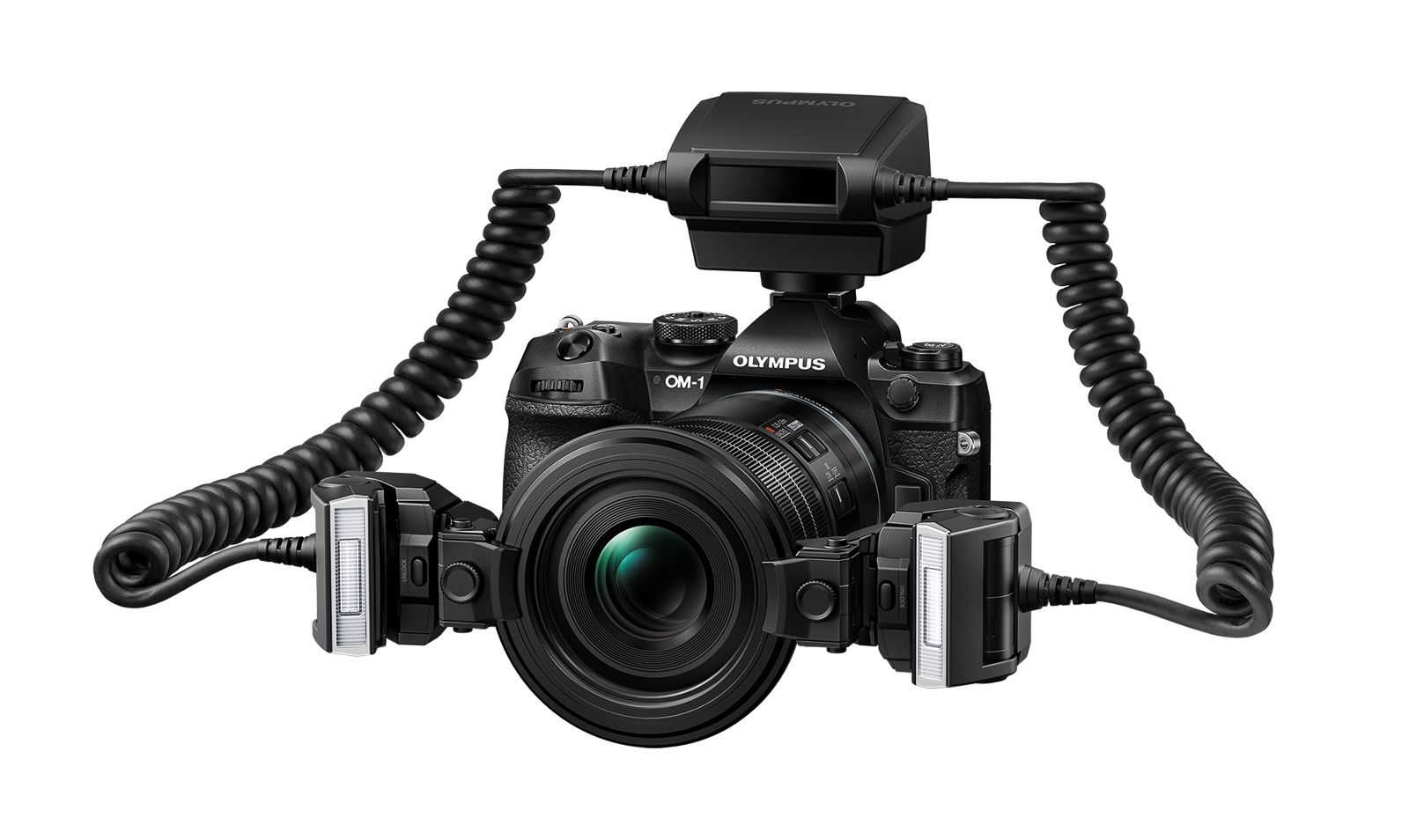
OM System m.Zuiko ED Digital 90mm f/3.5 IS Pro macro lens with STF-8 twin-flash

Aimed at macro photography in the field

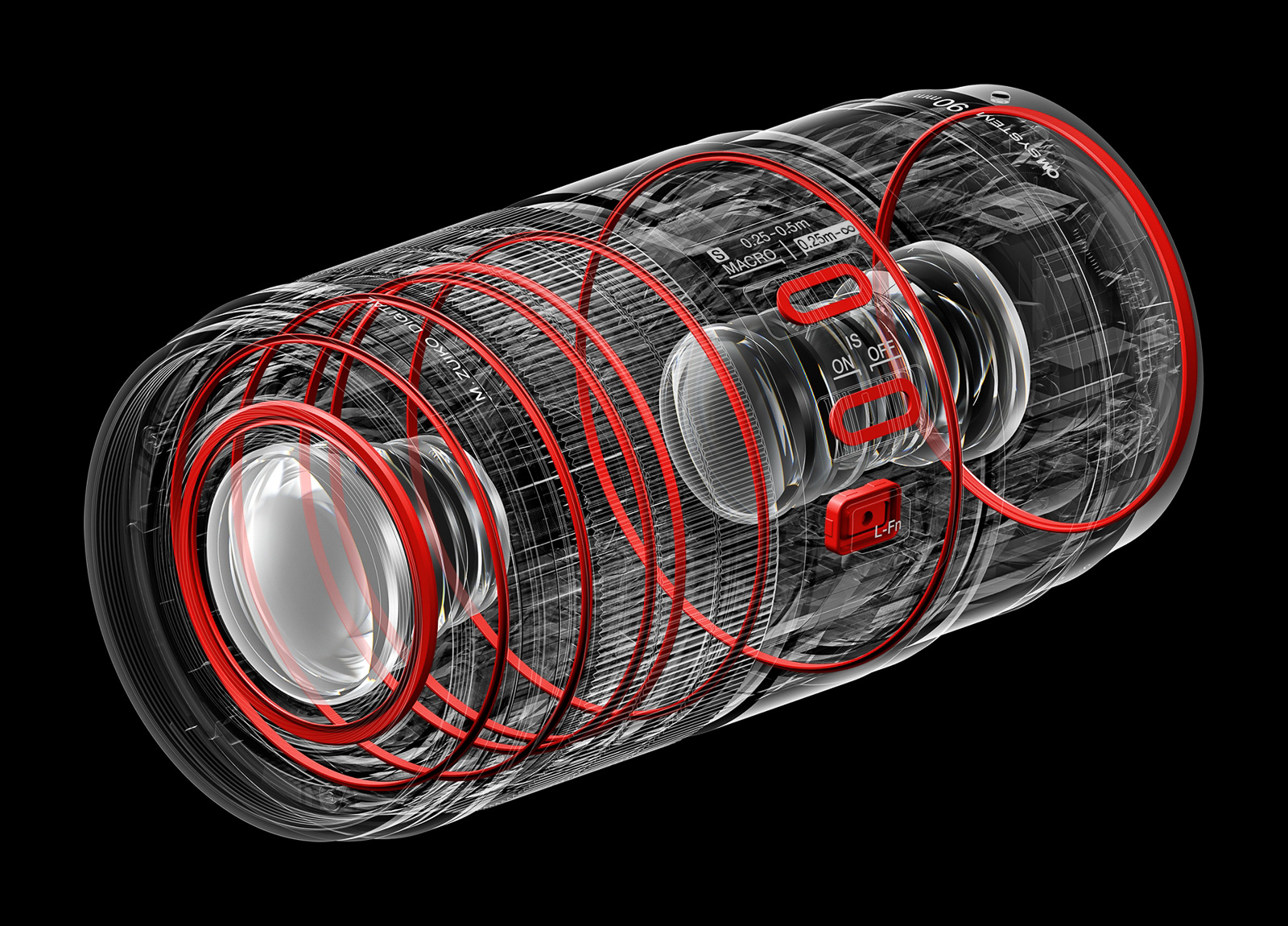
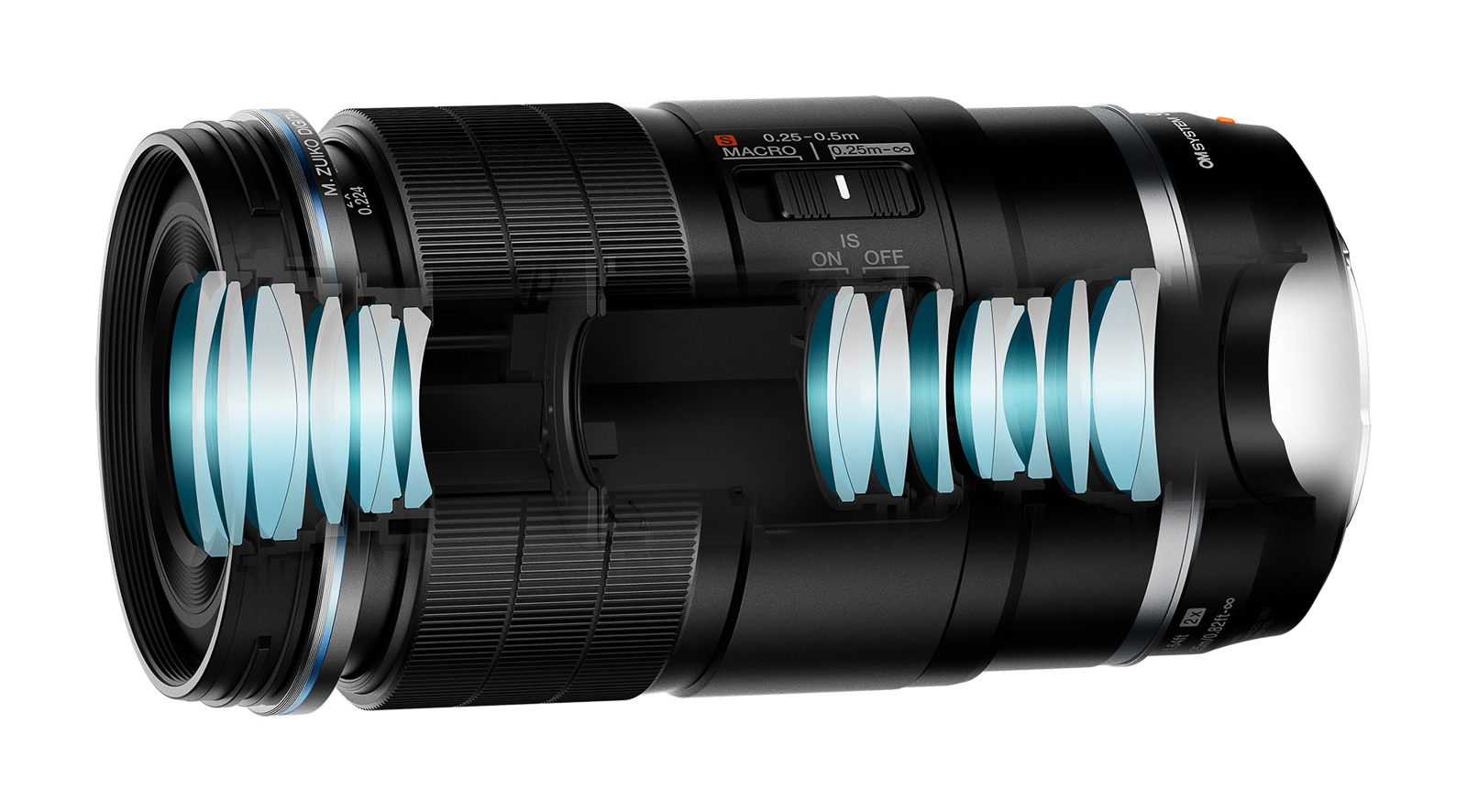
Combining ultra-fast macro focusing and Sync IS, as well as class-leading dust and splash-proofing, OM System’s new 90mm macro lens is aimed at both professional photographers working in all weathers and conditions, and those amateurs who seek same benefits.

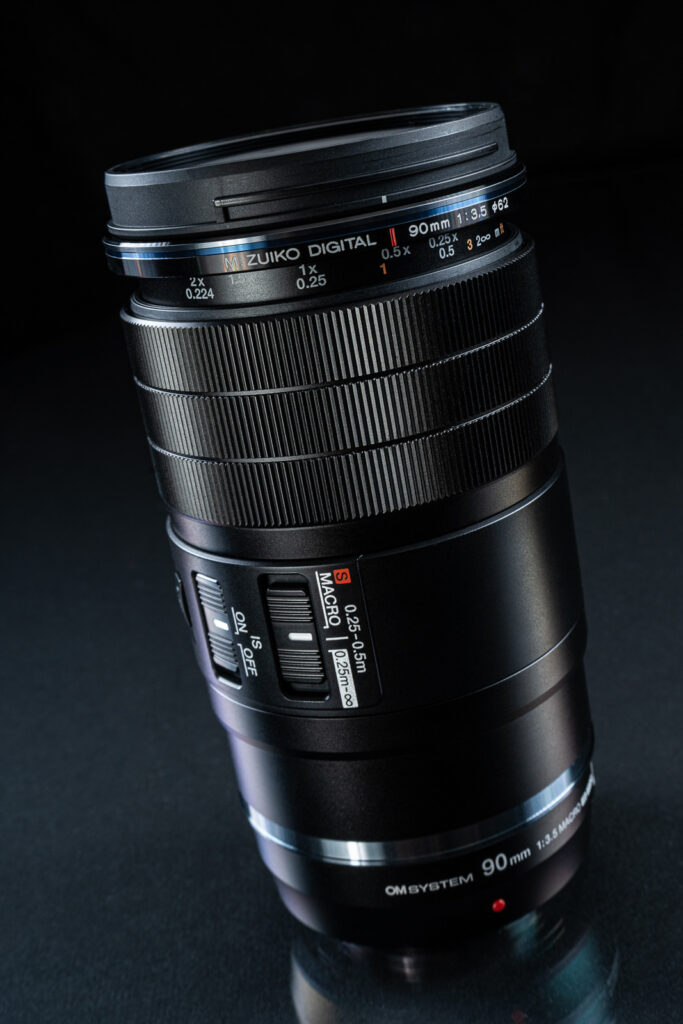
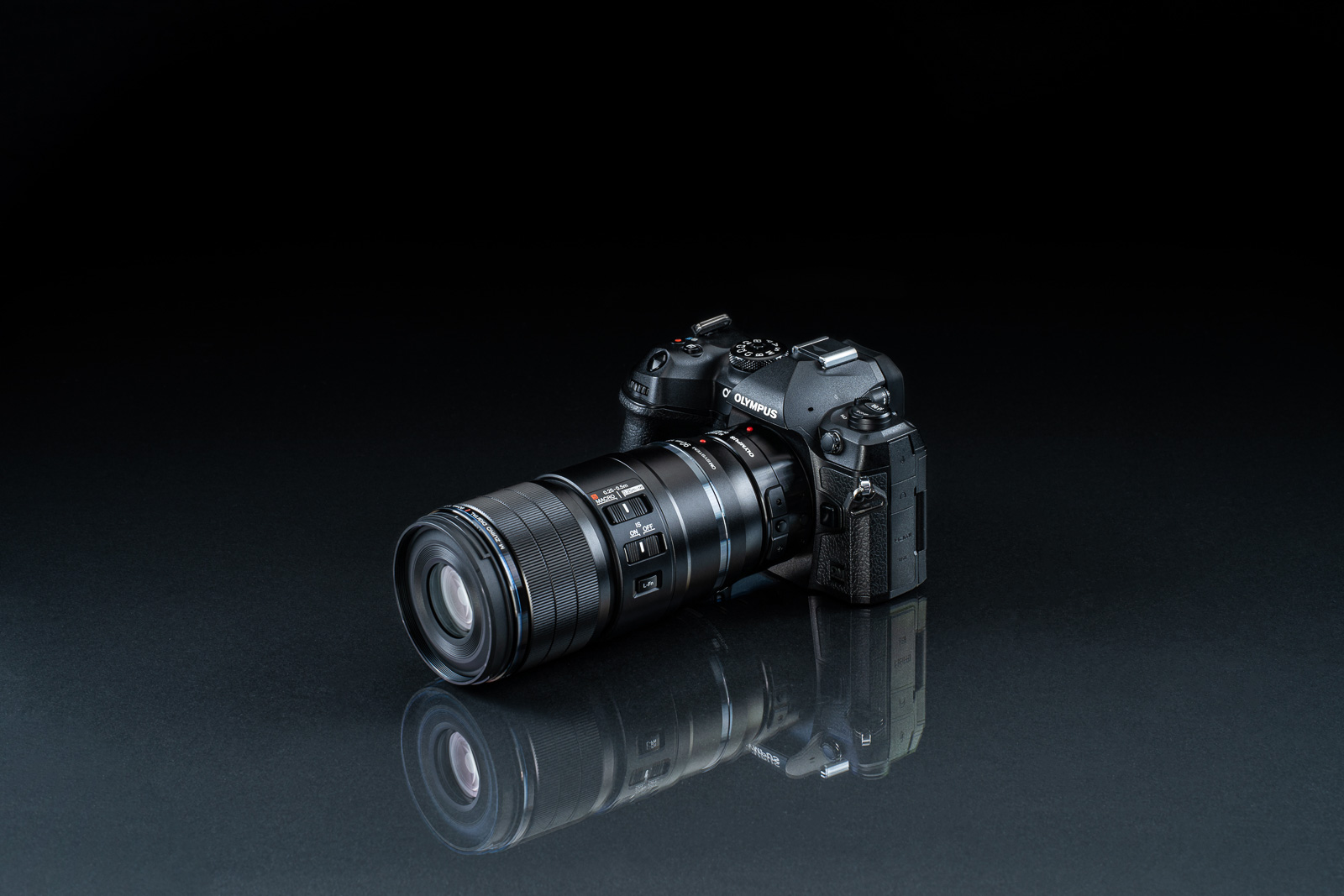
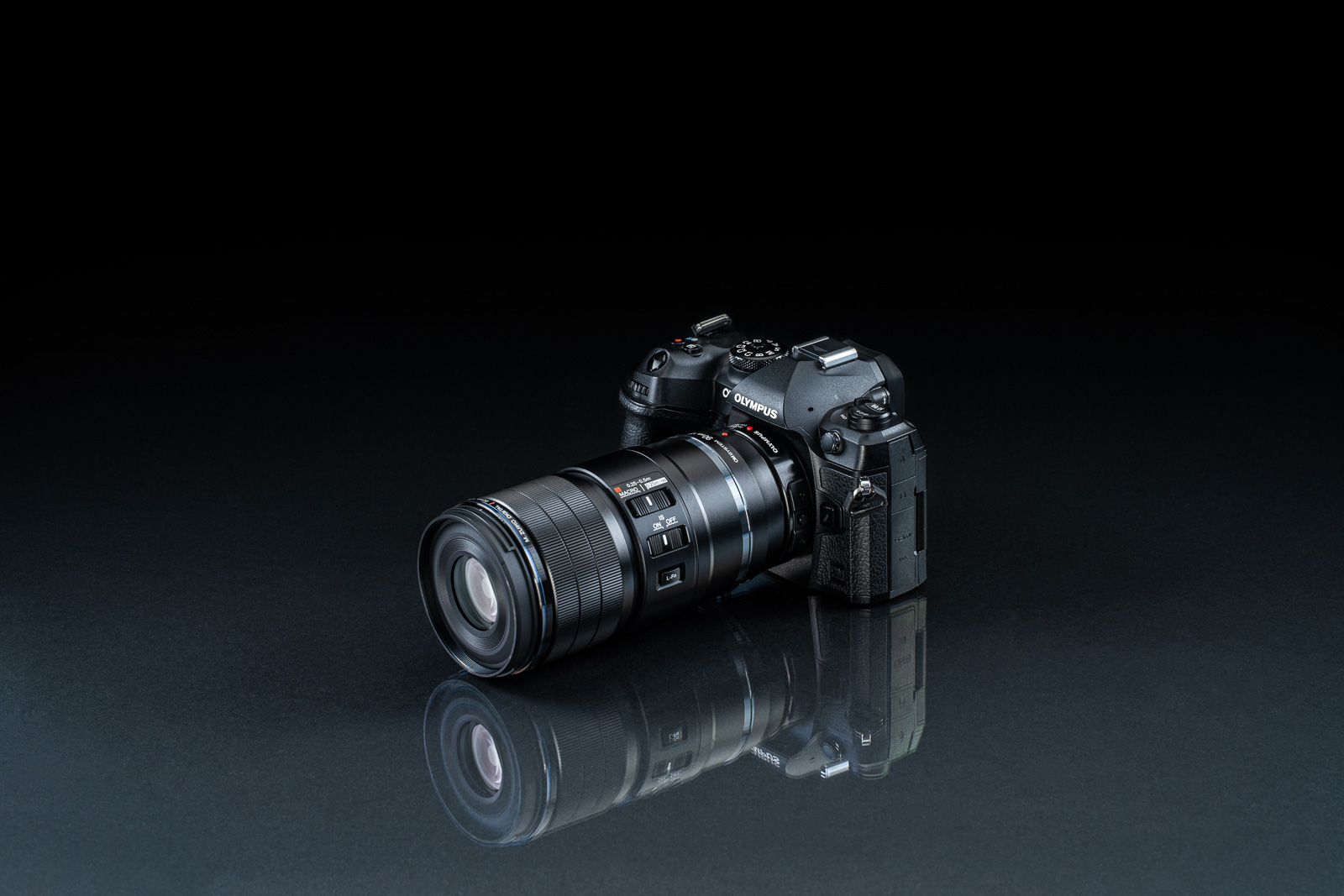
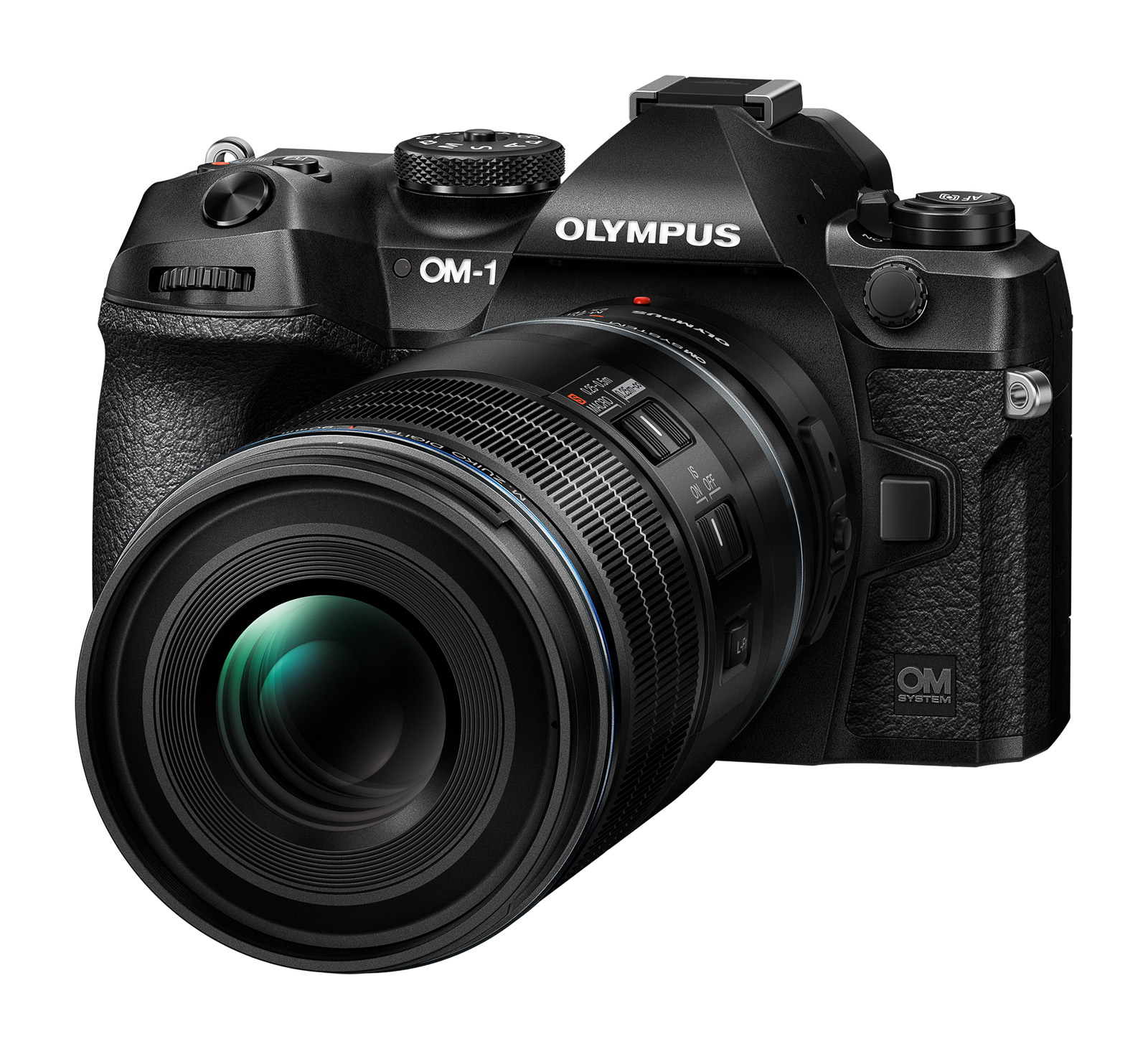
OM System m.Zuiko ED Digital 90mm f/3.5 IS Pro macro lens

Key features:

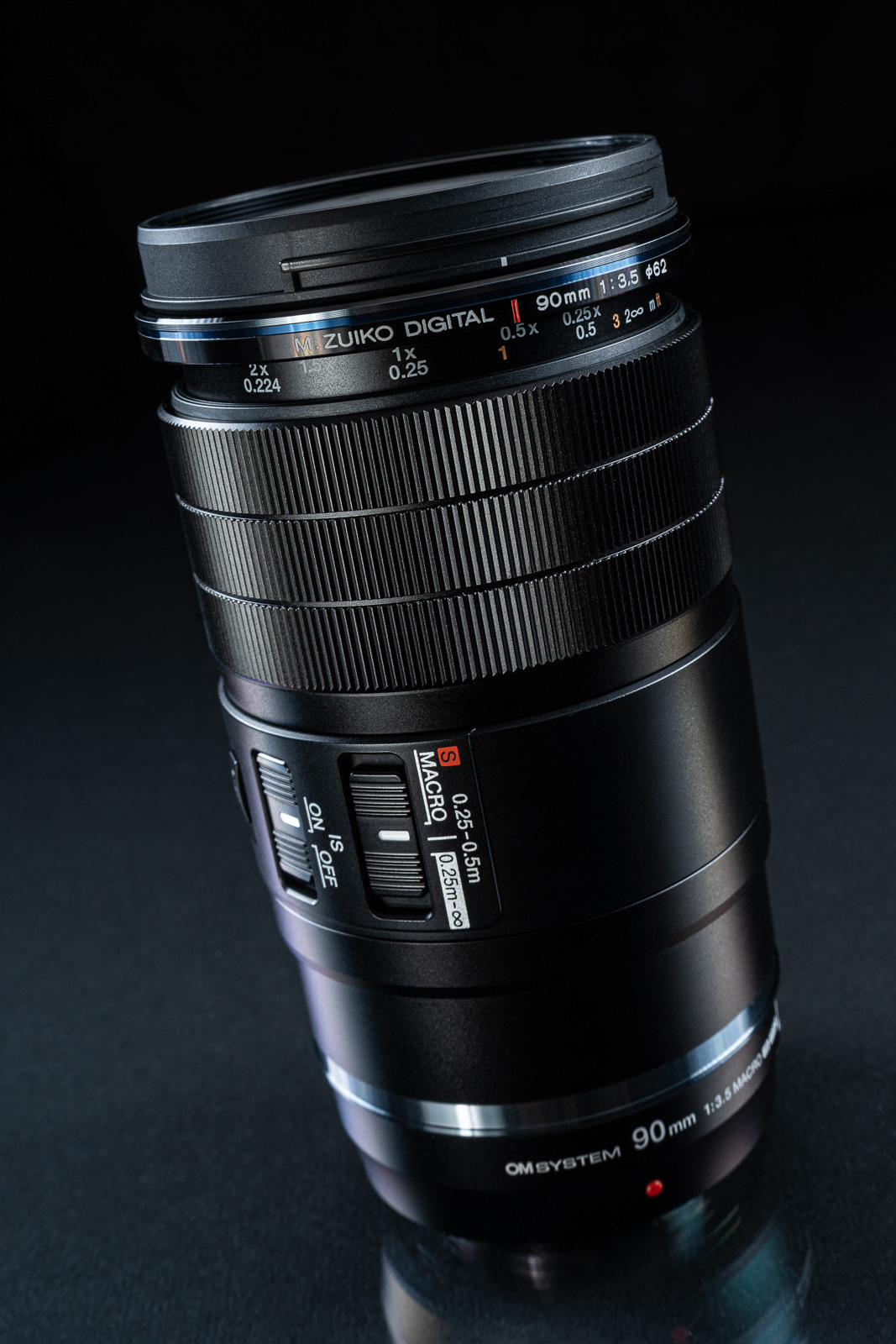
  • At closest focus you get 2:1 (2x life size) subject reproduction on the sensor.
  • Closest focus (2:1) is achieved at a distance of 0.224m.
  • Compatibility with OM System’s MC-14 (1.4x) and MC-20 (2x) converters, delivers up to 4x life-size reproduction on the sensor.
  • A Micro Four Thirds sensor, being smaller than a full frame sensor, fills the frame twice as much at the same magnification when compared to an equivalent FF macro lens; 2x magnification with the 90mm macro is like 4x on FF.
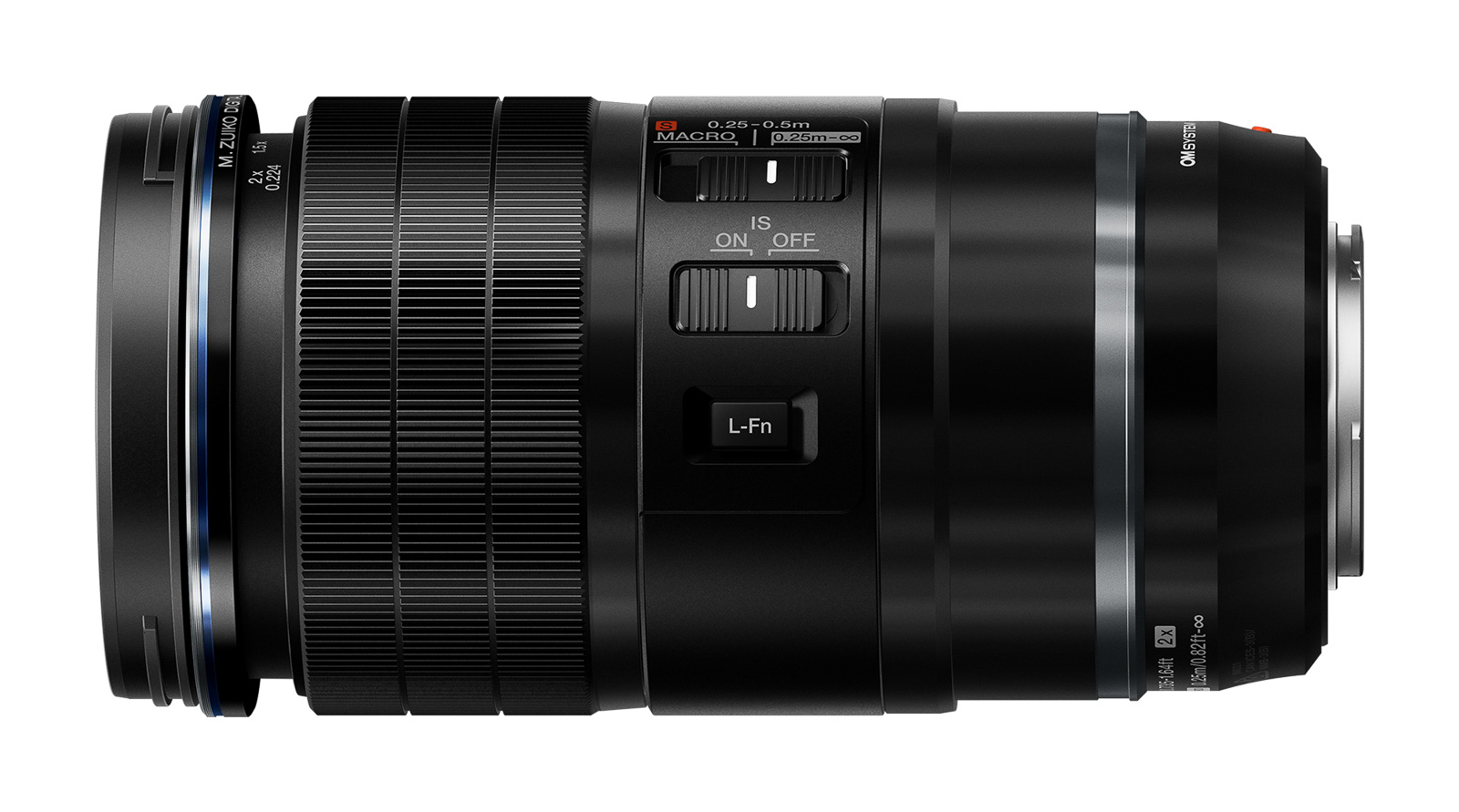
  • Fast auto and manual focusing, with an instant focus clutch for the latter.
  • Compatibility with Olympus and OM System camera bodies that include in-camera high-speed focus bracketing and focus stacking modes.
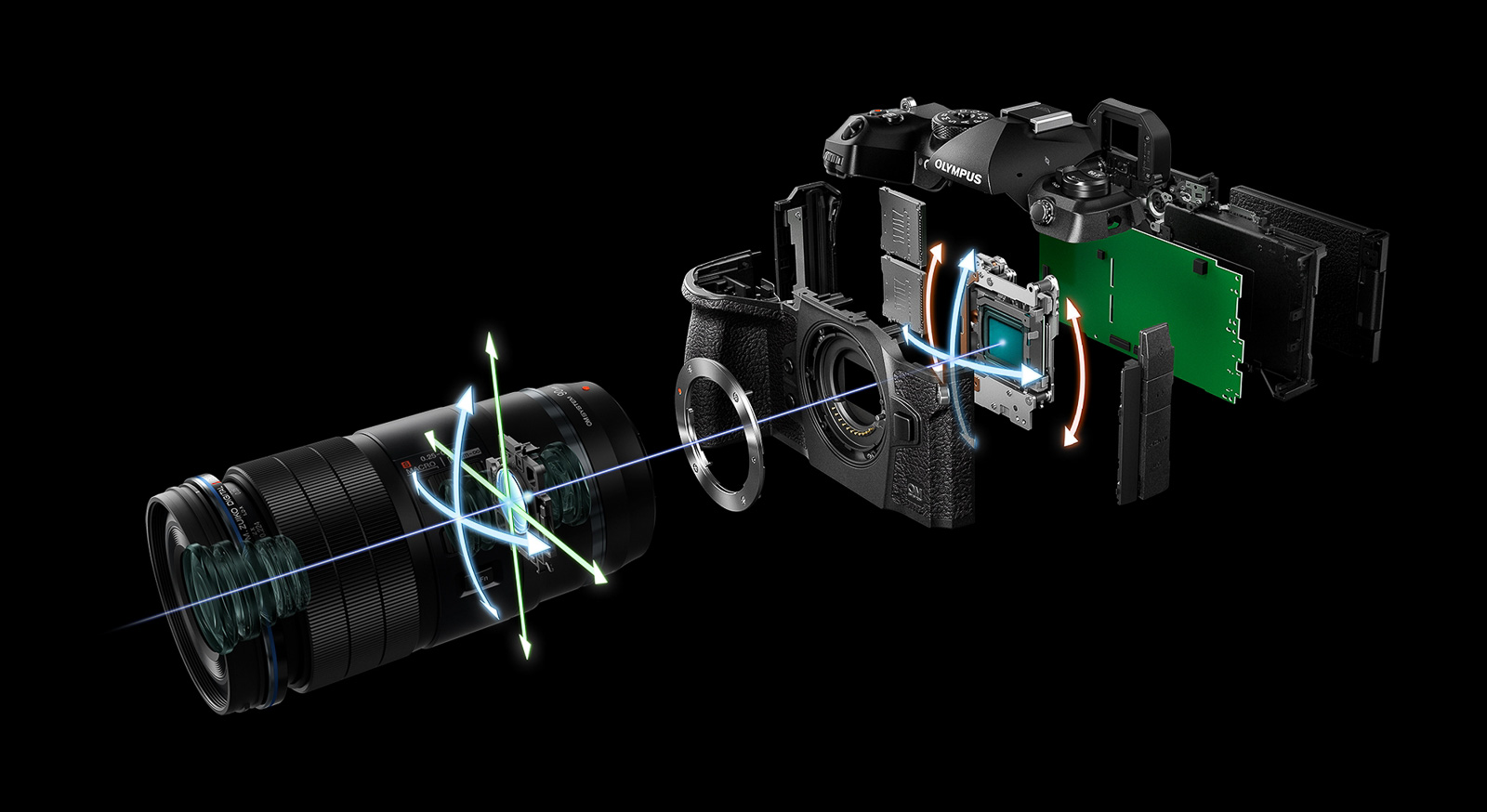
  • Up to 7 EVs of shutter speed compensation via integrated lens optical image stabilisation (OIS) and tandem (Sync IS) camera body sensor-shift image stabilisation (IS).
  • Fluorine-coated front element for significantly more effective clearing of water droplets in damp conditions.
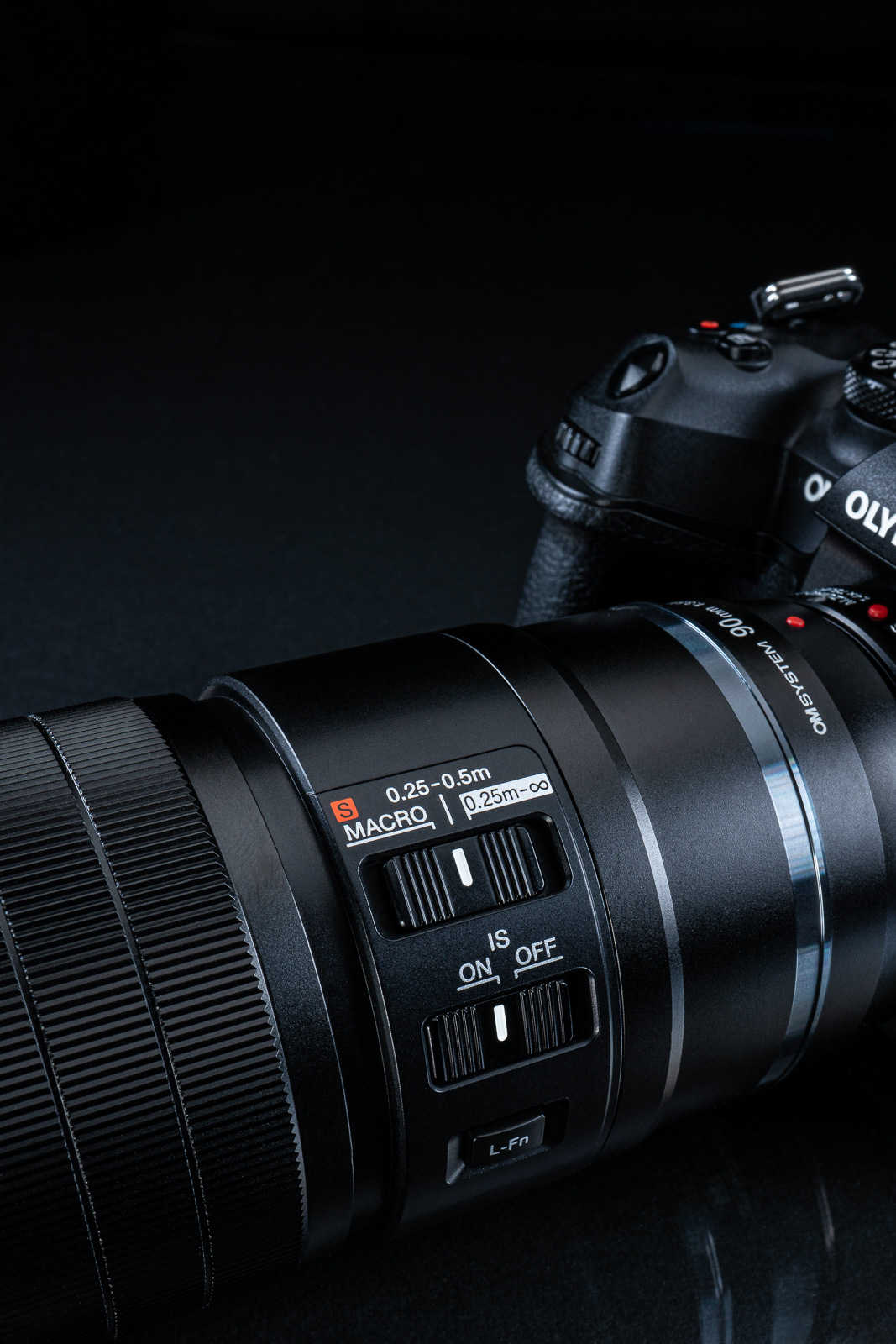
  • On-lens control switches for infinity/mid-range focus limiting and Macro mode (S), IS on/off, and programmable L-Fn button.
  • The 90mm macro lens is also suitable for use as a conventional short telephoto (180mm FF equivalent) lens.
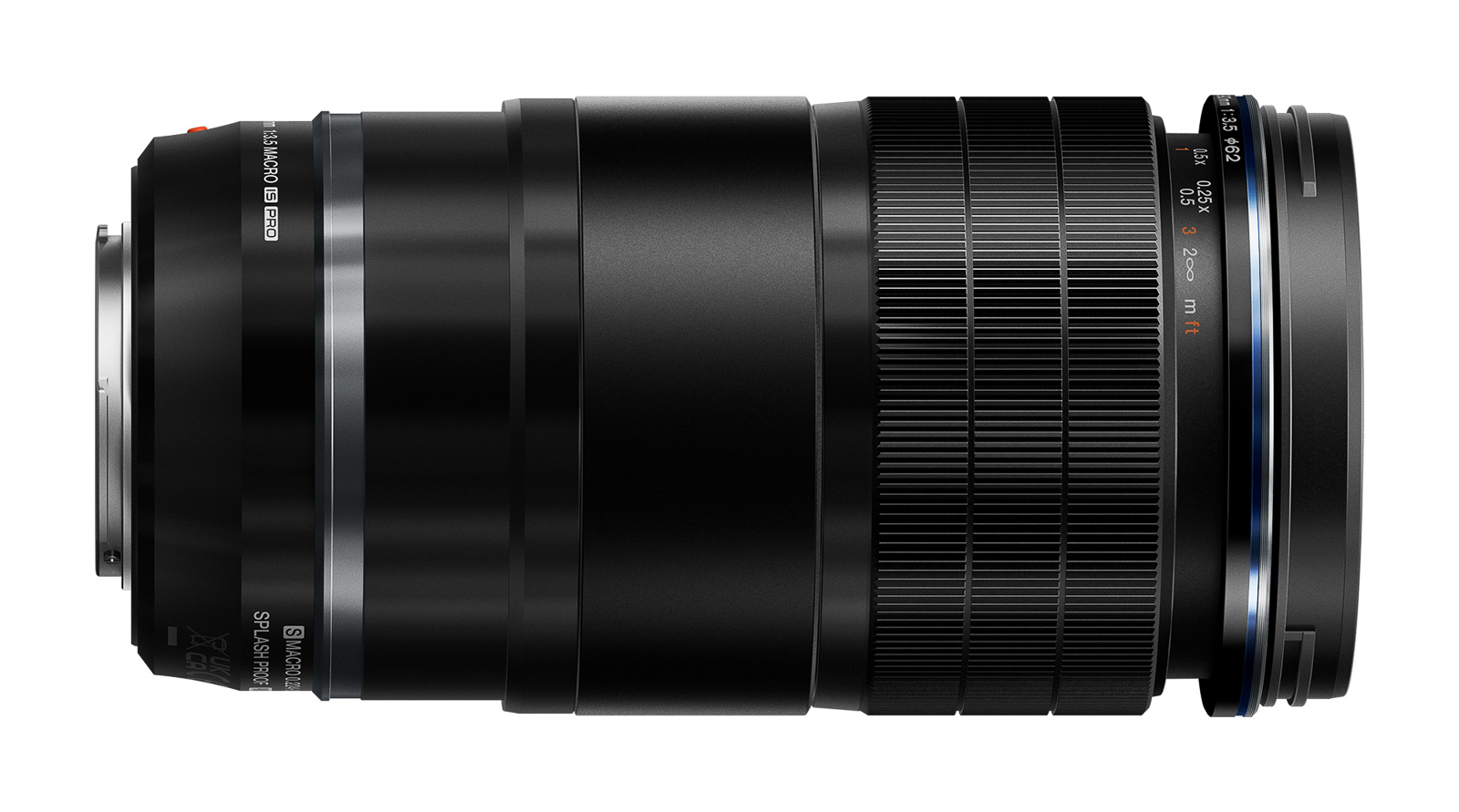
  • IP53 dust and moisture sealing.
  • Available from the end of February (Europe) and early March (North America) – UK price £1299 (€1499 in Europe and $1499 in the US)
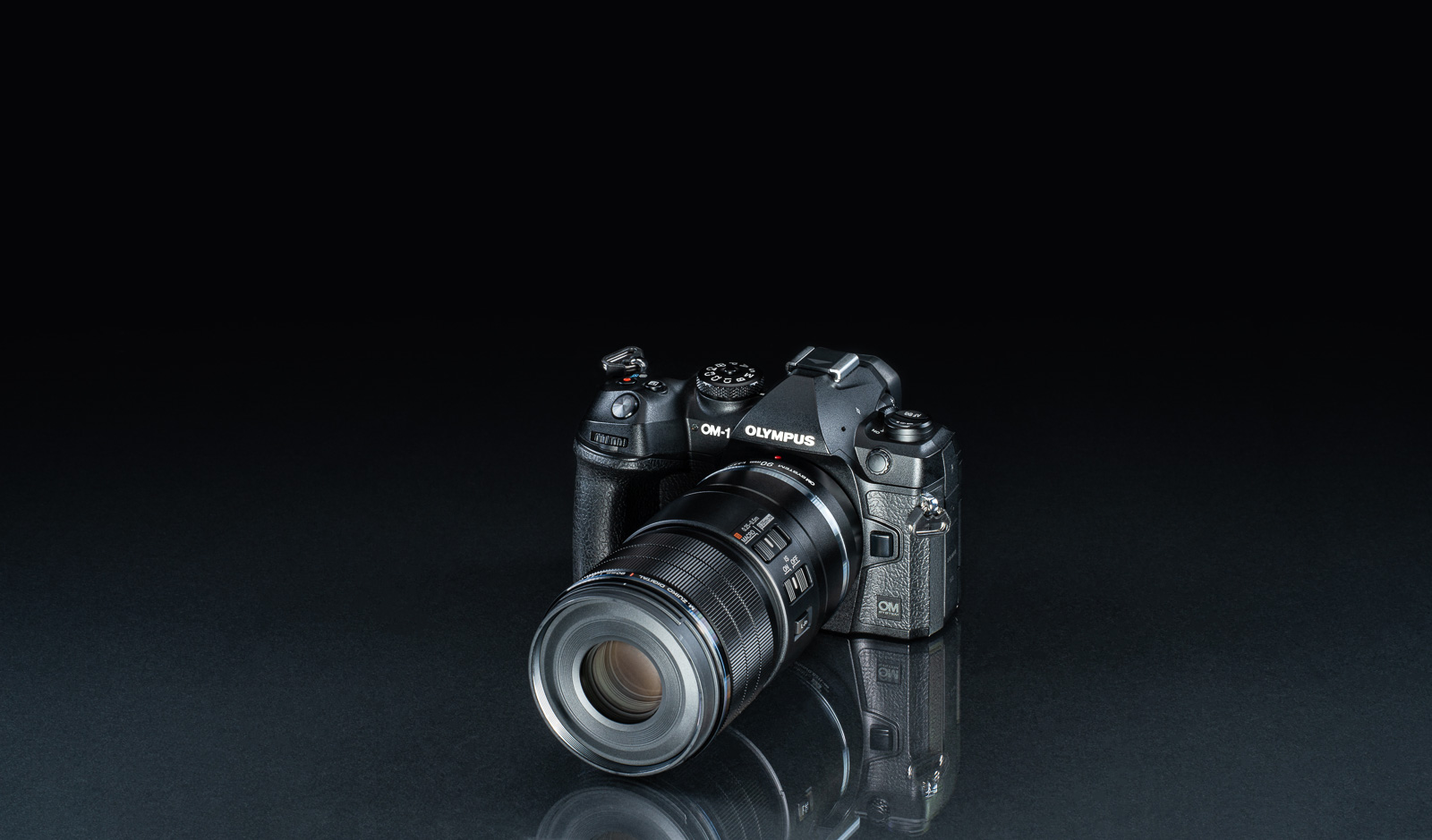
OM System m.Zuiko ED Digital 90mm f/3.5 IS Pro macro lens

Compared to the m.Zuiko 60mm macro

The familiar and more affordable m.Zuiko 60mm f.2.8 macro lens gets you down to a maximum 1:1 subject reproduction, at a focusing distance of 0.19m. At the same magnification the distance is 0.25m for the 90mm lens.

Dimensions

The non-extending lens barrel is 136mm in length and 69.8mm wide. Its weight is 453g and it takes 62mm filters. OM System points out that few other macro lenses can deliver 2:1 reproduction without extension tubes, while the new 90mm macro is also one of the lightest lenses in its field.

Accessories

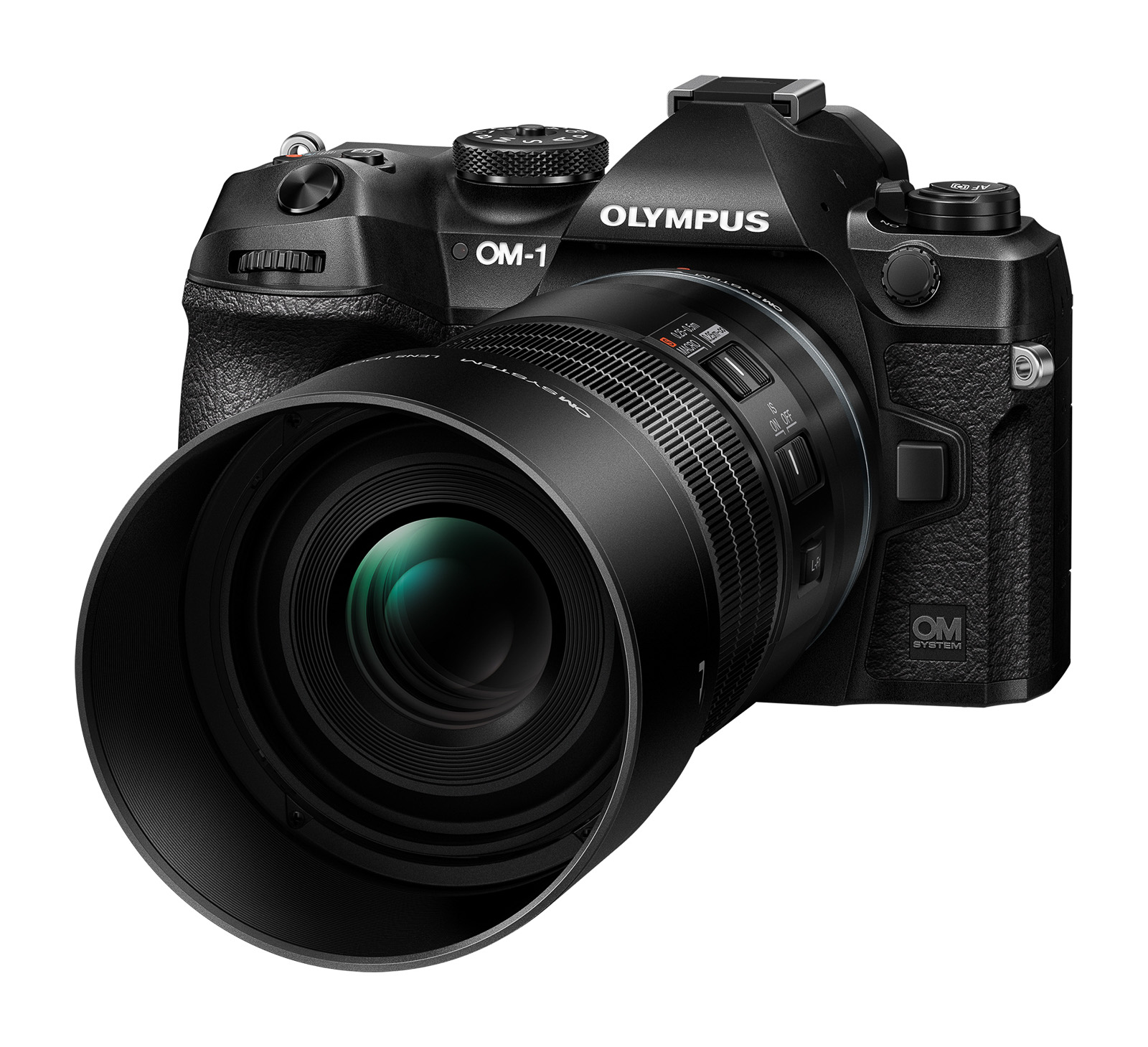
An LH-66E lens hood and CS-53 wrapping cloth are included in the box. The lens fits the optional LSC-0914 pouch case, and the lens is also compatible with the STF-8 Macro twin flash system.

Summary

Above all, the m.Zuiko ED Digital 90mm f/3.5 IS Pro macro lens is aimed squarely at a photographer who wants to travel light, probably without a tripod, and shoot without being overly concerned about the weather. At the same time the lens, by default, can magnify subjects by 2x and this can increase to 4x with the optional MC-20 converter. Real-time focus bracketing and stacking complete the picture. And when this lens isn’t being used for macro, it becomes a convenient short telephoto, complete with a focus limiter, if required. Having instantly available manual focusing (which can also be range limited) thanks to the familiar m.Zuiko manual/auto focus clutch system, is the icing on the cake.

Product image gallery

Posted on

Is the bulk and weight of your camera gear getting you down?

It’s very easy for photographers who are invested in relatively large sensor camera platforms to dismiss the smaller sensor Micro Four Thirds system. You might think it’s even easier now that the big hitters, Nikon and Canon, have finally retired their DSLR strategies, following Sony’s move a few years back. Without the need for space to house a mirror box and pentaprism viewfinder, they can now make much smaller and lighter camera bodies.
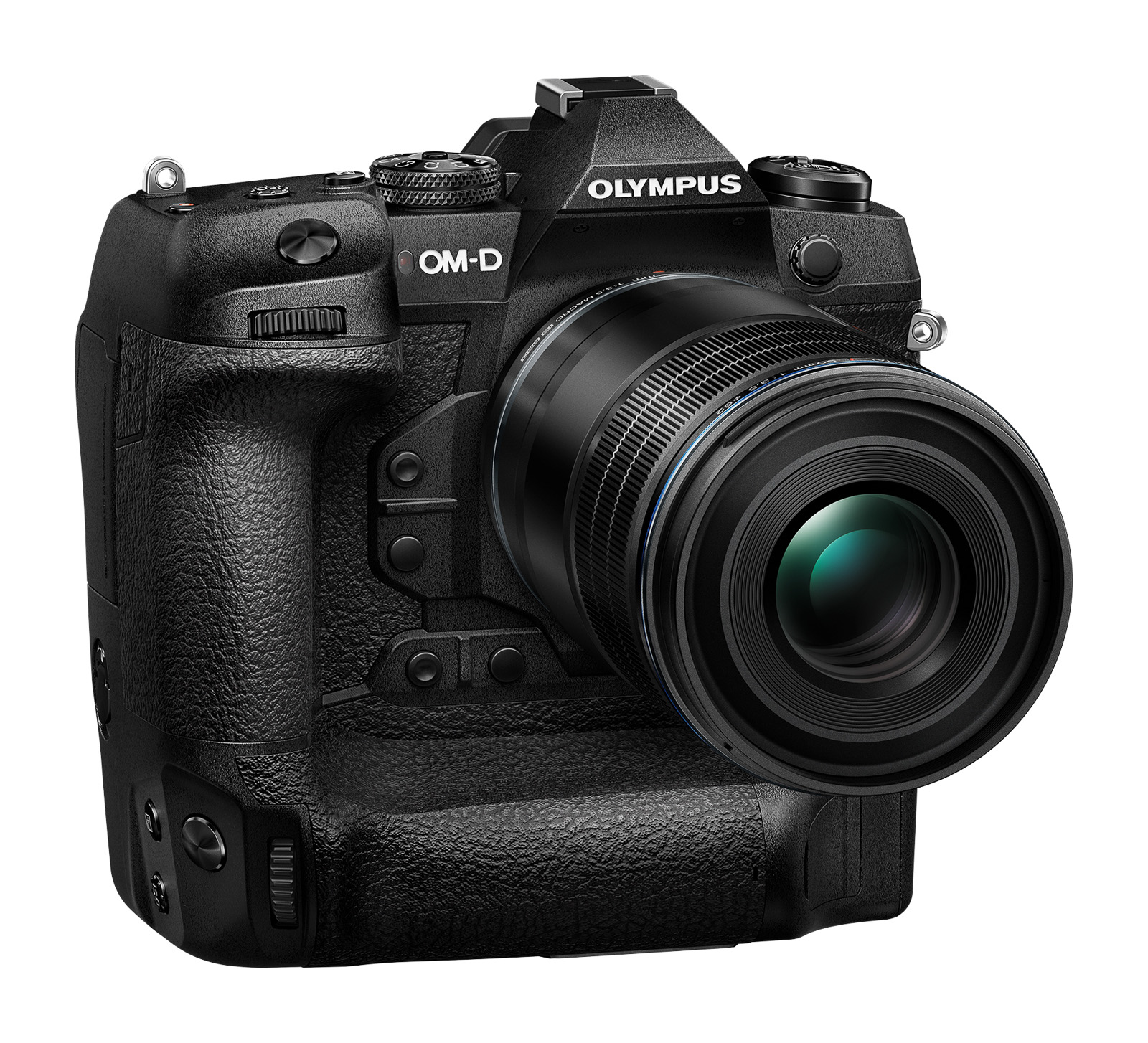
Mirrorless bodies can be very small, but what about the lenses?

Digital mirrorless system cameras, which Panasonic and Olympus ushered in 14 years ago, are generally much smaller and lighter than DSLRs. But it’s all very well making small camera bodies hiding large sensors; because sensor size dictates how large a lens has to be. APS-C and Full Frame systems still need lenses significantly larger and bulkier lenses than Micro Four Thirds. It’s one of the key reasons why photographers are switching to Olympus/OM System and Panasonic Lumix.

Larger sensor system lenses can be more compact but there is a cost

You can get lenses that are substantially reduced in size, but only by sacrificing the brightness of the optics. The Olympus m.Zuiko Pro 12-100mm f/4 is very similar in size and weight to Nikon’s Nikkor Z 24-200mm, which has the same viewing range and the same f/4 aperture at the wide angle end of the zoom range. But at 200mm, the Nikon lens is stopped down to f/6.3, 1.3EVs lower in brightness, while the Olympus lens retains maximum f/4 brightness across the zoom range.

An extreme example is Canon’s strategy of producing long telephoto lenses with f/11 fixed apertures. These RF 600mm and 800mm lenses are impressively small and light, but f/11 is a serious limitation to working brightness.

Mirrorless lenses are smaller than DSLR lenses

Mirrorless bodies bring the lens mount flange closer to the sensor focal plane. This helps reduce the size of lenses, too – especially with wide-angle lenses. So, some mirrorless lenses are now noticeably smaller than their DSLR counterparts. But sensor size is still the primary factor in determining the bulk of a lens.

Here are a few comparisons with similar Full Frame, APS-C and Micro Four Thirds lenses:

Nikkor (FF) S-Line 70-200mm f/2.8 vs. Fuji (APS-C) XF50-140mmF2.8 R LM OIS WR vs. Panasonic (M43) Lumix 35-100mm f/2.8
Weight 1360g vs. 995g vs. 357g
Length 220mm vs. 175.9mm vs.99.9mm
Diameter 89mm vs. 82.9mm vs. 67.4mm
Cylindrical storage volume* 1367cm3 vs. 949cm3 vs. 356cm3

Canon (FF) RF 600mm f/4L IS USM vs. Olympus (M43) m.Zuiko Pro300mm f/4 IS Pro
Weight 3090g vs. 1475g
Length 472mm vs. 280mm
Diameter 168mm vs. 92.5mm
Cylindrical storage volume* 10457cm3 vs. 1881cm3 


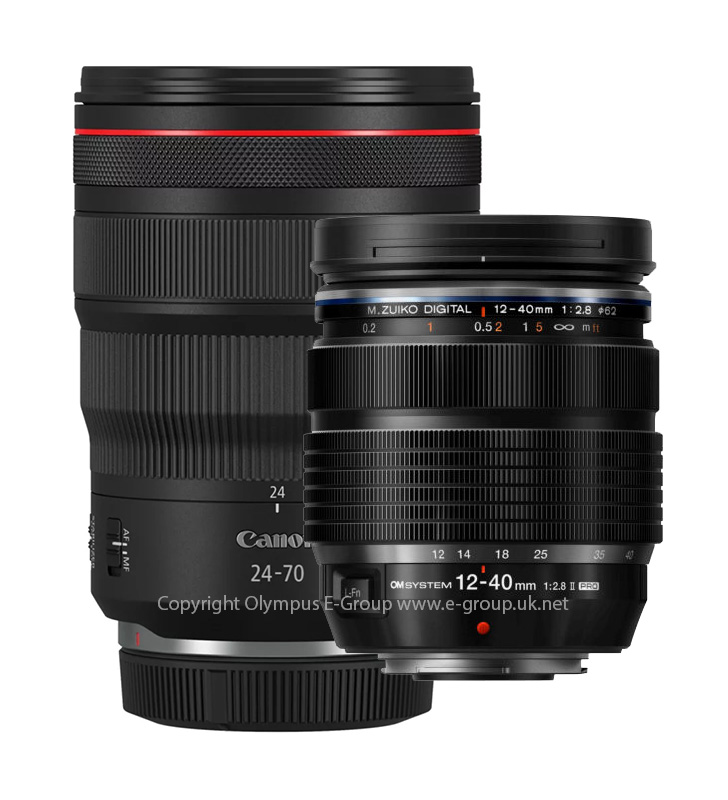
Canon (FF) RF 24-70mm f/2.8L IS USM vs. Sony (FF) FE 24-70mm f/2.8 GM II vs. Olympus (M43) m.Zuiko Pro 12-40mm f/2.8
Weight 900g vs. vs. 695g vs. 382g
Length 125.7mm vs. 119.9mm vs. 84mm
Diameter 88.5mm vs. 87.8mm vs. 69.9mm
Cylindrical storage volume* 773cm3 vs. 725cm3 vs. 322 cm3

Sony 35mm FE f/1.4 GM vs. Fuji (APS-C) XF 33mm f/1.4 R LM WR vs. Olympus (M43) ED 20mm f/1.4 m.Zuiko Pro
Weight 524g vs. 360g vs. 247g
Length 96mm vs. 73.5mm vs. 63.4mm
Diameter 76mm vs. 67mm vs. 61.7mm
Cylindrical storage volume* 435cm3 vs. 259cm3 vs. 190 cm3 

*A cylinder of the length and maximum diameter of the lens, representing a typical space required for storing the lens, not the volumetric size of the lens itself, which will be smaller.

There is no getting away from physics. A smaller sensor means the optical lens design required to cover a given scene, given the same brightness (f-number) will be more compact than the optics required for a larger sensor.

No matter how small you make the body, the lens on your large sensor setup will, likely, determine the size and weight you will need to carry around with you.

As the data, above, shows, APS-C format lenses are smaller and lighter than their Full Frame counterparts, but Micro Four Thirds lenses even smaller and lighter.

But sensor is important, isn’t it?

It’s true, a larger sensor should deliver lower noise, and, if you need it, lenses of similar f-stop will deliver less depth of field. In day to day normal use, these perceived limitations may not actually be so apparent. We’ll look at these issues in a future article.

But the message is clear – if you don’t want to carry bulky and heavy camera gear anymore, Micro Four Thirds is well worth considering. Lots of former FF and APS-C format photographers have done exactly that, and not looked back.